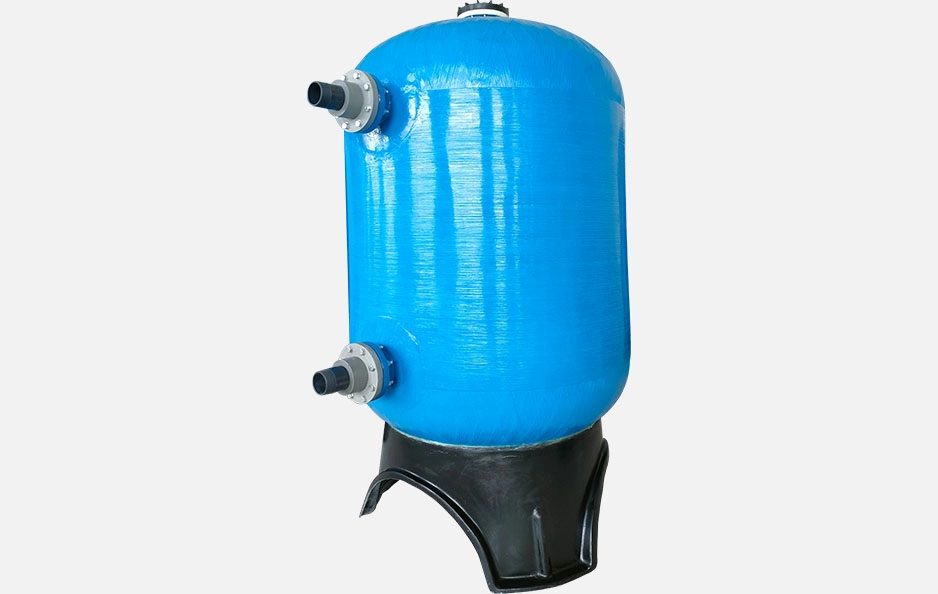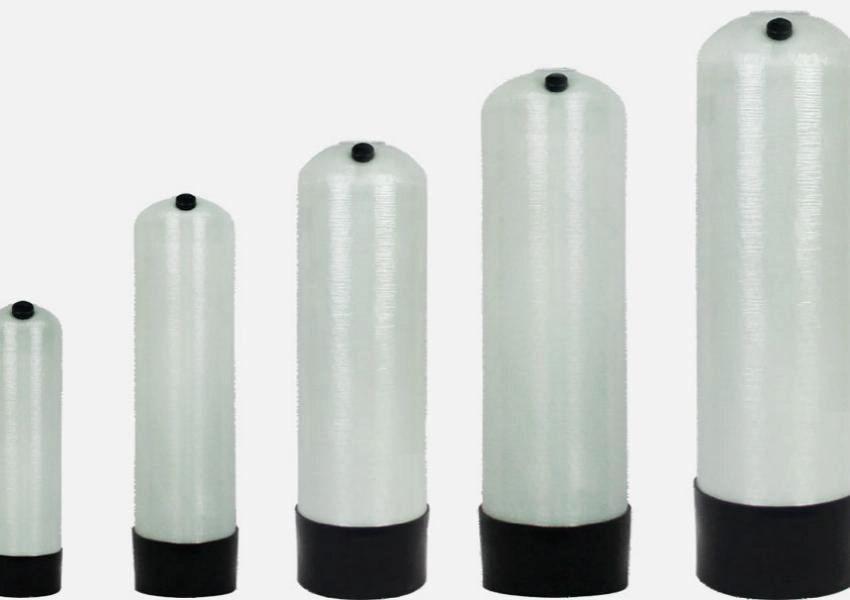

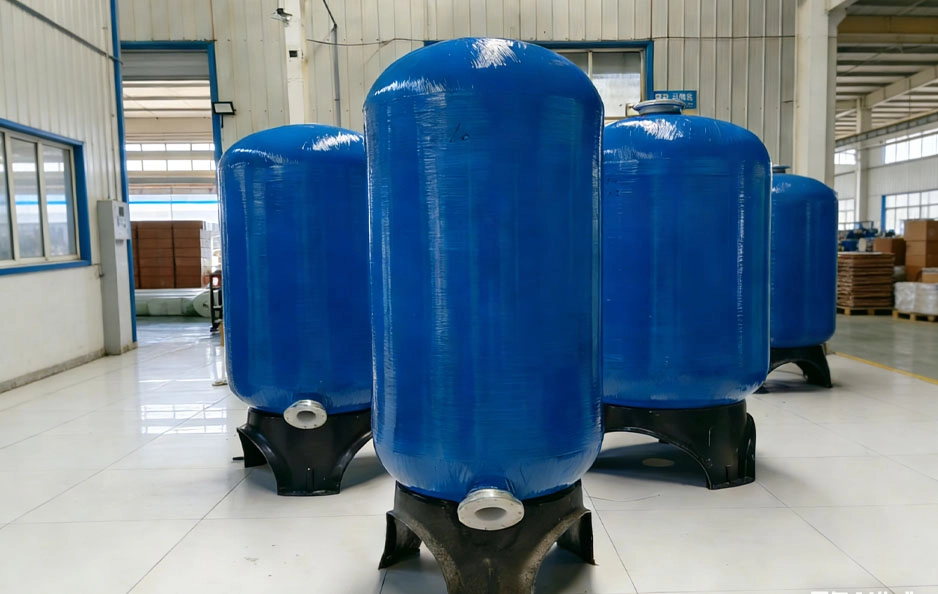
In the field of advanced water treatment, FRP water treatment tanks have become indispensable due to their structural versatility and chemical resilience. These tanks are composed of fiber-reinforced plastic — a composite material that merges resin with fiberglass to achieve an exceptional strength-to-weight ratio. The outer shell consists of premium fiberglass embedded in epoxy resin, while the inner shell is made of seamless polyethylene, ensuring both mechanical strength and hygiene. This dual-layer configuration not only enhances durability but also ensures compliance with drinking water hygiene standards.
Design flexibility is another defining characteristic. Tanks can be customized for different capacities and installation conditions, ranging from compact domestic systems to large-scale municipal or industrial operations. The use of CNC-controlled blow molding and filament winding technologies allows precise control over wall thickness, fiber orientation, and curing quality—essential parameters for pressure-bearing reliability.
How Do FRP Tanks Function Within Water Treatment Processes?
The operational role of an FRP tank for water treatment extends far beyond simple storage. Within integrated systems, these vessels perform multiple functions: sedimentation chambers for suspended solids removal, filtration units housing media like activated carbon or quartz sand, and dosing containers for chemical reagents that adjust pH or disinfect water.
The healthy non-toxic lining is made of non-toxic PE plastic and reaches the drinking water hygiene standard. This ensures that no contaminants leach into the treated water — a critical factor in maintaining purity throughout processing cycles. In both municipal and industrial systems, FRP tanks provide stable containment without risk of corrosion-induced leakage.
For specialized dosing operations requiring precision chemical mixing, our PE dosing tank series offers a complementary solution. These tanks are made from food-grade HDPE using one-piece blow molding technology to ensure seamless construction and resistance to cracking. They feature clear capacity markings for accurate reagent preparation — ideal for RO pre-treatment or wastewater neutralization processes.
Which Performance Factors Determine the Reliability of FRP Tanks?
Before selecting a supplier or model, engineers must evaluate several key performance metrics that define long-term reliability under operational stress.
How Do Mechanical Strength and Durability Affect System Longevity?
Mechanical integrity governs how well a tank withstands internal pressure variations during operation cycles. The operating pressure of the product is 150 psi (10.5 bar), withstanding over 100,000 cycles between 0–150 psi without failure. Such fatigue resistance ensures stability even under fluctuating hydraulic loads common in backwashing or regeneration phases. UV protection is equally vital for outdoor installations; resin formulations incorporating stabilizers prevent photodegradation that can weaken structural bonds over time. Fiber orientation during winding further enhances tensile and flexural strength—allowing thinner walls without compromising safety.
Why Is Chemical Compatibility Critical in Water Treatment Applications?
Chemical compatibility defines whether an FRP tank can safely contain aggressive substances used during treatment processes. The combination ratio of glass fiber and epoxy resin forms a naturally corrosion-resistant product with stability against low-concentration acids, alkalis, salts, oils, and other solvents. Depending on application requirements, epoxy or vinyl ester resins may be selected for enhanced resistance profiles.
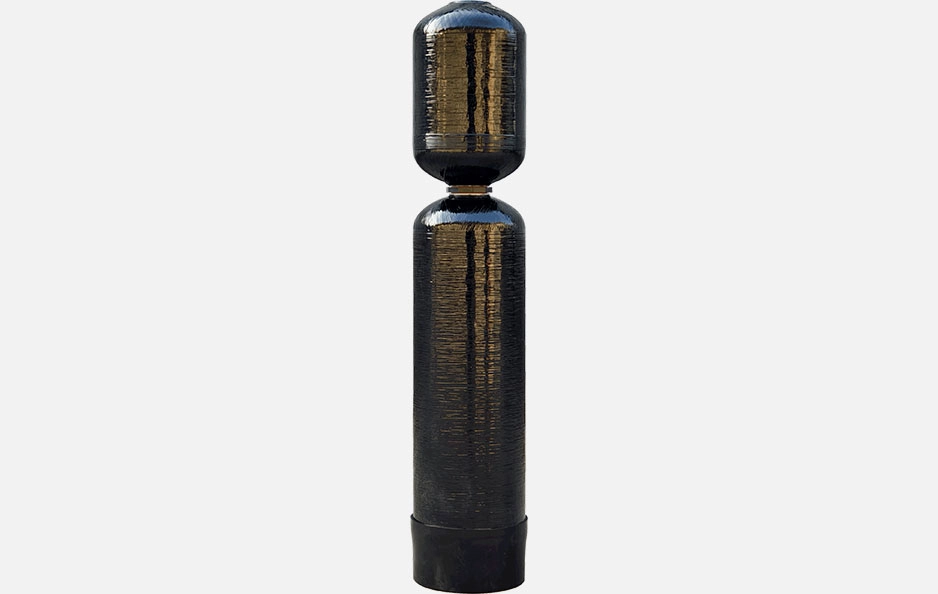
For ultra-pure or reactive fluids requiring isolation from ambient air exposure, we recommend the FRP nitrogen-sealed tank This model injects nitrogen into the tank headspace to prevent secondary contamination by separating stored water from air. It is ideal for semiconductor manufacturing or pharmaceutical-grade water storage where conductivity stability is paramount.
How Does Thermal Stability Influence Environmental Adaptability?
Temperature fluctuations can induce expansion stresses at joints or fittings if not properly managed. FRP materials maintain structural performance across wide temperature ranges — typically from -17°C up to 49°C — allowing deployment in varied climates without deformation risks. Insulated configurations may also be specified when thermal consistency is essential for process control.
What Criteria Should Guide the Selection of an FRP Water Treatment Tank Supplier?
Identifying a reliable FRP water treatment tank supplier involves assessing technical expertise, production capabilities, certification compliance, and after-sales support.
How Important Are Technical Expertise and Manufacturing Capabilities?
A competent manufacturer should demonstrate proficiency in custom fabrication aligned with project specifications. Hebei Hedelong Water Treatment Co., Ltd., is a high-technology enterprise concentrating on the water treatment field. We employ CNC-controlled filament winding and injection molding processes that ensure dimensional precision across all vessel types—from small dosing units to large industrial reactors.
Our FRP special-shaped custom pressure tank exemplifies this capability by allowing full customization according to client-provided parameters such as diameter, height, working pressure, opening layout, and base form. These tanks are formed through advanced winding technology, offering excellent corrosion resistance and long service life.
Why Must Compliance with Industry Standards Be Verified?
Compliance ensures safety consistency across installations worldwide. Our products have passed CE certification, NSF certification, ISO9001 quality management system certification, and domestic hygiene license approval documents. Adherence to ASTM or ISO standards guarantees traceable material quality and validated design pressures verified through hydrostatic testing protocols.
What Role Does After-Sales Support Play in Lifecycle Management?
Comprehensive after-sales service extends operational lifespan while minimizing downtime risks. We provide maintenance guidelines tailored to environmental conditions along with optional inspection services for early fault detection. Availability of repair kits further simplifies onsite restoration without full replacement costs.
How Should FRP Tanks Be Integrated Into Existing Water Systems?
Integration success depends on mechanical compatibility with existing infrastructure as well as adherence to best installation practices that preserve structural integrity over time.
What Are Key Considerations When Matching System Compatibility?
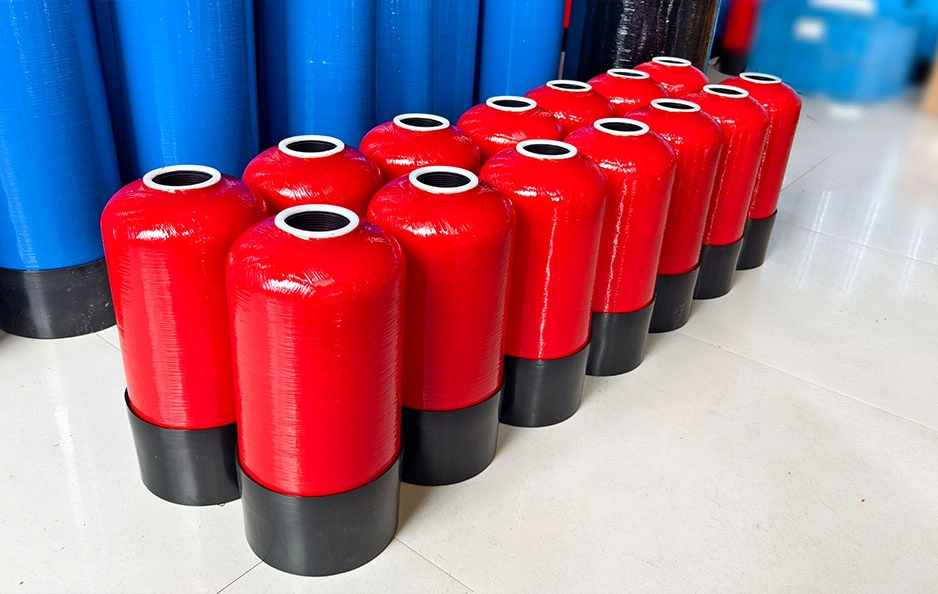
Connection interfaces must align precisely with pipeline diameters or pump outlets to prevent stress concentration at joints. Foundation design should account for filled weight distribution; level surfaces reduce localized strain zones that could initiate microcracks under load cycling. Venting provisions are also crucial—especially during rapid filling or draining phases—preventing vacuum formation that could collapse thin-walled sections.
Which Installation Practices Ensure Long-Term Performance?
Good ground preparation starts with making the base perfectly flat. Using soft pads under the tank bottoms helps stop scratching between the hard surfaces. When moving or lifting the tanks, soft straps must be used instead of metal hooks. This careful step avoids surface scratches that happen easily to fiberglass materials.
How Do FRP Tanks Compare Economically Against Conventional Materials?
Long-term money plans often guide buying choices more than just the first price tag. In this area, FRP always beats steel or cement options. This is mostly because FRP needs very little upkeep.
What Does Lifecycle Cost Analysis Reveal?
The first money spent might look higher than simple steel tanks. However, having fewer rust repairs quickly pays back that extra cost. This usually happens within the first one to five working years. A long working life of more than twenty years cuts down how often you need to buy new tanks. This helps a lot in busy plants that handle active chemicals all day long.
How Do Operational Efficiencies Contribute Financially?
The light weight of the tanks makes moving them much easier during the setup time. This cuts down on expensive crane rental hours. It also speeds up the time it takes to get the system running. Furthermore, the natural ability to stop rust removes the need for regular painting. Regular painting is a common cost for metal tanks placed near salty air or harsh chemicals.
About Hedelong
As experts focused on giving full answers to world markets, we at Hebei Hedelong Water Treatment Co., Ltd, bring together smart new ideas and exacting building skills. We have gathered this knowledge over twenty years. Our product list includes FRP tanks, membrane housings, chemical mixing parts, valves, filters, and complete cleaning units. These are all checked under CE and NSF rules for safe use around the world. We have helped more than 600 partner buyers in 150 countries. We do this through steady quality plans based on ISO 9001 rules. We keep pushing forward with green composite methods. Our designs focus on what the user needs. We aim for a long working life rather than just saving a little money at the start.
For project advice or help with details about any FRP water treatment tank, our technical experts are always ready to help through our contact page.
FAQ
Q1: What distinguishes an FRP tank from conventional steel vessels?
A1: Steel tanks easily rust when touching harsh chemicals. However, FRP vessels mix fiberglass strength with epoxy resin bases. This mix provides a natural shield against rust. It is also much lighter but keeps the same strong physical structure.
Q2: Can FRP tanks handle high-temperature fluids?
A2: Yes, they can. Depending on the chosen resin kind (like epoxy or vinyl ester), working heat levels usually reach up to 49°C without stopping. This happens without hurting the tank’s strong build. Thus, they are very fit for places with changing heat, such as salt-removing heaters.
Q3: Are customized geometries possible when ordering an FRP tank?
A3: Absolutely. By using computer-guided filament winding machines, we can shape widths up to several meters. We also place pipe holes exactly as shown on the buyer’s drawings. This guarantees a perfect fit into special working plans at factory sites all over the globe.