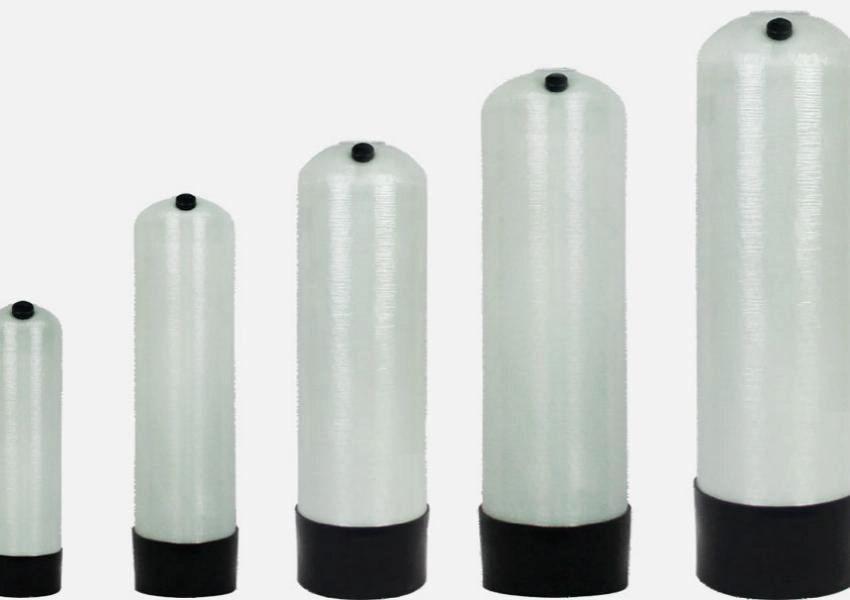

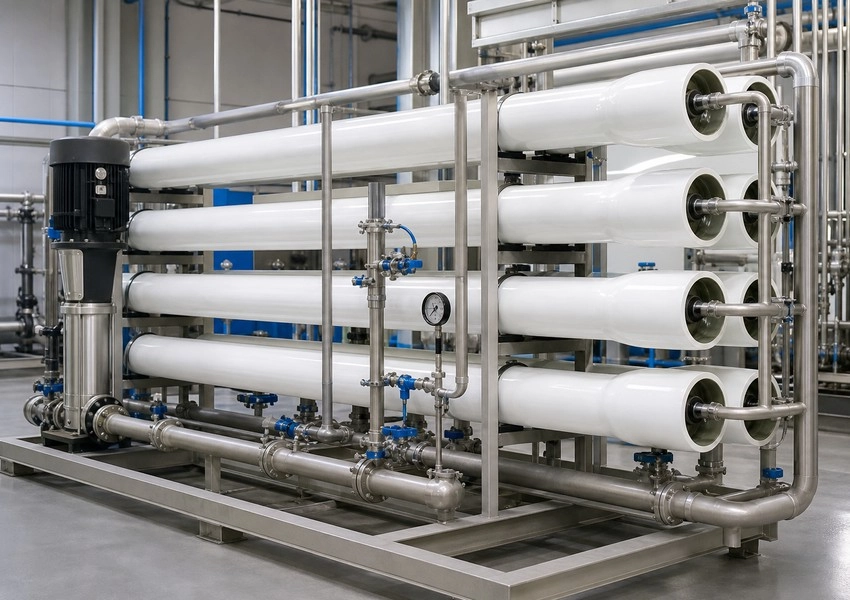
Procurement teams, engineering contractors, and water treatment equipment manufacturers are being asked to reduce project cost while improving delivery speed, system reliability, and documentation quality, so a low quotation can look attractive even when the proposed FRP membrane housing does not fully match the operating pressure, membrane size, connection layout, or feedwater chemistry. We see this tension in commercial and industrial projects every day, and our role is to help buyers compare each RO membrane housing as a complete reverse osmosis pressure vessel rather than as a simple tube with a unit price.
Why Can the Lowest FRP Membrane Housing Price Cost More?
A quotation only becomes useful when every supplier prices the same technical scope. Before comparing totals, buyers should separate the visible purchase price from the less visible costs created by sizing errors, weak documentation, unsuitable accessories, or a port arrangement that forces changes to the skid.
What Does the Unit Price Leave Out?
FRP membrane housing price normally changes with vessel diameter, element capacity, pressure rating, connection type, shell construction, end components, sealing materials, inspection requirements, order quantity, and packaging, yet a short quotation may show only a model name and total amount. That limited view can make two products look equivalent even when one reverse osmosis pressure vessel carries a different pressure class, uses different port threads, or includes fewer accessories. We recommend checking the full supply boundary before treating any price gap as a saving, because missing clamps, adapters, straps, seal kits, or pressure-rated fittings can reappear later as change orders and delayed assembly.
The safest comparison starts with a common datasheet that records membrane diameter, membrane quantity, normal operating pressure, maximum operating pressure, temperature, feedwater type, cleaning conditions, port dimensions, and required certificates. Once those fields match, the buyer can compare FRP membrane housing offers fairly and identify where a higher price pays for useful performance rather than unnecessary over-specification. This discipline also prevents a low-pressure RO membrane housing from being quoted for a duty that requires a stronger shell and end assembly, while keeping buyers from paying for a high-pressure model when the real operating conditions do not justify it.
Which Lifecycle Costs Change the Decision?
Initial FRP membrane housing price matters, especially for multi-vessel skids, but the purchase order represents only one part of total ownership cost. Installation labor, manifold changes, commissioning time, spare seals, membrane replacement access, leakage response, production interruption, and future vessel replacement can outweigh a small saving at the sourcing stage. A reverse osmosis pressure vessel that aligns with the skid layout and service procedure usually reduces these downstream costs because technicians can connect, inspect, open, and reseal it without improvising around the original design.
Which Performance Factors Should Define Real Value?
Performance should be measured against the actual duty point, not against the largest number printed on a catalogue page. We focus on the conditions that influence safe operation, sealing stability, corrosion resistance, and maintenance because these factors determine whether an RO membrane housing continues to perform after the system leaves the factory.
How Should Pressure and Cycling Be Evaluated?
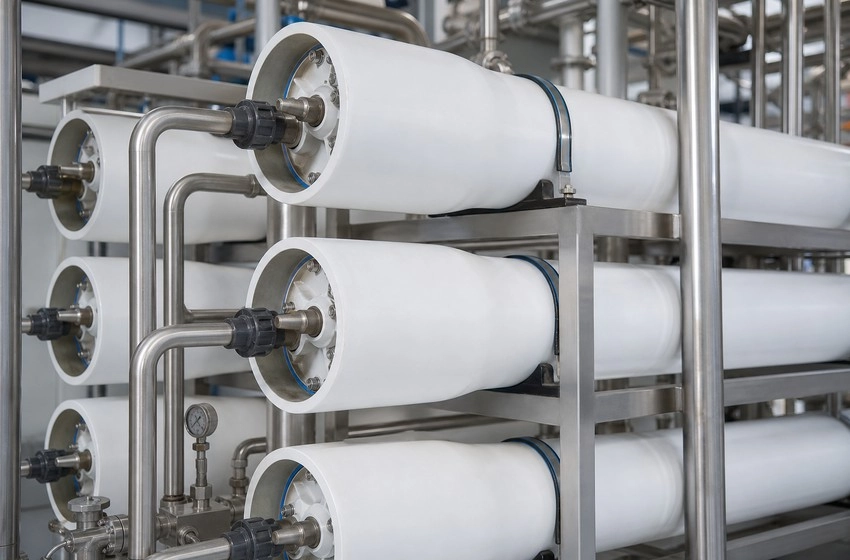
The pressure class is the first technical filter for any reverse osmosis pressure vessel, yet normal pump discharge pressure alone is not enough to select it. The design review should also consider startup and shutdown events, valve movement, flushing, cleaning, temperature, possible pressure surges, and the frequency of repeated cycles. We advise buyers to provide both normal and maximum operating conditions, then ask for the rated limits and applicable test documentation for the exact FRP membrane housing model, because a general brochure cannot replace model-specific confirmation.
Why Do Chemistry, Seals, and Ports Matter Together?
FRP offers strong corrosion resistance in water treatment service, but the complete RO membrane housing also contains seals, end plates, fasteners, adapters, and threaded or coupled ports, so compatibility must cover every wetted or exposed component rather than the shell alone. Feedwater salinity, pH, cleaning chemicals, concentration, temperature, and contact time can affect material selection, while poor seal compatibility can create leakage even when the FRP membrane housing body remains in good condition. We therefore ask buyers to describe both routine operation and chemical cleaning before confirming the final configuration.
Which FRP Membrane Housing Size Fits the Project?
Diameter and element capacity should follow the required flow, available footprint, membrane specification, and maintenance plan. Our product range covers compact equipment through large industrial arrays, allowing buyers to select an RO membrane housing that matches the system rather than forcing one vessel format into every application.
When Should You Choose 2.5-Inch or 4-Inch Housings?
For compact commercial equipment, laboratory purification, medical water devices, and small industrial units, our 2.5-inch FRP RO membrane housing accepts standard 2514, 2521, and 2540 membrane elements, with published 300 PSI and 1000 PSI options and compact quarter-inch connections. This configuration keeps the reverse osmosis pressure vessel small enough for integrated equipment while retaining the corrosion resistance and structural benefits expected from a FRP membrane housing. We recommend it when flow demand is moderate, installation space is limited, and the project needs a clean end-port arrangement.
For commercial drinking water systems, food and beverage process water, packaged RO equipment, and medium industrial treatment, our 4-inch FRP RO membrane housing supports one to four standard 4-inch membrane elements in selected configurations and covers published pressure choices from 300 PSI through 1200 PSI. A 4-inch RO membrane housing creates a practical middle ground between compact 2.5-inch equipment and an 8040 membrane housing, while its end-port layout can simplify piping on space-sensitive skids. Final selection should still confirm membrane quantity, port standard, pressure class, and service clearance because those items influence both performance and FRP membrane housing price.
When Is an 8040 Membrane Housing the Better Choice?
Large industrial RO trains, brackish-water desalination, wastewater reuse, high-purity water production, and other high-flow duties commonly use an 8040 membrane housing because standard 8-inch membrane elements provide far more membrane area than compact formats. Our 8-inch FRP RO membrane housing supports one to eight standard 8-inch elements in published configurations and offers multiple pressure classes for conventional and demanding industrial service. The end-port arrangement groups external connections at the vessel ends, helping integrators build regular multi-vessel arrays with organized manifolds and efficient use of skid space.
Who Are We as Your Reliable Supplier?
We are Hedelong a water treatment equipment manufacturer with more than 20 years of industry experience and a product portfolio that includes FRP pressure vessels, membrane housings, tanks, pipes, filters, and supporting components. Our team works with equipment manufacturers, engineering contractors, distributors, and project buyers across international markets, so we know that a useful quotation must do more than list a price: it should help the buyer confirm pressure, membrane capacity, port arrangement, materials, documentation, and delivery scope before production begins.
Conclusion
The strongest buying decision combines correct pressure rating, membrane compatibility, corrosion resistance, sealing reliability, practical port layout, clear documentation, and predictable service support. FRP membrane housing price remains important, but it should be compared only after every quotation reflects the same technical scope, because a low initial figure cannot compensate for an unsuitable pressure class, missing accessories, difficult maintenance, or field changes to the skid. When your next project needs a matched recommendation rather than a generic quote, please contact us to review the application and available configuration.
FAQ
Q1: What information is needed for an accurate FRP membrane housing price?
A1: Please provide membrane size, element quantity, operating and maximum pressure, feedwater type, temperature, cleaning chemicals, connection layout, port sizes, order quantity, required documents, and delivery destination. These details allow us to quote the correct reverse osmosis pressure vessel and avoid pricing a generic model that may not fit the project.
Q2: Is a higher-pressure RO membrane housing always the better option?
A2: No. A higher rating may increase cost without adding practical value when the system operates at a lower pressure. The correct RO membrane housing should match the maximum expected operating condition, applicable engineering margin, membrane specification, and cleaning procedure, while the system designer should approve the final pressure class.
Q3: When should we select an 8040 membrane housing?
A3: An 8040 membrane housing is usually the better choice for industrial RO systems that use standard 8-inch membrane elements and require high flow, multi-element loading, and standardized vessel arrays. Before ordering, confirm the element count, pressure class, port layout, support position, and membrane-removal space so the FRP membrane housing integrates cleanly with the skid.