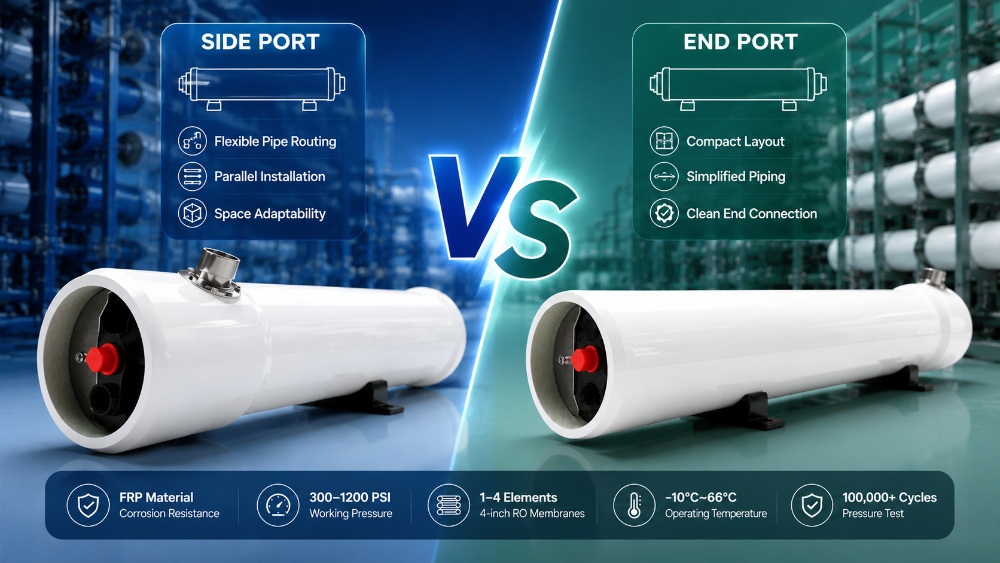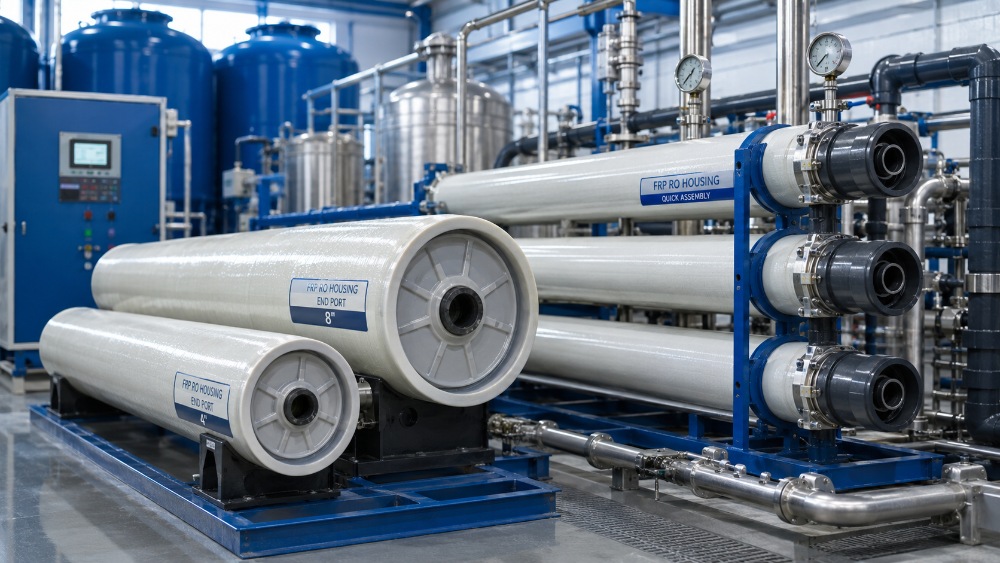

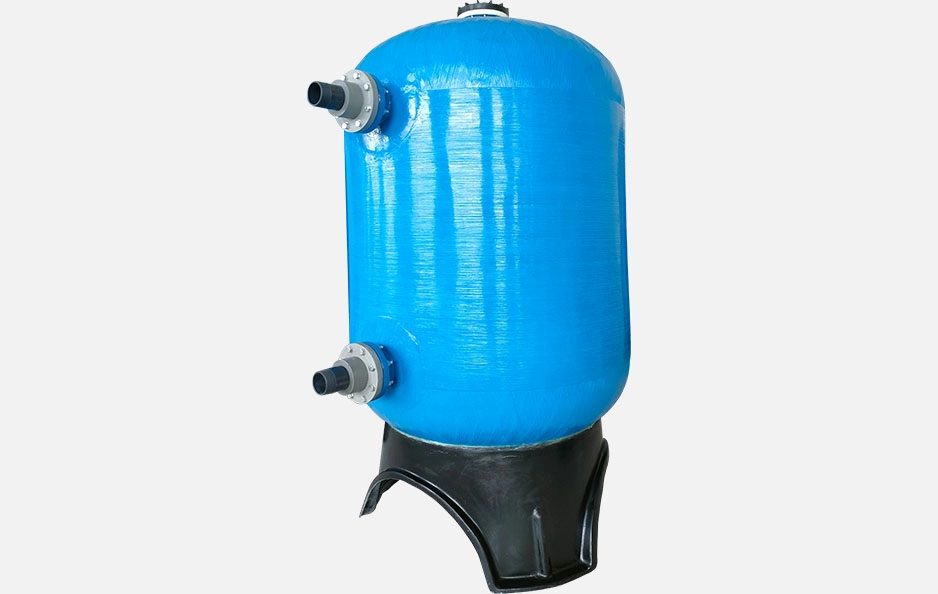
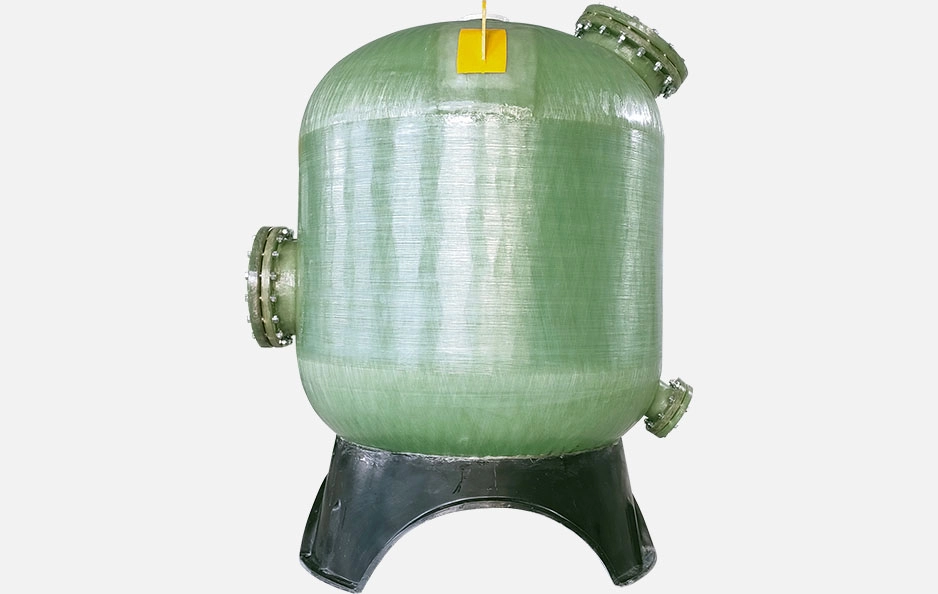
The structural design of FRP pressure vessels relies on composite engineering methods. These methods blend fiber reinforcement with polymer matrices to reach great performance, and these vessels mainly consist of resin matrices. Glass or carbon fibers reinforce these matrices, which provides strong mechanical strength and chemical safety across many industrial situations. The inner shell is a seamless polyethylene layer, and the outer shell consists of top-quality fiberglass embedded in epoxy resin. This two-layer setup makes sure the inside surface stays safe and clean for water contact. Meanwhile, the outside layer gives strong defense against rust and physical impact.
Production methods like CNC-controlled filament winding, blow molding, and multi-arm rotational molding play a key role in the vessel’s strength. The winding method places the fibers exactly along stress lines, which boosts pulling strength while keeping the weight low. Based on the production rules, the working pressure of the product is 150 psi (10.5 bar). It can handle more than 100,000 cycles from 0 to 150 psi without breaking. These features make FRP pressure vessels perfect for uses where high pressure, light weight, and rust resistance are very important.
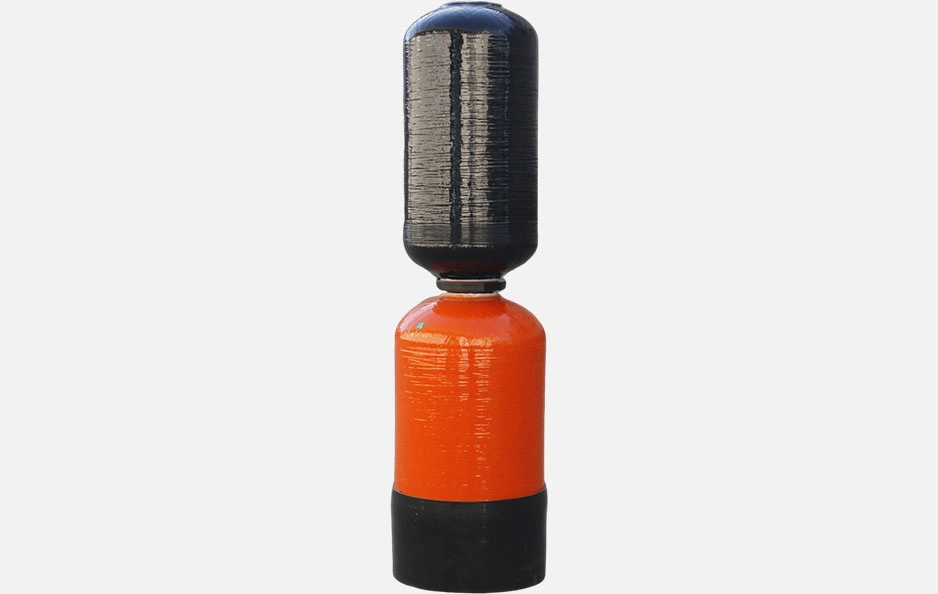
For specialized industrial requirements, our FRP special-shaped customized pressure tank series offers fully customizable configurations that adapt to complex operational environments through advanced fiberglass winding technology.
What Defines the Material Properties of Stainless Steel Tanks?
Workers make stainless steel tanks from metal blends holding chromium, nickel, and iron. People know these elements for their rust defense and lasting power under harsh conditions. Adding chromium creates a protective film on the surface, which stops rusting. At the same time, nickel improves flexibility and toughness. Types like 304 or 316L have different amounts of molybdenum, and this difference changes how well they fight rust caused by chlorides.
FRP composites show different strengths in different directions because of fiber placement. Unlike them, stainless steel is the same in all directions, which offers steady mechanical traits everywhere. This quality makes it very useful in high-pressure or hot places where keeping a steady shape is vital.
Mechanical Performance and Durability
How Do Strength and Flexibility Compare Between FRP Vessels and Stainless Steel Tanks?
FRP vessels show a great strength-to-weight balance, which happens because fiber reinforcements take most of the weight. The resin matrix then spreads the stress out smoothly, which helps them keep their solid shape even during repeated pressure changes or small bumps. FRP membrane housing products hold unmatched benefits over normal steel, plastic, and other materials. They are better at handling pressure, heat, and rust. The natural flexibility in composite materials also lowers the chance of breaking under moving loads.
On the other hand, stainless steel tanks offer more stiffness and bump defense. However, they are heavier to move and set up. They work best in still uses where physical bending must stay low, and might need thicker walls or extra support to perform well over a long time.
How Do Corrosion Resistance and Environmental Tolerance Differ?
How a material fights rust is a key point when choosing between FRP and stainless steel holding systems. FRP materials fight rust from acids, alkalis, and salty conditions without needing extra paint. Their natural lack of reaction removes the need for inner linings, which remains true even in harsh chemical places like desalination plants or wastewater treatment facilities. Still, long sunlight contact or heat past design limits can break down resin matrices over time if not covered well.
Stainless steel fights oxygen damage well. However, it can face spot rusting or crack rusting when touching chlorides or acidic fluids. These conditions happen often in sea or chemical work fields. Therefore, checking the surface health regularly is very important.
Thermal and Chemical Compatibility
Can FRP Pressure Vessels Endure High Temperatures Like Stainless Steel Tanks?
Temperature tolerance varies significantly between these two materials. FRP vessels typically operate within moderate thermal ranges depending on resin formulation; the allowable operating temperature range is -7°C–49°C (19°F–120°F). Beyond this threshold, thermal expansion differences between fiber and resin may cause microcracking or delamination.
Stainless steel keeps its mechanical traits across much larger heat gaps, which works from cold to very hot conditions. This makes it perfect for steam-based setups or hot chemical holding. Heat changes affect composites differently than metals. Metals grow evenly during heating. Composites feel different pulling forces across fiber directions.
How Do Both Materials React Chemically During Industrial Operations?
Chemical matching decides long-lasting trust in process fields. FRP shows great defense against acids, alkalis, salts, oils, and solvents, due to its epoxy-fiberglass makeup. The smooth inner face has good safety against weak acids, alkalis, salts, oils, and other solvents, which makes it fit for water treatment plants dealing with harsh items like chlorine or salty water mixes.
Stainless steel works best with neutral fluids like drinking water or food-safe liquids. But it might need special treatments when touching strong chemicals. Good matching tests should always happen before setup when working with reacting mixes. For small setups needing joined cleaning and softening steps in tight spots, our FRP Central Integration Water Treatment Tank puts many treatment steps into one vessel. This is a smart choice that balances chemical safety with space-saving.
Maintenance, Inspection, and Lifecycle Considerations
What Are the Inspection Requirements for Each Type of Vessel?
Composite builds need modern checking methods because inner flaws are not always easy to see from the outside. Safe testing methods like ultrasonic testing or acoustic emission testing help find layer splitting early, which happens without taking machines apart. FRP vessels require these safe testing methods for finding layer splitting. Stainless steel tanks depend more on looking closely at weld lines and connection points. Rust often starts there. Regular fixing of the protective layer brings back the safe oxide coating. Cleaning soaps or rubbing often harms this coating.
How Long Can Each Vessel Type Last Under Proper Operation?
When manufacturers build them to match strict rules like ISO9001 and NSF marks—as ours are—FRP tanks can give many years of working life. They need very little care if they stay safe from sunlight damage. Our items have passed CE marking, NSF marking, and ISO9001 quality system marking. Stainless steel tanks also give long working lives. However, they might bring higher care costs because of welding fixes or rust control steps over time. Life cost checking should count resting time risks during checking periods. It should also count fixing costs tied to each material type.
Cost Efficiency and Installation Aspects
Which Option Offers Better Value Over Time?
Starting costs differ a lot between these two choices. FRP vessels mostly cost less at the start. Their light design makes building moves easier and lowers shipping costs. Stainless steel setups ask for higher starting money. However, total ownership value depends on application context—installations requiring frequent relocation benefit from lighter composites, whereas fixed industrial plants may prefer metallic robustness despite higher capital costs.
How Does Installation Flexibility Affect Project Planning?
Light composite builds allow easier moving through tight spaces using smaller lifting tools. This is a big plus during updates or roof setups where entry is hard. On the flip side, the heavy weight of stainless steel needs stronger bases. But it gives lasting structural trust once put in place. Our official site details multiple modular assembly options enabling engineers to tailor vessel configurations precisely according to project constraints without compromising safety standards.
Application Suitability Across Industrial Sectors
Where Are FRP Pressure Vessels Most Advantageous?
FRP pressure vessels do great wherever rust defense matters more than heavy weight needs. Examples include desalination plants, dirty water treatment sites, fish farming setups, or chemical-adding units managing acid waste. Their flexible shape also expands their use into special mixing tanks or super-clean water holding setups needing very clean insides.
In Which Scenarios Do Stainless Steel Tanks Dominate?
Industries emphasizing hygiene compliance—like pharmaceuticals or food processing—favor stainless steel due to its smooth surfaces that resist bacterial growth during sterilization cycles. Likewise, petrochemical sectors operating under high pressures depend on metallic containment’s superior rigidity for process safety assurance.
About Hedelong
Hebei Hedelong New Material Technology Co., Ltd., a global leader specializing in advanced water treatment materials, integrates innovation with precision engineering across every stage of production—from CNC-controlled filament winding to rigorous international certification testing. We possess numerous independently developed products and production equipment, making us a leading enterprise in the water treatment fiberglass pressure vessel manufacturing industry. Our expertise covers FRP tanks, RO membrane housings, brine tanks, dosing systems, valves, controllers—and we export these solutions worldwide while maintaining strict adherence to CE and NSF standards through continuous improvement initiatives inspired by professionalism and integrity.
FAQ
Q1: Are FRP pressure vessels safe for potable water applications?
A1: Yes. The inner lining uses food-safe polyethylene. This matches drinking water cleanliness rules. All touching materials are held as safe and clean based on global safety rules.
Q2: Can stainless steel tanks be replaced directly by FRP units in existing facilities?
A2: Replacement feasibility depends on operating temperature and pressure parameters; structural supports may need adjustment since FRP components weigh significantly less than metal equivalents.
Q3: What customization options exist for specialized industrial projects?
A3: We offer fully tailored solutions—including diameter adjustments and custom openings—through our FRP special shape custom pressure tank series, ensuring precise adaptation to each client’s process requirements without compromising performance integrity.