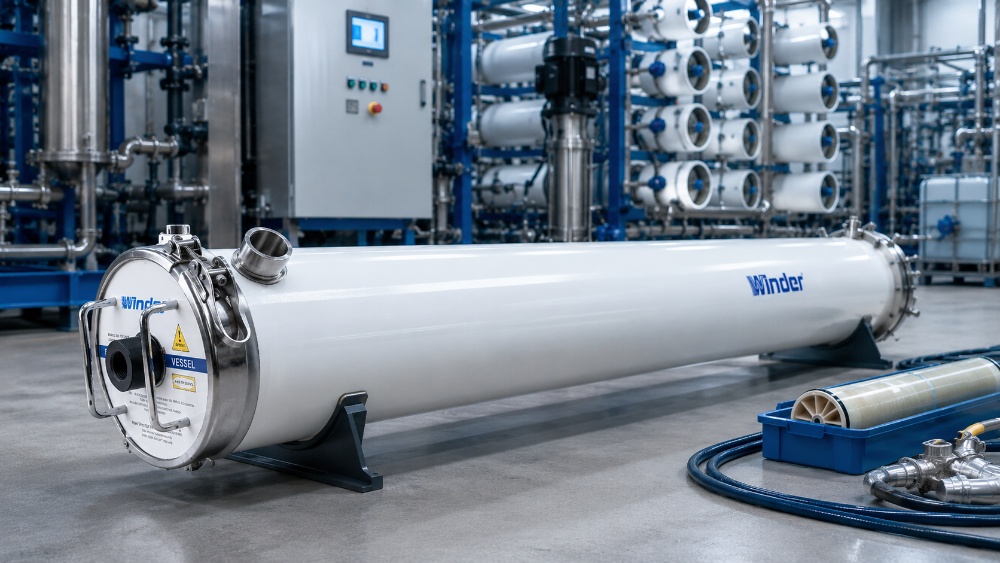

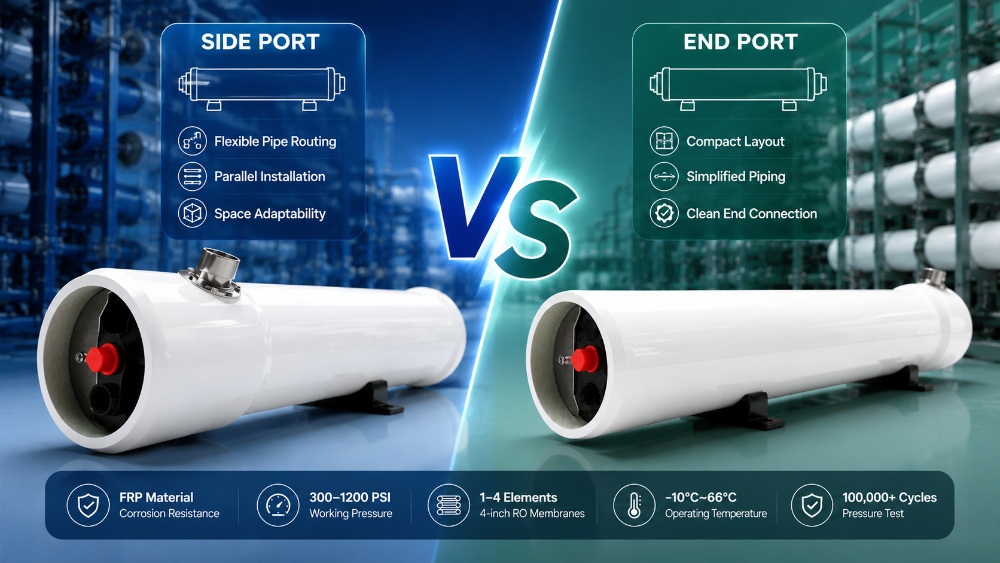
Choosing between a side port and an end port design is not only a product preference. It is a layout decision. A membrane housing may have the right pressure rating and membrane size, but if the port direction does not match the skid layout, installation can become difficult, and future maintenance may take longer than expected.
For buyers comparing a side port RO membrane housing with an end port RO membrane housing, the main factors are pipe direction, available space, membrane quantity, maintenance access, and the overall structure of the RO system. Both designs can serve commercial and small industrial water treatment projects, but they solve different layout problems.
A side port design is often more suitable when the system needs flexible pipe routing or multiple housings arranged in parallel. An end port design is usually better when the project needs a compact, clean, and easy-to-read equipment layout. The better choice depends on how the system will be built, installed, and serviced.
What Makes Side Port and End Port Designs Different?
Side port and end port housings perform the same basic role: they hold RO membrane elements under pressure and protect them during operation. The difference lies in where the water interfaces are placed. That small structural difference can affect pipework, skid size, service access, and installation logic.
A buyer should not choose a reverse osmosis pressure vessel by diameter alone. The same 4 inch ro membrane housing may behave very differently in a real system if its ports are placed on the side instead of at both ends.
Side Port Design Focuses on Flexible Pipe Routing
A side port structure places the raw water and concentrate interfaces on the side of the cylinder, while the product water outlet remains at the end. This arrangement gives system builders more freedom when pipework needs to enter from the side or when several housings are installed in a parallel layout.
This type of RO membrane housing design is useful in compact rack-mounted systems, customized RO skids, and projects where straight end-to-end piping is not the most efficient layout. It can help reduce awkward pipe turns and make the internal equipment arrangement easier to plan.
End Port Design Focuses on Compact End Connection
An end port structure places the inlet and outlet interfaces at both ends of the membrane housing. This creates a more regular structure and supports cleaner pipe routing when the system design allows water to enter and leave from the ends.
For many commercial RO systems and small industrial units, this design can simplify equipment planning. The pipe path is easier to read, the structure looks more organized, and the system may be easier for installers to assemble when end clearance is available.
Product Comparison: 4-Inch Side Port vs 4-Inch End Port RO Membrane Housing
The clearest comparison comes from looking at two housings with the same general membrane size. A 4 inch ro membrane housing can serve many commercial and small industrial applications, but the side port and end port versions support different installation habits.
| Connection structure | Raw water and concentrate interfaces are located on the cylinder side | Inlet and outlet interfaces are located at both ends |
| Main layout advantage | More flexible pipe layout | More compact and regular structure |
| Membrane compatibility | 1–4 standard 4-inch RO/NF membrane elements | 1–4 standard 4-inch RO membrane elements |
| Pressure range | 300–1200 PSI | 300–1200 PSI |
| Better for | Parallel installation, compact rack-mounted integration, complex piping | Clean end connection, compact skid layout, simplified pipe installation |
| Typical applications | Commercial drinking water, small industrial RO, material separation, brackish water desalination | Commercial direct drinking water, food and beverage processing, small industrial desalination |
| Main buyer concern | Whether side piping leaves enough service clearance | Whether end access is enough for membrane removal |
The pressure range and membrane compatibility are similar, so the real choice is not about which housing is stronger in every case. It is about which layout fits the system. A side connection may solve pipe congestion in one skid, while an end connection may create a cleaner and simpler installation in another.
For buyers comparing more membrane housing options beyond these two 4-inch structures, the wider RO membrane housing range can help place side port and end port designs within the full product line.
When Should Buyers Choose the Side Port Design?
A side port design is often the better choice when pipe direction is difficult to control or when several pressure vessels must work within one compact frame. It gives engineers more layout freedom, but that freedom still needs proper planning.
Systems with Side-Access Piping
Some RO skids are built inside narrow frames or equipment cabinets where end-to-end pipe routing would create congestion. In these cases, side-access piping can make the system easier to assemble and inspect.
A side port ro membrane housing can help when raw water and concentrate lines are easier to connect from the side. This can be especially useful in equipment where pumps, pretreatment filters, gauges, and control valves already occupy the end area.
Parallel Membrane Housing Arrangements
Side port structures are also useful when multiple housings are arranged in parallel. Parallel installation often requires centralized piping, and side access can make the pipe network easier to organize.
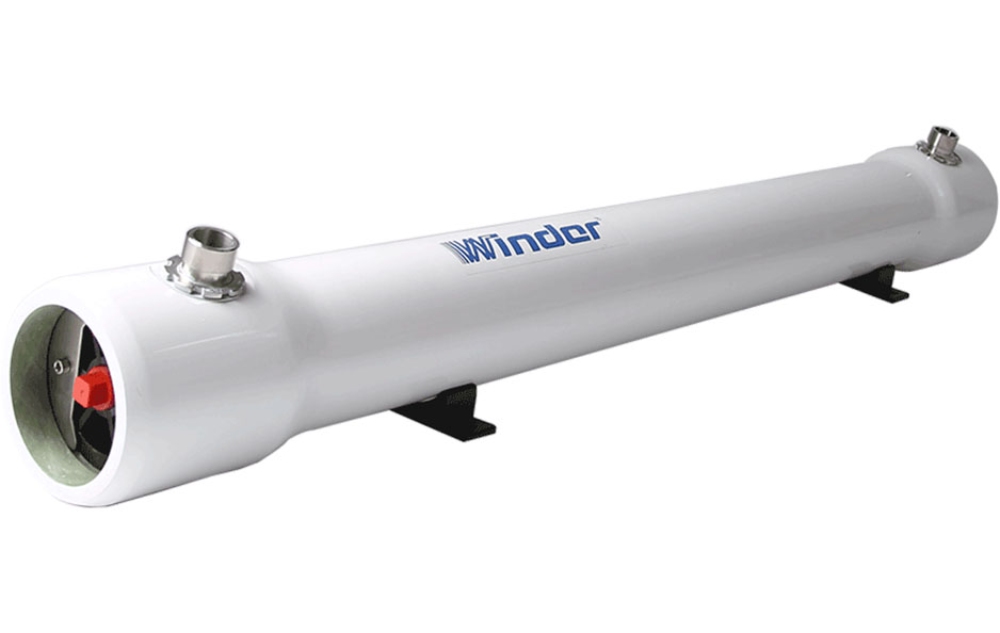
The 4-inch side port RO membrane housing is designed with a side connection structure and can accommodate 1–4 standard 4-inch RO/NF membrane elements. Its 300–1200 PSI pressure range supports different commercial and small industrial RO requirements, including applications where flexible pipe layout is a key concern.
Projects with Limited End Space
Some systems have enough side clearance but limited end clearance. In that situation, a side port structure may help reduce pressure on the end area. However, buyers should still leave enough space for membrane removal and end cover service. Side piping should never block practical maintenance.
This is where layout review matters. A side port option can improve installation only when the surrounding equipment leaves enough room for operation, inspection, and later servicing.
When Should Buyers Choose the End Port Design?
An end port design is usually more suitable when the RO system has a clear end-to-end flow path and enough space around both ends of the vessel. It favors order, simplicity, and compact structure.
Systems That Need Clean End-to-End Pipe Routing
If the main pipework naturally enters and exits from both ends, an end port RO membrane housing can make the system cleaner. The inlet and outlet positions are easy to identify, and the pipe path often looks more regular.
This can help installers reduce unnecessary turns, avoid tangled pipework, and create a more organized system layout. It is especially useful when the RO skid follows a standard structure rather than a highly customized pipe direction.
Compact Commercial and Small Industrial RO Skids
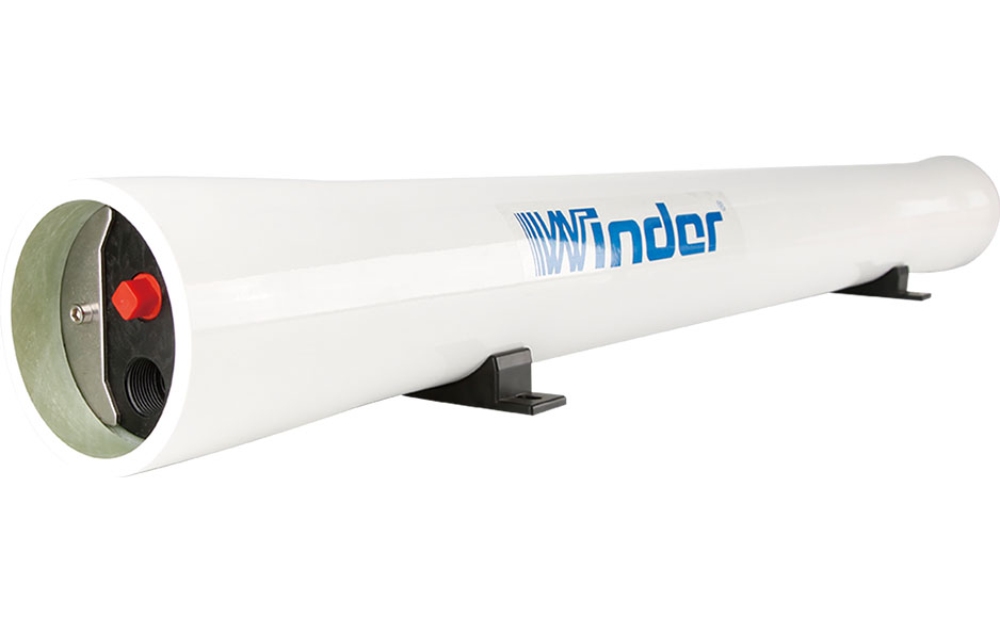
The 4-inch end port RO membrane housing is made from FRP and uses an end-port structure with interfaces placed at both ends. It supports 1–4 standard 4-inch reverse osmosis membrane elements and covers 300–1200 PSI pressure ratings.
This makes it suitable for commercial direct drinking water systems, food and beverage processing, and small-scale industrial desalination projects. In these applications, a compact and regular layout can reduce installation difficulty and make later inspection easier.
Projects That Prioritize Regular Equipment Appearance
Some buyers care about more than system function. They also need a clean equipment layout for distributors, project owners, or end users. End port designs can support that goal because the connection logic is easier to follow.
For standard commercial RO units, small industrial skids, and modular systems, this structure can improve the visual and practical order of the equipment. It may also make training easier for maintenance teams, since the pipe direction is more direct.
How to Decide Between the Two Designs
The side port versus end port decision should be made after reviewing the system layout. A buyer should compare the space around the housing, the pipe direction, the number of membrane elements, and the maintenance plan before confirming the final model.
Check the Main Pipe Direction
If pipes need to enter from the side due to skid layout or equipment position, a side port design may be more practical. If the system has a clear end-to-end route, the end port option may create a simpler installation.
Confirm Membrane Quantity and System Scale
Both 4-inch models can support one to four standard 4-inch membrane elements. This makes them suitable for many commercial and small industrial projects. However, the number of elements still affects housing length, frame design, and service clearance.
For a compact commercial RO unit, one or two elements may be enough. For a larger small-scale industrial system, more elements may be required. The port design should match that physical layout.
Match Pressure Rating to Real Operating Conditions
Both designs cover 300–1200 PSI across different model options. The final choice should match feedwater quality, membrane type, pump design, recovery target, and safety margin. A pressure rating should not be selected only because it appears higher.
A reverse osmosis pressure vessel must fit the actual engineering conditions. Over-specifying can raise cost, while under-specifying can create safety and reliability concerns.
Review Maintenance Clearance
Membrane replacement, seal inspection, and end cover operation all require working space. The port structure should not make these tasks difficult. Buyers should check whether side piping blocks access or whether end connections leave enough room for membrane removal.
This is often where early drawings help. A simple layout review can prevent expensive changes after the system has already been built.
Where Hedelong’s 4-Inch Side and End Port Options Fit
At Hedelong, we supply water treatment equipment and related accessories, including FRP tanks, membrane housings, brine tanks, dosing tanks, water storage tanks, water distributors, filters, softeners, valves, and controllers. In this article, the key comparison remains focused on two 4-inch membrane housing designs.
The side port model is more suitable for projects that need flexible side piping, parallel housing arrangements, or compact rack-mounted integration. It fits commercial water purification, small industrial RO equipment, material separation, and brackish water desalination where pipe routing is more complex.
The end port model is more suitable for projects that need a compact structure, simplified pipe installation, and cleaner end-to-end connections. It fits commercial direct drinking water systems, food and beverage processing, and small-scale industrial desalination, where layout order and service access both matter.
Neither design is automatically better. The better design is the one that makes the complete RO system easier to install, operate, and maintain.
Conclusion: Choose by Layout, Not by Name
Side port and end port designs should not be chosen by label alone. The correct choice depends on pipe direction, skid space, membrane quantity, pressure rating, and maintenance access.
A side port design is often more useful when the system needs side-access piping, parallel installation, or flexible pipe routing. An end port design is often better when the system needs clean end-to-end pipe routing, compact structure, and a regular equipment layout.
For a stable RO system, the membrane housing should fit the full equipment design, not just the membrane size. If the layout is still uncertain, share the membrane size, pressure rating, pipe direction, and maintenance space with our team to review a suitable side port or end port configuration before ordering.
FAQ
Q: What is the main difference between the side port and the end port RO membrane housing?
A: A side port housing places raw water and concentrate interfaces on the cylinder side, giving more pipe layout flexibility. An end port housing places interfaces at both ends, supporting a cleaner and more compact end-to-end structure.
Q: Is the side port RO membrane housing better for parallel installation?
A: It can be more suitable when several membrane housings need side-access piping or centralized pipe routing. Buyers should still check service clearance, pipe direction, and skid space before choosing the final design.
Q: When should buyers choose an end port RO membrane housing?
A: Buyers should consider an end port design when the system has enough end clearance, needs a regular equipment layout, and benefits from simpler pipe installation in commercial or small industrial RO applications.