

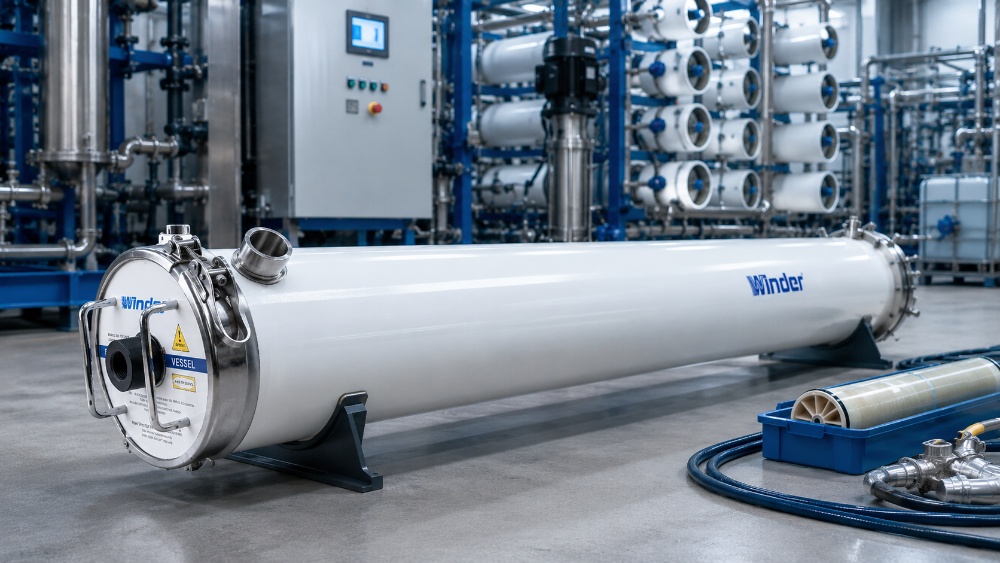
Industrial RO systems are working under heavier pressure in 2026. More factories are reusing wastewater, reducing discharge, and pushing reverse osmosis units to run with higher recovery and tighter water quality control. When membrane performance drops, the result is not only lower permeate flow. It can also mean higher energy use, unstable conductivity, unplanned shutdowns, and earlier membrane replacement.
Offline membrane cleaning gives operators a more controlled way to deal with difficult fouling. Instead of circulating chemicals through the whole installed array, the membrane element is removed, cleaned separately, rinsed, and checked before it returns to service. This method is useful when routine cleaning-in-place cannot restore performance well enough or when one element needs closer inspection.
Why Offline Cleaning Matters for RO Maintenance
Industrial water treatment is becoming more complex. Feedwater may contain suspended solids, hardness, organics, biological load, oil traces, or concentrated salts. Even with good pretreatment, membrane elements can gradually lose capacity. A planned cleaning strategy helps operators avoid late reactions and emergency replacement.
Higher Reuse Targets Create More Fouling Risk
Water reuse often means RO systems handle tougher feed streams. Wastewater recovery, cooling water reuse, brackish water treatment, and zero liquid discharge projects can increase scaling and organic fouling risk. In these cases, cleaning should not wait until the system becomes unstable.
A plant should track normalized permeate flow, differential pressure, salt rejection, recovery, and feedwater quality. When performance changes repeatedly after normal RO membrane cleaning, the system may need deeper diagnosis.
CIP Is Useful, but It Has Limits
Cleaning-in-place is still the first option for many plants because it is fast and does not require removing membrane elements. It works well for moderate fouling when chemical flow is evenly distributed.
The limitation appears when fouling is uneven. The first element may collect more particles, while later elements may face higher concentration and scaling. A single cleaning cycle may not treat every element with the same effect. Offline membrane cleaning helps isolate the element that needs deeper treatment, instead of treating the whole array as one unit.
Key Signs That a Membrane Needs Deeper Cleaning
Operators should not rely on one data point. A better decision comes from trends across flow, pressure, and permeate quality.
Declining Permeate Flow
A steady drop in permeate flow is a common warning sign. Before starting chemical cleaning, operators should check feed pressure, temperature, recovery, and instrument accuracy. If these factors are stable and flow continues to fall, fouling is likely.
Rising Differential Pressure
Differential pressure increases when water passes through a restricted flow channel. Particles, biofilm, colloids, and scale can all create this problem. If pressure rises again soon after CIP, membrane fouling cleaning should be reviewed more carefully.
Unstable Permeate Quality
Higher permeate conductivity may come from fouling, seal damage, chemical attack, or membrane aging. Removing and testing a single element can help separate a recoverable element from one that should be replaced.
Online Cleaning vs Offline Cleaning
Online and offline methods should work together. One is not always better than the other; each fits a different maintenance goal.
Online cleaning is suitable for routine maintenance. It reduces handling work and allows a quick cleaning cycle while the elements remain in the system. For many industrial RO systems, this is enough when fouling is light or moderate.
Offline cleaning is more useful when performance recovery is poor, fouling is uneven, or operators need to inspect one membrane element separately. It allows better control over chemical contact, soaking time, rinsing, and post-cleaning testing. For service companies, it also supports batch cleaning and clearer performance records.
A practical rule is simple: use CIP for regular control, and use offline treatment when the system needs element-level diagnosis or deeper recovery.
Practical Workflow for Offline RO Membrane Cleaning
A clean workflow reduces handling errors and helps operators compare results from one cleaning cycle to the next. Exact chemical choice should follow membrane supplier guidance, but the maintenance process usually follows several steps.
Remove and Inspect the Element
The element should be removed carefully to avoid damage to the outer wrap, brine seal, permeate tube, and end surface. Visual inspection can show deposits, discoloration, odor, seal wear, or mechanical damage. These clues help identify whether the fouling may be inorganic scale, organic matter, biofilm, or suspended solids.
Select the Cleaning Solution
Acid cleaners are often used for mineral scale, while alkaline cleaners may help with organic or biological fouling. Mixed fouling may require a staged process. The cleaning vessel must handle repeated chemical contact without corrosion or leakage, especially when acids, alkalis, or oxidizing agents are used within approved membrane limits.
Clean, Rinse, and Check Recovery
A typical process includes circulation, soaking, flushing, and clean-water rinsing. After cleaning, the element should be tested under controlled conditions. Useful records include flow before cleaning, flow after cleaning, differential pressure, conductivity, chemical type, cleaning duration, and final decision.
Good records turn membrane fouling cleaning into a maintenance system, not a one-time reaction.
How to Choose an 8 Inch Membrane Housing for Cleaning
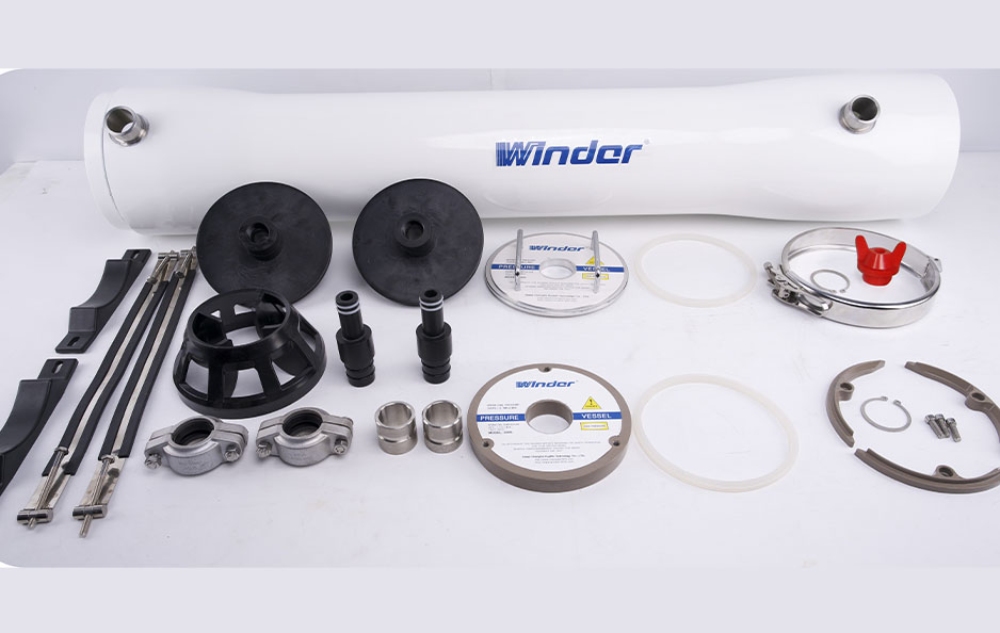
A cleaning housing should be selected for repeated maintenance work, not only for pressure containment. Chemical resistance, quick opening, membrane compatibility, and safe sealing all matter.
Material and Chemical Resistance
Repeated cleaning can expose the vessel to acidic or alkaline solutions. A FRP membrane housing is often used in water treatment because fiberglass-reinforced plastic offers corrosion resistance and lighter handling compared with many metal structures. For chemical cleaning duties, this can reduce long-term maintenance concerns.
Quick Loading and Unloading
Frequent element handling is part of offline work. If the vessel is slow to open or difficult to seal, the cleaning process becomes less efficient. A quick-disassembly design helps operators load, clean, rinse, inspect, and remove elements with less labor pressure.
Pressure and Element Compatibility
A proper 8 inch membrane housing should match the membrane size, cleaning pressure, connection design, and maintenance workflow. In many industrial plants, standard 8-inch RO or NF elements are the main cleaning target.
The 8-inch Offline Membrane Cleaning FRP Membrane Housing is designed for single-element offline cleaning. It supports standard 8-inch membrane elements used in RO/NF cleaning workflows, has a 300 PSI design pressure, operates within pH 3-11, and works within -10°C to 66°C. Its quick-disassembly structure makes repeated element removal and installation more efficient during cleaning work.
How Dedicated Equipment Reduces Downtime
Cleaning downtime is expensive when RO water supports boilers, electronics production, chemical processes, food processing, or wastewater reuse. The goal is to restore membrane performance while keeping maintenance predictable.
A dedicated cleaning setup helps teams prepare before shutdown. Operators can arrange chemicals, seals, tools, test procedures, and spare elements in advance. When elements need to be removed, the cleaning process can start quickly instead of waiting for equipment preparation.
For large plants or service providers, the benefit is repeatability. Elements can be cleaned, tested, sorted, and documented in a consistent way. This supports better replacement decisions and helps avoid throwing away membranes that could still recover.
Hedelong manufactures water treatment equipment and related accessories, including FRP tanks and membrane housings. When buyers need help matching size, pressure, cleaning use, or connection requirements, its service support can assist with project selection.
Best Practices for Long-Term RO Cleaning Control
A good cleaning plan starts before fouling becomes severe. Operators should normalize performance data and set action points for flow decline, pressure increase, and conductivity change. Waiting too long can reduce cleaning success and shorten membrane life.
Pretreatment should also be reviewed after each cleaning cycle. If fouling returns quickly, the root problem may be poor filtration, antiscalant mismatch, biological growth, high recovery, or unstable feedwater. Cleaning restores performance, but root-cause control protects the whole RO system.
Plants that use many 8-inch elements should also consider spare elements and a planned offline path. This allows production to continue while fouled elements are cleaned separately. For critical systems, that preparation can reduce downtime and improve maintenance confidence.
Conclusion
Offline cleaning is not a replacement for good pretreatment or routine CIP. It is a deeper maintenance method for cases where element-level control is needed. In 2026, as water reuse and stricter water quality targets push RO systems harder, operators need cleaning strategies that protect flow, quality, and uptime.
A reliable plan should define when to use online cleaning, when to remove individual elements, how to select cleaning chemicals, and how to judge recovery after treatment. The right FRP membrane housing can make this process more efficient, especially when standard 8-inch elements require repeated single-element cleaning.
For projects that need a dedicated cleaning solution, speak with our technical team to discuss pressure requirements, chemical conditions, connection needs, and project compatibility.
FAQ
Q: What is offline membrane cleaning in an RO system?
A: It removes membrane elements from the RO system and cleans them separately under controlled conditions.
Q: When should operators choose offline cleaning instead of CIP?
A: It is suitable when fouling is severe, uneven, or difficult to recover through normal CIP.
Q: Why use a dedicated cleaning housing for 8-inch membranes?
A: It supports single-element cleaning, easier handling, and controlled chemical cleaning workflows.