


Choosing the right PE dosing tank is no longer a small purchasing detail. In modern water treatment systems, the tank affects dosing accuracy, refill frequency, maintenance rhythm, operator safety, and the stability of the wider chemical dosing system. That matters more in 2026 because water reuse is moving deeper into industrial operations, PFAS monitoring rules are tightening in Europe, and more facilities are using digital tools for real-time compliance and process control. A dosing tank does not solve those pressures by itself, but it supports the chemical feed steps that keep treatment lines stable every day.
A good selection process starts with a simple principle: pick the tank for the duty, not for the catalog photo. Capacity matters, but material, construction, level visibility, site access, and fit with the dosing pump matter just as much. In many projects, the right chemical dosing tank is the one that reduces small daily problems before they grow into downtime, wasted chemicals, or hard-to-track operating drift.
Why PE dosing tank selection matters more now
Water treatment has become more demanding on two fronts. First, operators are expected to run tighter processes with less waste. Second, projects are being designed with more pressure on reuse, reporting, and operating consistency. EPA’s Water Reuse Action Plan 2.0, released on April 16, 2026, puts fresh emphasis on reuse for industry, technology, and energy sectors, while also calling for validation, monitoring, and digital solutions that improve compliance and risk management. That changes the context for any water treatment dosing tank. It is no longer just a place to hold chemicals. It is part of a controlled operating system.
In practical terms, buyers now need a PE dosing tank that fits normal plant work. It has to be easy to move into place, easy to check during rounds, and dependable when the line runs every day. It also needs to fit a real chemical dosing system rather than sit beside it as an afterthought. Tanks that look acceptable on paper can become inefficient when refill access is poor, the size is mismatched to demand, or level checks are too rough for consistent dosing.
Start with material and construction
Why HDPE remains a strong choice
For many routine dosing duties, an HDPE dosing tank remains a practical choice because it combines low weight, good toughness, and reliable day-to-day handling. That matters in water treatment rooms where tanks may be repositioned during installation, checked often by operators, and exposed to vibration, splashing, and variable ambient conditions. A rigid but overly fragile tank can become a maintenance problem. A tank that is too heavy for its size can create unnecessary friction during handling.
That is why we place material first in the selection process. A PE dosing tank built fully from HDPE makes sense when the goal is steady service, simpler handling, and fewer joint-related issues. In our experience, buyers often focus too much on nominal volume and too little on how the tank will actually behave once it is in use.
Why one-piece molding matters
Construction quality is where a chemical dosing tank either earns trust or loses it. One-piece blow-molded construction reduces the risk that joints become the weak point over time. That does not guarantee perfect performance in every chemical environment, but it gives the tank a cleaner structural baseline for common dosing work.
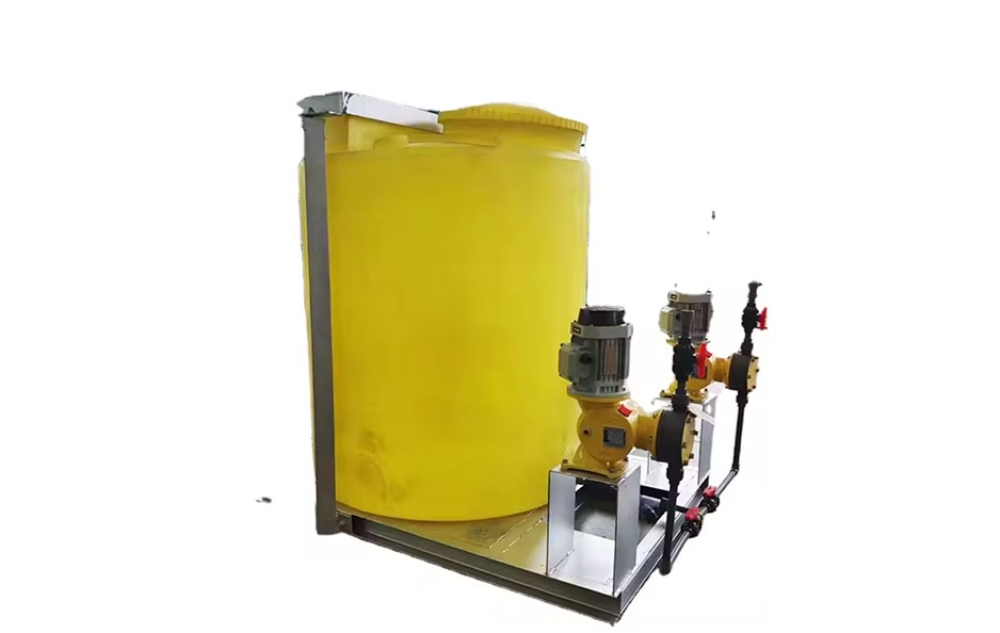
At Hedelong,our PE dosing tank series is built from HDPE and uses one-piece blow molding with no adhesive joints. The range covers 40L, 60L, 100L, and 200L, and the tank wall includes volume markings that make daily checks easier. The series is also designed to stay lightweight, resist vibration and impact, and reduce cracking risk during normal handling. Those are not decorative details. They are the small features that make an HDPE dosing tank more useful in real plant conditions.
Size the tank by dosing duty, not by habit
Match capacity to actual chemical use
A common mistake is to choose the biggest tank that fits the room. That can work in some cases, but it is not a reliable rule. The better method is to size the PE dosing tank around daily or weekly chemical consumption, refill frequency, available floor space, and the level of operator attention the line will receive.
Small and mid-size tanks are often the better choice when the goal is easier chemical rotation, cleaner housekeeping, and faster visibility during inspection rounds. A 40L or 60L tank can be practical where consumption is modest and space is tight. A 100L tank often works well as a balanced option in standard dosing duties. A 200L tank is more attractive when refill intervals need to be longer, or chemical demand is less predictable. The right answer depends on the process, not on habit. Our current series covers those four capacity points, which makes it easier to match volume to the duty rather than force one tank size into every application.
Think about refill rhythm and storage discipline
Tank size also changes how people work. If the tank is too small, operators refill too often and lose time. If the tank is too large for the application, chemicals may sit longer than necessary, floor area is wasted, and the system becomes harder to manage neatly. A water treatment dosing tank should support a disciplined refill routine, not fight against it.
This is where many buyers benefit from stepping back and asking a simple question: what refill rhythm will keep the process stable without adding routine burden? That question usually produces a better answer than asking only which model has the lowest unit price.
Pay attention to daily-use details
Level visibility is more important than it looks
Clear level visibility sounds like a minor feature until the site starts operating. Once operators need to confirm fill level quickly, estimate refill timing, or prepare batch additions, markings on the tank wall become useful every day. On a busy line, anything that cuts down rough guesswork helps. That is one reason outer-wall markings are worth treating as a selection point rather than a cosmetic extra. Our PE dosing tank series includes those markings for exactly that reason.
Light weight and impact resistance reduce operating friction
A chemical feed tank should not create unnecessary work during installation or routine service. Light weight helps with movement and positioning. Impact resistance helps when equipment rooms are busy and tanks are exposed to ordinary knocks, vibration, or tight working clearances. These points are not dramatic, but they shape day-to-day reliability. The best tank is often the one that quietly avoids service calls.
Clean layout matters
Even a well-built chemical dosing tank can become inconvenient if the surrounding layout is poor. Buyers should check floor footprint, refill access, pump position, tubing runs, and whether operators can inspect the tank without leaning over other equipment. Modern water treatment systems reward a clean layout because the whole line is easier to monitor and maintain.
Fit the tank to the wider chemical dosing system
The tank should never be selected in isolation. In a functioning chemical dosing system, the tank, dosing pump, suction arrangement, control logic, and operating routine all need to work together. That is even more relevant where plants are moving toward automated chemical dosing or broader smart water treatment practices. Digital monitoring and tighter reporting do not remove the need for sound hardware. They make poor hardware choices easier to notice.
A PE dosing tank does not need to be complex, but it does need to fit the process. Buyers should review pump compatibility, expected dosing pattern, access for cleaning and refill, and whether the tank size suits both operating demand and site layout. In industrial water reuse projects, stable chemical feed can directly affect pretreatment consistency and line resilience. In applications touched by PFAS-related compliance pressure, the tank still matters because precise chemical addition often supports pH control, oxidation, coagulation, cleaning support, or other steps around the treatment train. The tank is not the headline technology, but it is part of the operating discipline that keeps the train dependable.
Common buying mistakes that create avoidable problems
One mistake is buying on volume alone. Another is buying on price alone. Both can lead to the same result: a tank that technically fits the spec sheet but adds friction to the job.
A second mistake is treating all dosing duties as equal. Different chemicals, refill habits, and operating routines change what “right size” really means. A tank used for a lightly loaded correction loop is not judged by the same standard as a tank supporting frequent addition on a more variable line.
A third mistake is ignoring usability. If the tank is awkward to inspect, awkward to refill, or awkward to position, people work around it. Once that starts, the value of the original purchase drops quickly.
The last mistake is separating the tank decision from service support. When a project is simple, a straightforward selection may be enough. When the process has space limits, integration questions, or an uncertain dosing rhythm, support becomes part of the product decision.
A practical framework for choosing the right PE dosing tank
For most B2B buyers, the selection process can stay simple if the checklist stays disciplined.
1. Confirm the material
Choose an HDPE dosing tank when low weight, good toughness, and practical site handling are important to the application.
2. Check the construction
Prefer one-piece molded construction where possible. It gives the tank a cleaner structure and reduces dependence on bonded joints.
3. Match the capacity to the duty
Use the real refill plan and actual chemical consumption to choose between 40L, 60L, 100L, and 200L rather than defaulting to the largest model.
4. Look for useful operating details
Outer-wall markings, clean geometry, and manageable handling are all worth checking on a water treatment dosing tank.
5. Review system fit
Make sure the tank works with the wider chemical dosing system, not just with the available floor space.
6. Think about support before purchase
If the site has a tighter layout, special refill rhythm, or integrated skid design, technical help during selection can save time later.
Final thought
The right PE dosing tank is rarely the most dramatic piece of a treatment line, but it often has a clear effect on how stable and efficient the line feels in daily work. When the material is right, the size matches the duty, and the tank fits the wider chemical dosing system, operators spend less time compensating for equipment and more time running the process well.
When a project moves beyond a simple catalog comparison, our service support can help review sizing, layout, and fit with the wider system. If the duty point is still not fully clear, contact us.
FAQ
Q: What is the difference between a PE dosing tank and a general chemical storage tank?
A: A PE dosing tank is selected for controlled chemical feed in a treatment process. A general storage tank may only focus on holding liquid. In water treatment work, a chemical dosing tank usually needs a better fit with pumps, refill routines, and level checks.
Q: How do I choose between 40L, 60L, 100L, and 200L for a water treatment dosing tank?
A: Start with real chemical consumption, refill frequency, and available installation space. Smaller sizes can suit compact systems and lighter demand. A 100L tank is often a balanced choice, while a 200L tank can make sense when refill intervals need to be longer. The best size is the one that matches the duty, not the one that simply fills the room.
Q: Why is an HDPE dosing tank common in automated chemical dosing systems?
A: An HDPE dosing tank combines practical handling, good toughness, and stable daily use. In automated chemical dosing, those basics still matter because the tank supports level management, refill work, and reliable feed conditions around the wider control system.