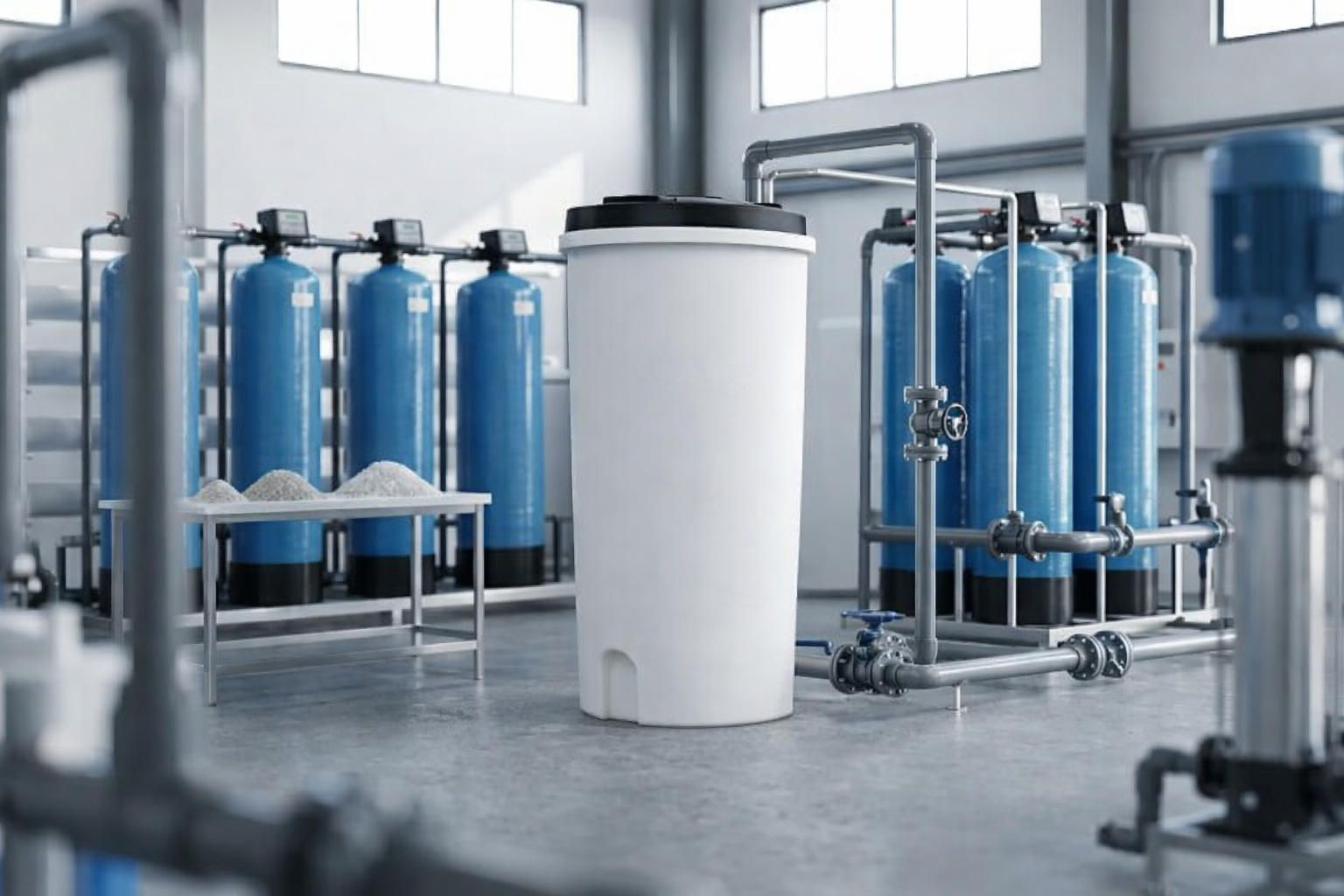

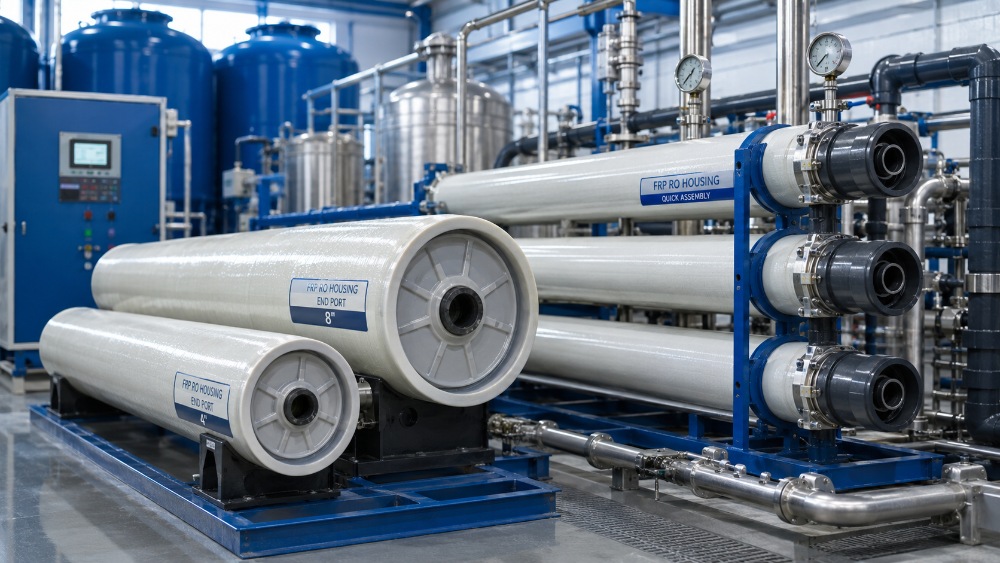
A stable RO system depends on membrane quality, pump sizing, pretreatment design, and the housing that protects each membrane element. For buyers choosing an FRP RO membrane housing, the main question is whether the housing fits the pressure range, membrane size, port layout, cleaning routine, and working environment of the system.
In industrial reverse osmosis systems, a wrong housing choice can cause difficult membrane replacement, poor pipe alignment, unnecessary downtime, or a pressure rating mismatch. A reliable RO membrane pressure vessel should protect the element, hold stable pressure, resist corrosion, and support maintenance. Buyers should also compare size and structure across 2.5-inch, 4-inch, and 8-inch options, including end port, side port, quick-release, and offline membrane cleaning designs.
Why housing selection matters in RO systems
A membrane housing is often treated as a supporting component, but it works under direct pressure. If it is difficult to open, poorly matched to the membrane element, or unsuitable for the water chemistry, issues may appear later during inspection or troubleshooting.
FRP is widely used in water treatment equipment because it offers strength, corrosion resistance, and manageable weight in humid, chemical, or saline environments.
Pressure resistance and system safety
Pressure rating should be checked before price, color, or external appearance. A membrane housing must match the system’s operating pressure, cleaning pressure, and safety margin. A housing with insufficient pressure capacity can create safety risks, while an oversized specification may increase cost without solving the actual project problem.
For small and medium RO systems, 300 PSI housings are often considered where the process conditions match that range. Larger RO systems may require higher pressure options, especially when feedwater quality, recovery target, or membrane type creates higher resistance.
Corrosion resistance in water treatment environments
RO systems may handle municipal water, well water, process water, brackish water, or pretreated wastewater. Each source has a different corrosion profile. A suitable FRP membrane housing helps reduce corrosion concerns in many water treatment environments, especially where traditional metal housings may face coating damage or long-term surface attack.
Buyers still need to check pH range, cleaning chemicals, temperature, and operating pressure. A professional selection process should consider both the normal running condition and the chemicals used during membrane cleaning.
Maintenance access and downtime control
Many RO systems lose time not because the membrane has failed, but because access is inconvenient. If end covers are difficult to remove or membrane replacement requires special tools, routine maintenance becomes slower. This matters for commercial water purification equipment, laboratory water systems, and compact industrial units.
A quick assembly design can be useful when membrane inspection, cleaning, or replacement happens frequently. It allows maintenance teams to shorten service steps and reduce the chance of damage caused by repeated disassembly.
Key factors to check before choosing an FRP membrane housing
Choosing an FRP membrane housing should start with the system requirement, not with the product model. Buyers should check membrane size, element quantity, pressure rating, port design, installation space, and service access in one review. This avoids a common problem: the housing matches the membrane size but not the equipment layout.
Match the housing size with RO membrane elements
Membrane size is the first filter. A 2.5-inch, 4-inch, and 8-inch RO membrane cannot share the same pressure vessel. The number of membrane elements also matters because it affects housing length, system flow, and maintenance space. Compact systems may use one or two elements, while larger systems often use longer housings with multiple elements.
A 4 inch RO membrane housing is often used in commercial water purification, small industrial skids, laboratory pure water equipment, and pilot-scale RO units. It fits systems that do not need 8-inch flow capacity but still require stable pressure support and convenient maintenance access.
Choose the right pressure rating
Pressure rating should be based on real operating conditions. Buyers should check normal operating pressure, peak pressure, cleaning pressure, and the design safety margin. The pressure vessel should also match the membrane manufacturer’s operating conditions and the system integrator’s engineering design.
For many smaller RO systems, a 300 PSI RO membrane pressure vessel can be suitable when feed pressure and process requirements stay within the designed range. For brackish water, seawater desalination, high-recovery systems, or industrial wastewater reuse, higher pressure models may be needed.
Check connection type and installation space
Port layout can affect pipe routing, skid size, and service access. Side port housings may support flexible piping in some industrial layouts, while end port designs can be easier for certain compact systems. Quick assembly structures are useful when maintenance speed is more important than a traditional fixed structure.
Before choosing the final model, buyers should review the available space around the housing. Technicians need enough room to open the end cover, remove the membrane element, check seals, and reconnect pipes.
Main RO membrane housing types buyers should compare
A main-entry guide should not treat every membrane housing as the same product. Buyers can narrow options by membrane size, port structure, and pressure class before checking drawings.
By membrane size: 2.5-inch, 4-inch, and 8-inch housings
A 2.5-inch end port RO membrane housing is built for compact RO systems and can fit 2514, 2521, and 2540 membrane elements. It is available in 300 PSI and 1000 PSI options, making it relevant for small commercial pure water equipment, laboratory ultra-pure water systems, medical devices, and small industrial RO equipment.
A 4-inch end port RO membrane housing serves larger commercial and small industrial systems. It can hold one to four standard 4-inch membrane elements, covers 300 to 1200 PSI pressure ratings, and suits commercial direct drinking water, food and beverage processing, and small-scale industrial desalination projects. For higher flow projects, 8-inch designs may be more suitable.
By port design: end port, side port, and quick-release structures
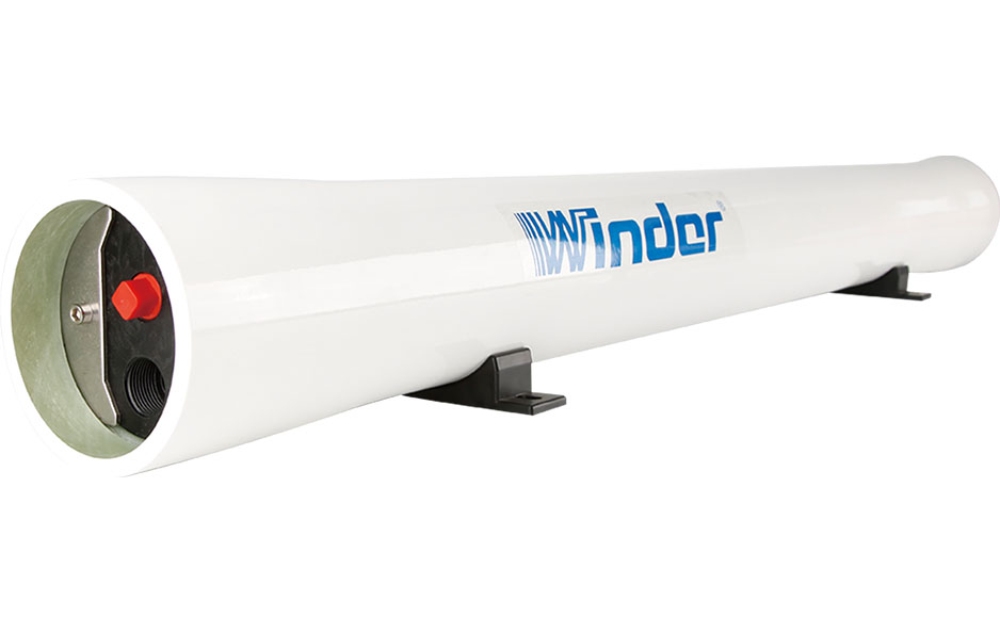
End port housings place inlet and outlet interfaces at both ends, supporting compact layouts and cleaner pipe routing. Side port designs fit different skids, while quick-release structures suit frequent membrane inspection, cleaning, or replacement.
By pressure rating: standard and higher-pressure RO systems
Pressure selection should follow system design. Standard commercial RO systems may use lower pressure classes, while brackish water, seawater, and demanding industrial duty may require higher-pressure vessels and closer engineering review.
Where the 4-inch quick assembly option fits best
A quick assembly option is not meant to replace every standard housing. It fits RO systems where operators need regular membrane access and where one to two 4-inch elements provide enough capacity.
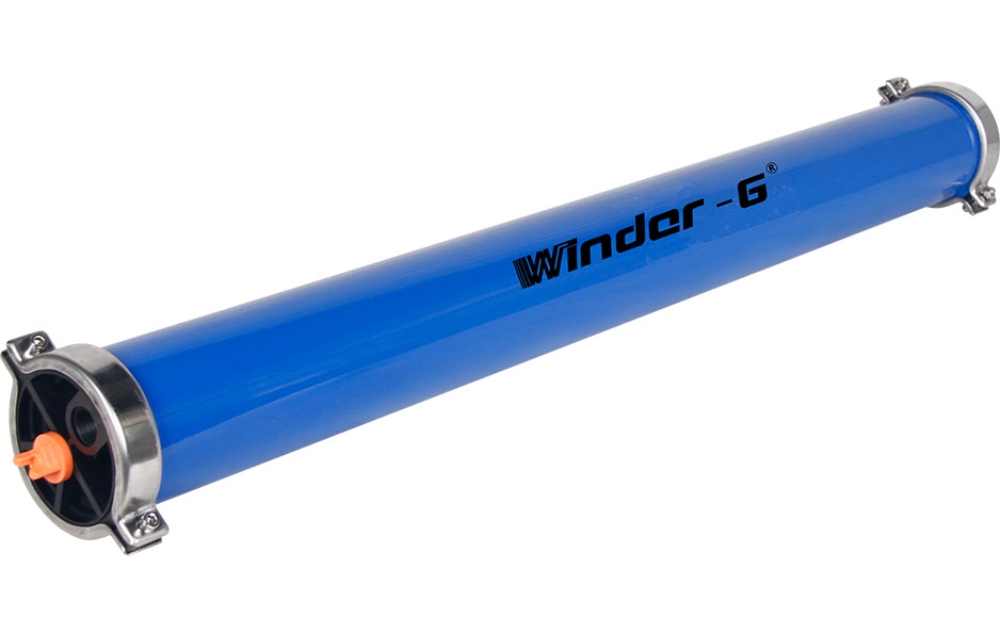
The 4-inch quick-release fiberglass reinforced plastic RO membrane housing uses glass fiber reinforced plastic and a quick detachable structure. It is designed for 300 PSI working pressure and supports one to two standard 4-inch reverse osmosis membrane elements.
This makes it most relevant to commercial water purification, compact industrial RO equipment, and laboratory pure water systems. High-flow or high-pressure projects should compare end port, side port, and larger 8-inch options before selection.
Commercial water purification systems
Commercial RO systems often operate where service time must stay short, such as schools, offices, restaurants, coffee shops, and direct drinking water projects. They may not need an 8-inch housing, but they still need reliable sealing and simple maintenance.
A quick detachable housing can help service teams inspect or replace membranes with fewer steps and less disruption. For distributors, this can reduce training difficulty for local maintenance staff.
Small industrial RO systems
Small industrial reverse osmosis systems are common in food and beverage processing, component washing, process water preparation, and small manufacturing plants. A compact housing helps control skid size while keeping membrane service accessible.
The housing should still be selected together with pretreatment filters, pumps, pressure gauges, and control valves. Convenient housing cannot compensate for poor pretreatment, but it can make performance checks easier.
Laboratory and pure water equipment
Laboratory and pure water systems often require stable operation and clean maintenance routines. Space may be limited, and technicians may need to inspect components without complex tools.
A 4-inch quick assembly structure can support these needs when system pressure and membrane configuration match the design. Buyers should still confirm water quality goals, feedwater conditions, and cleaning procedures.
Buying checklist for membrane housing
A clear checklist helps purchasing teams avoid model mismatch. It also helps suppliers and system builders communicate with fewer errors.
| Selection point | What buyers should check |
| Membrane size | Confirm 2.5-inch, 4-inch, or 8-inch membrane compatibility. |
| Element quantity | Check whether the housing holds one, two, or multiple elements. |
| Pressure rating | Match normal pressure, peak pressure, and cleaning conditions. |
| Port design | Choose side port, end port, or quick assembly based on pipe layout. |
| Maintenance access | Leave room for membrane removal and end cover operation. |
| Water chemistry | Review pH, cleaning chemicals, temperature, and corrosion exposure. |
| Supplier support | Confirm drawings, pressure rating, accessories, and spare parts. |
| Housing type | Compare end port, side port, quick-release, and offline cleaning designs based on layout and maintenance needs. |
| Product range | Check whether the supplier can provide 2.5-inch, 4-inch, and 8-inch housing options for different system scales. |
For buyers comparing models, at Hedelong, we support FRP tanks, membrane housings, brine tanks, dosing tanks, water distributors, water filters, and related accessories. The right housing is the one that fits the system design, maintenance routine, and operating conditions.
Conclusion
Choosing an FRP RO membrane housing requires more than matching diameter and pressure on a product list. Buyers should review membrane size, element quantity, pressure rating, port layout, corrosion exposure, and maintenance access together, especially for export equipment, compact spaces, or local service teams.
A 4 inch RO membrane housing can fit commercial water purification, small industrial RO skids, and laboratory pure water systems when compact size and easy membrane access matter. Smaller systems may use 2.5-inch end port designs, while higher-flow projects may require 4-inch or 8-inch housings with another port structure.
If your project has uncertain pressure requirements, space limits, or membrane replacement concerns, share your system details with our team for a more suitable housing configuration before procurement.
FAQ
Q: What is the main role of an RO membrane housing?
A: It protects the RO membrane element, supports operating pressure, keeps the membrane sealed inside the system, and allows technicians to inspect, clean, or replace the membrane when needed.
Q: How do buyers choose between 2.5-inch and 4-inch end port housings?
A: A 2.5-inch design fits compact RO equipment using 2514, 2521, or 2540 membrane elements. A 4-inch end port housing fits larger commercial or small industrial systems using one to four standard 4-inch elements.
Q: How should buyers choose between end port and quick assembly designs?
A: End port designs help compact pipe routing and regular equipment layouts. Quick assembly designs are better when membrane inspection, cleaning, or replacement happens often.