

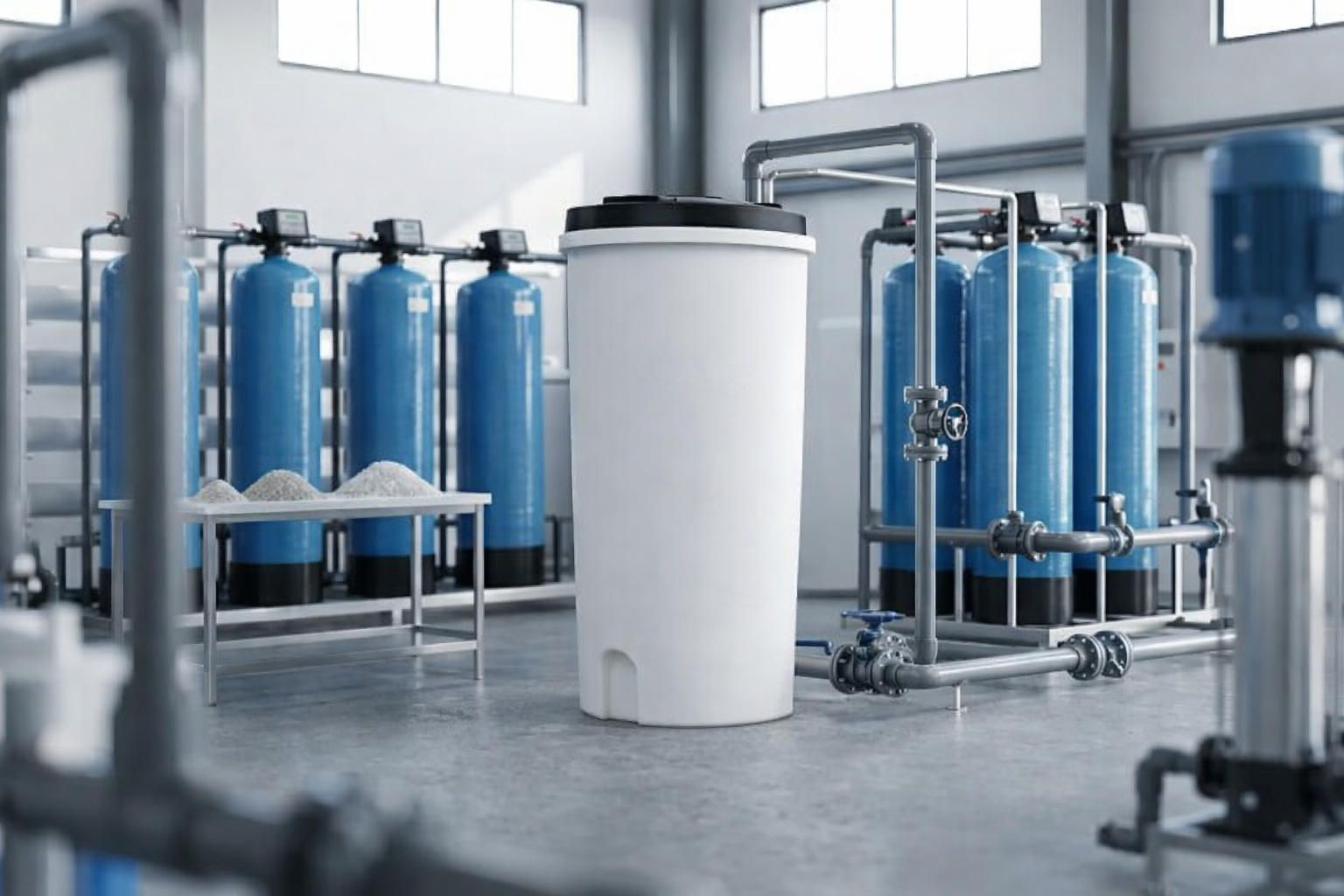
Plant managers face a distinct set of hardware challenges as environmental regulations tighten globally. Pushing sustainable operations from a corporate ideal to a strict legal necessity requires a deep audit of site infrastructure. In the field of industrial water softening, the containment units holding concentrated salt solutions take a heavy chemical beating daily. If a structural failure happens at this specific point, it leads directly to groundwater contamination, heavy regulatory fines, and forced operational downtime. Finding highly reliable water treatment machinery is now a foundational requirement for any compliant facility looking to modernize.
At Hedelong, we recognize how vital these specific hardware choices are for long-term site stability. We operate as a high-technology enterprise with over two decades of applied experience across more than 150 countries. Our engineering team focuses entirely on developing leak-proof solutions that help facility operators meet current ecological demands without sacrificing processing speed. We deliberately utilize eco-friendly recycled materials to help industrial sites cut down their carbon footprint while simultaneously upgrading their liquid handling capabilities. Through consistent material testing and design refinement, we have successfully partnered with over 600 clients to build safer, highly resilient water purification networks.
Why Seamless Construction Matters in Water Purification Systems
Look closely at traditional liquid containment units used in heavy industry. Many of these older models rely heavily on adhesive joints or multi-piece welded assemblies. Constant exposure to a highly corrosive salt brine attacks these artificial seams at a rapid pace. Micro-fractures inevitably develop along the weld lines. Eventually, these fractures turn into active leaks, leading directly to the severe pollution of traditional groundwater resources. A failure of this type ruins the workflow of a water purification system and forces the facility into expensive, unplanned site cleanups.
The most effective engineering fix is straightforward in concept but complex in execution: completely remove the joints. A one-piece tank body simply has no adhesive connections to fail over time. It strongly resists cracking under normal pressure and prevents any harmful substances from leaching into the fluid stream. We manufacture these specific units using a high-quality PP/PE composite material. This specialized material delivers exceptional anti-acid, alkali-resistant, and pull-resistant properties, ensuring perfect tightness and absolutely no leakage.
Inside the containment unit, a smooth inner wall creates small liquid resistance and low friction. When salt granules and water interact, a rough surface would normally trap particulates, causing chemical buildup. Our smooth interior prevents this, extending the clearing period and significantly lowering maintenance costs over a lifespan that can exceed 50 years in normal pressure working environments. The hardware handles extreme thermal variations effortlessly, operating safely between -100 degrees and 200 degrees. Furthermore, the composite structure retains excellent impact resistance even in severe low-temperature settings, protecting the system against accidental physical impacts on the factory floor.
Advanced Manufacturing Blow Molding vs Rotational Molding
Building a flawless, single-piece structure requires specific fabrication methods based entirely on the target volume. A single manufacturing process does not work optimally for every size category. We employ dual molding technologies across our production lines to guarantee absolute structural integrity and achieve high ring stiffness up to SN20. This rating makes the equipment nearly impossible to crack under heavy industrial stress.
For capacity requirements falling between 60L and 300L, the blow molding process provides the most consistent results. This technique inflates a heated plastic tube inside a rigid mold, delivering uniform wall thickness and high dimensional precision. Take our compact 60L model, measuring φ380×750mm. The blow molding process gives this unit a dense, highly impact-resistant outer shell capable of withstanding rough handling. We extend this specific method up to the 300L size, which measures φ700×1140mm, to keep the mid-sized units lightweight yet structurally rigid for easy transport.
Larger industrial setups demand a completely different manufacturing tactic. When moving into the massive 500L to 1000L volume range, the rotational molding process becomes an absolute engineering necessity. A heavy-duty 1000L model, carrying dimensions of φ1080×1460mm, relies on slow, heated, biaxial rotation. The rotational molding process builds a thick wall completely free of internal stress, capable of holding immense liquid weight without bulging or deforming. This slow-curing process ensures that corners and edges are naturally reinforced with thicker material. Both manufacturing paths produce a robust, safe solution finished in a clean white color, making visual fluid level checks highly efficient for floor operators.
Sizing Your Tank for Optimal Water Storage and Softening
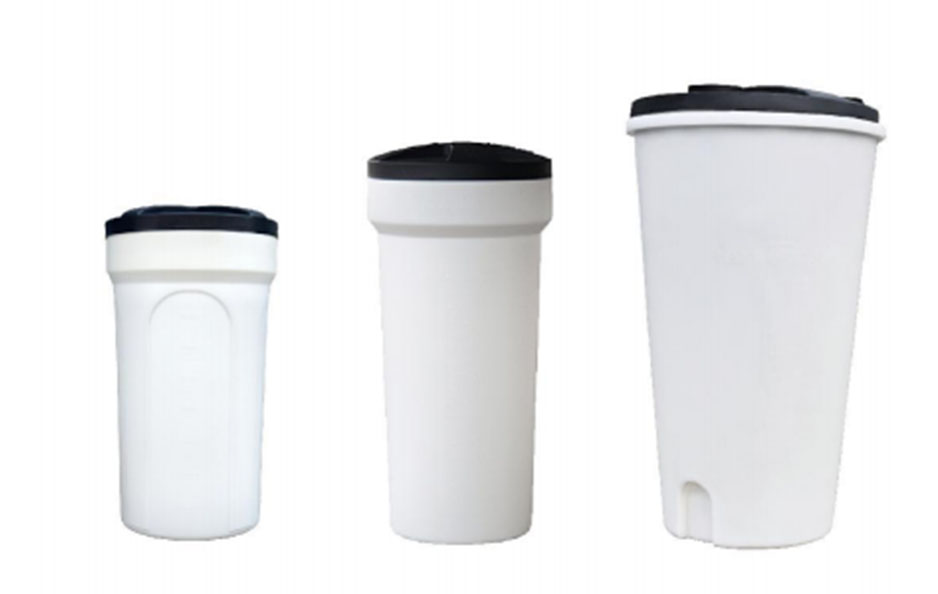
Knowing the exact manufacturing background provides necessary confidence, but facility engineers still must select the correct physical dimensions for their specific site layout. Sizing a PE conical brine tank requires calculating your regeneration cycle frequency alongside the total daily water consumption. Picking a unit that is too small means your maintenance staff will spend excessive hours on manual salt refilling, driving up labor costs. Picking a unit that is vastly oversized wastes premium floor space and creates risks regarding stagnant liquid settling.
Our series utilizes a specific geometric shape to solve common operational flow issues. The conical design deliberately optimizes space utilization in crowded mechanical rooms. More importantly, it maximizes material discharge. A sloping bottom forces the granular salt to settle properly and dissolve rapidly into the surrounding liquid. This gravity-fed design actively prevents the bridging, clumping, and mushing problems that frequently shut down older flat-bottomed units.
This highly practical design geometry fits a wide variety of operational scenarios. An operator might run an industrial water treatment setup requiring multi-layer media, or perhaps need dedicated water softening for a chemical manufacturing line. When managing a centralized filtration system for high-rise residential and commercial buildings such as hotels and resorts, space is often at a premium in basement utility rooms. The vertical, conical design maximizes active volume per square foot. The sizing options accommodate all these distinct needs perfectly. They also function exceptionally well within demanding aquaculture and fish farming filtration systems, or act effectively as a grease trap or interceptor. With precision volumes scaling from a modest 60L up to a massive 1000L, procurement teams can precisely match their fluid management targets across any critical water storage tank deployment.
Comprehensive Service and Expert Support
Acquiring top-tier physical hardware represents only half of a successful facility upgrade. Great hardware needs highly reliable technical backing to function properly over decades. Industrial sites simply cannot tolerate extended downtime caused by missing parts or poor installation guidance. Operators require a complete one-stop water treatment solution rather than a basic transactional parts supplier.
A major operational benefit of our equipment is the heavily simplified setup process. Installation conditions are not affected by weather or climate, allowing construction teams to proceed regardless of outside temperatures. The robust tank design allows the units to be installed freely across flat surfaces, completely removing the need for expensive gravel backfill and heavy machinery coordination. On the production floor, we strictly follow CE and ISO9001 quality management system standards. Our top-notch components regularly carry international certifications like NSF. Our engineering team ensures every single product is 100% tested before delivery through strict quality inspection and pressure testing.
We offer extensive OEM and ODM manufacturing support to fit specialized project parameters, handle sample and small-batch trial orders for testing phases, and utilize highly durable wooden packaging to secure complex export logistics. Long-term facility maintenance requires immediate access to exact replacement hardware. Because of this, we supply a vast inventory of spare parts and accessories, covering critical items like flanges, valves, seals, and water distributors. We back this hardware supply chain with detailed installation guidance and professional after-sales training. A standard 1-year warranty covers our complete machines, while individual components carry specific warranty periods to keep your site operations running without interruption.
Contact Us for Your Custom Water Treatment Machinery Solutions
Upgrading a site’s liquid handling infrastructure demands exact coordination, starting from the first engineering review all the way to final deployment. Every industrial space features distinct limits regarding operating pressure tolerances, material chemical compatibility, and physical floor footprint. We hold the advanced production equipment, specialized mold designs, and deep engineering background required to match your exact facility blueprints.
Choosing seamless, eco-friendly equipment actively protects local ecosystems while cutting long-term site operating costs. Investing in the correct containment geometry prevents unexpected hardware failures and keeps your site fully compliant with strict environmental laws. If your maintenance team is ready to eliminate tank leaks, improve regeneration efficiency, and secure a safer operating environment, reach out to our engineers. Discuss your capacity requirements and specific pressure ratings by deciding to contact us today. Let our technical team integrate highly reliable water treatment machinery into your daily operations and secure a sustainable path forward.
FAQ
Q: Are you a trading company or a manufacturer?
A: Yes, we are a manufacturer handling designing, manufacturing, marketing, and exporting operations. We bring over 20 years of experience to the water treatment industry.
Q: What is the information you need to know before ordering?
A: We require the exact material specifications, the necessary pressure rating for your system, and the total order quantity to provide accurate engineering solutions.
Q: How long is your delivery time for the water treatment components?
A: Production and delivery depend on the specific products ordered. We keep standard items in stock for immediate shipment, while custom configurations require fabrication time. Feel free to contact us for detailed logistics schedules.