
In a semiconductor plant, purified water can lose quality after it leaves the treatment train. The storage stage introduces a new boundary: a headspace, wetted surfaces, nozzles, seals, instruments, drains, and a circulation pattern. That is where ultrapure water contamination often starts, especially when the tank is treated as a passive buffer rather than part of the high-purity water system.
A practical prevention program connects the vessel design with residence time, gas exposure, cleaning, monitoring, and maintenance. The goal is not to promise that one tank material solves every UPW risk. The goal is to make each contamination route visible, testable, and manageable before the equipment is released for production.
Map the Contamination Routes Before Selecting the Tank
A useful review begins with the water path, not the tank name. Trace the line from the final RO, polishing, or deionization stage to the storage inlet, then through the outlet, return loop, sampling points, and point-of-use branches. Mark every place where air, particles, chemicals, or personnel can reach the water.
Air, Particles, and Gas Exchange
A vented tank changes headspace volume as the liquid level rises and falls. Depending on the vent arrangement and room conditions, that air path may introduce particles or moisture. Gas exchange can also change the chemistry of low-conductivity water. This does not make every conventional vessel unsuitable, but it does make the headspace a design item that deserves the same attention as the outlet nozzle.
A nitrogen-sealed arrangement uses a nitrogen space above the water to separate the stored liquid from ambient air. The project purpose is straightforward: reduce one route for secondary contamination between purification and distribution. Nitrogen sealing does not replace polishing, sanitation, recirculation, or point-of-use monitoring. It addresses the storage boundary only.
Wetted Surfaces and Maintenance Openings
Contamination can also come from the tank interior, gaskets, valves, level probes, sample fittings, or an opening that is difficult to clean. A custom nozzle may be necessary for the process, yet every extra connection creates another inspection and maintenance boundary. The approved drawing should show the openings, internal access, drain path, and the equipment connected to each port.
The same review applies to an FRP vessel. Corrosion resistance and impermeability are useful material properties, but they do not by themselves prove compatibility with a semiconductor water specification. The proposed liner, resin system, laminate, seals, fittings, cleaning agents, and temperature range must be checked as one wetted-surface package.
Use a Tank Construction That Matches the Water Quality Plan
For high-purity storage, material selection is not a brochure-level decision. It is tied to the water chemistry, sanitization method, operating temperature, required cleanliness, and the consequences of an out-of-specification event. A supplier should identify which surfaces contact the water and which components sit inside the controlled boundary.
What the Nitrogen-Sealed Design Can Address
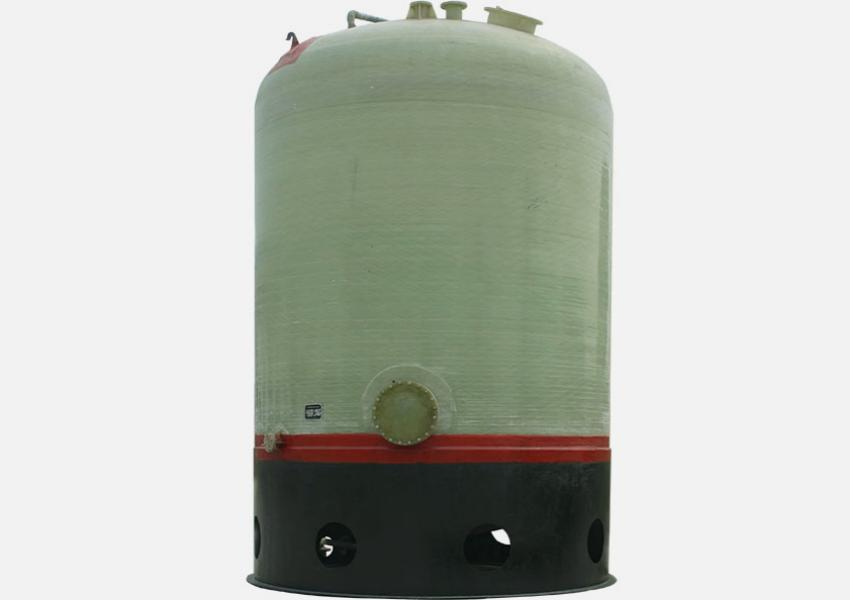
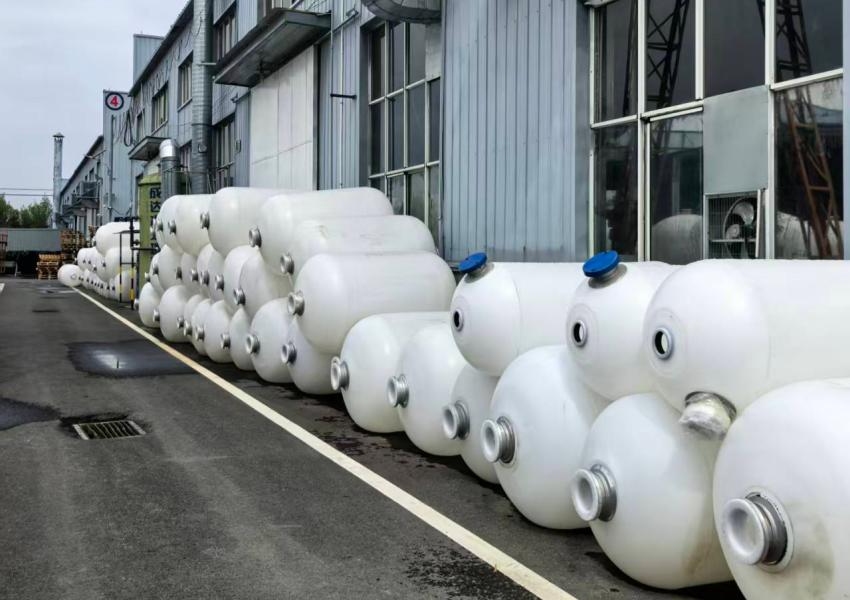
Hedlon’s nitrogen-sealed FRP tank is positioned for ultrapure-water storage. Its described construction includes a sanitary-grade resin inner lining and an exterior reinforced with resin and fiberglass winding. Nitrogen separates the stored water from air, while nitrogen admission and discharge are automatically managed by tank pressure. These are directly relevant features when a project is trying to reduce air contact at the storage stage.
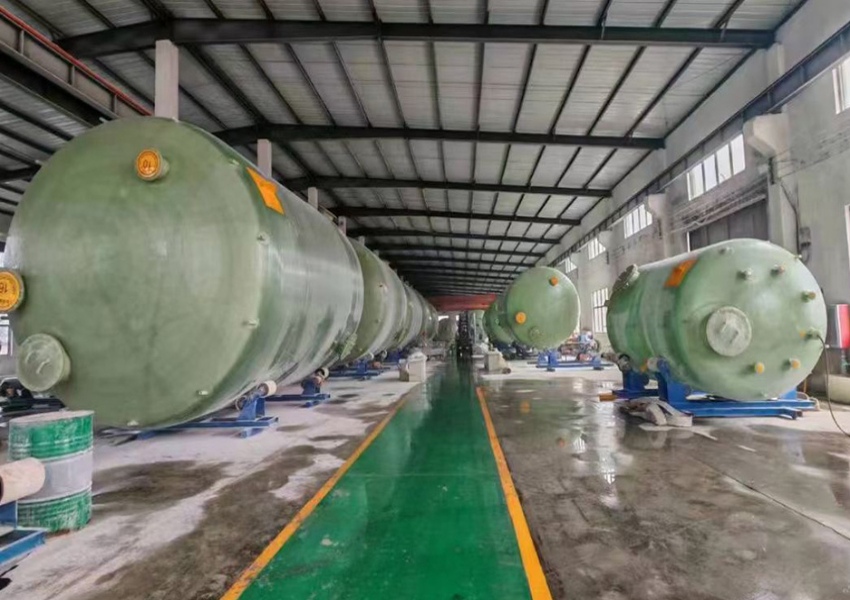
FRP construction characteristics such as strength, lightweight, corrosion resistance, impermeability, and customized openings. Those properties can support a practical vessel layout, but final semiconductor suitability still depends on the exact liner, fittings, cleaning method, and acceptance tests. Nitrogen purity, pressure setpoints, sterile venting, alarms, and cleanroom classification remain project-specific items for RFQ confirmation.
Do Not Transfer a Rating From Another Product
A pressure, temperature, or service statement from a conventional water-treatment vessel should not be copied onto a nitrogen-sealed storage tank without written confirmation. The broader FRP water treatment tank range may help define the upstream or auxiliary equipment, while the storage vessel needs its own pressure, vacuum, material, and cleanliness review.
The same discipline applies to an FRP storage tank used as a buffer. Ask for the construction schedule, nozzle details, internal surface description, allowable operating conditions, drainability, and test scope. A general claim about corrosion resistance is not a substitute for a compatibility statement against the actual water and cleaning chemistry.
Control Residence Time, Stagnation, and Recirculation
Even a well-selected vessel can become a contamination source when water remains still for too long. Residence time should be established from the process demand, tank volume, minimum operating level, production schedule, and return flow. A large tank with a low draw rate may carry more risk than a smaller tank with steady turnover.
Design For Full Drainage and Useful Flow
The outlet and return should move water through the actual storage volume, including the lower sections that are easy to overlook. Avoid dead legs, trapped pockets, unused branches, and high points that hold air. A low-point drain, an accessible sample point, and a clear flushing route make cleaning and verification more reliable.
Recirculation is a control measure, not proof of cleanliness. The flow pattern, pump duty, heat gain, and return location should be reviewed together. If the return only sweeps one side of the vessel, the opposite side may still develop a different quality profile. Instrument locations should represent the water that will actually reach the process.
Keep the Tank Connected To the Process
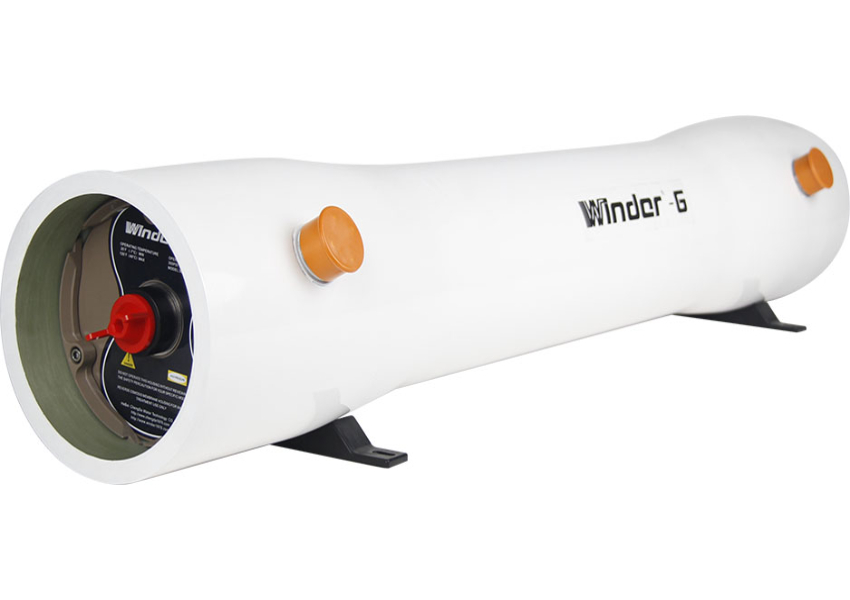
Storage should be considered alongside pretreatment and membrane equipment. Hedlon’s FRP tank covers water-treatment vessel categories that can be discussed with the tank layout, but upstream filtration does not remove the need to protect the post-treatment storage boundary. The tank, piping, instruments, and return loop should be reviewed as one operating sequence.
Build Cleaning and Monitoring Into the Design
A cleanability claim has little value unless operators can act on it. The cleaning procedure should define isolation, draining, access, rinsing, chemical exposure, final rinse criteria, sampling, and release conditions. The procedure should also state what happens after an extended idle period, a failed sample, or maintenance inside the tank.
Monitor Trends, Not Only Final Alarms
A semiconductor water tank may be connected to conductivity or resistivity, temperature, flow, pressure, level, total organic carbon, particle, and microbiological checks, depending on the site’s quality plan. No universal list should be imposed without the process specification. What matters is that measurements are taken at meaningful points and trended over time.
A gradual change can be more useful than a single alarm. Rising conductivity after storage may point to gas exchange, materials, or a process change. A particle increase after maintenance may point to handling or rinsing. Microbiological results need their own response path because a tank can meet a conductivity target while still presenting a biological concern.
Make Release Criteria Specific
Before return to service, the project should define which samples are required, where they are taken, how long the system circulates, and who approves release. Records should connect the result to the tank identification, cleaning batch, instrument status, maintenance work, and any replaced gasket or fitting. This turns UPW storage contamination from a vague suspicion into a traceable investigation.
Put the Prevention Plan Into the RFQ
The purchase specification should make contamination prevention measurable. Include water quality at the inlet and outlet, storage volume, minimum and maximum level, residence-time target, circulation arrangement, temperature, cleaning chemistry, sampling points, drain requirements, headspace or nitrogen arrangement, and installation environment.
Request a general arrangement drawing, nozzle schedule, materials list, pressure and vacuum limits, inspection and test plan, cleaning instructions, spare-parts list, and packing requirements. For the vessel, confirm the liner and structural construction separately. For a nitrogen-sealed design, confirm the gas-control components and the response to loss of supply or abnormal pressure. Unknown values should be marked RFQ items rather than filled with generic assumptions.
Hedlon can be reviewed together with the project drawing and water-quality specification when a storage vessel must connect with broader treatment equipment. The useful procurement question is not whether a tank sounds clean by design. It is whether the complete storage boundary can be installed, cleaned, monitored, tested, and maintained without creating an uncontrolled path back into the high-purity water system.
FAQ
Q1: What is the most common source of ultrapure water contamination after purification?
A1: There is no single universal source. Air exposure, wetted materials, stagnant sections, maintenance openings, poor rinsing, instruments, and microbial growth can all matter. The right starting point is a site-specific water-path review.
Q2: Does a nitrogen-sealed tank make a semiconductor water system contamination-proof?
A2: No. Nitrogen sealing reduces direct air contact at the storage headspace. It does not replace suitable materials, cleaning, circulation, sampling, monitoring, or documented release criteria.
Q3: What should buyers request before approving an FRP tank for UPW storage?
A3: Request the liner and laminate details, wetted materials, openings, drainability, pressure and vacuum limits, gas or vent arrangement, cleaning method, inspection plan, test records, spare parts, and all site-specific acceptance requirements.