
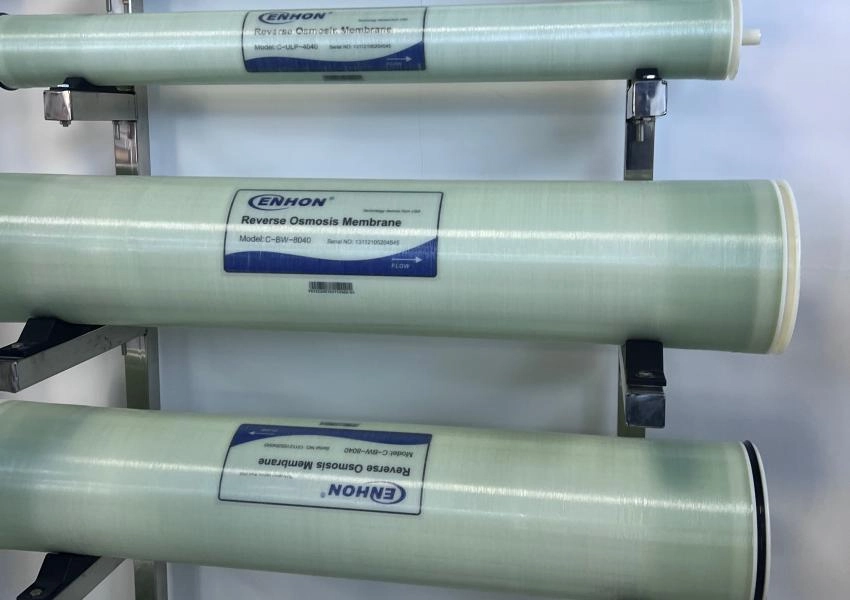
Um elemento de membrana 8040 é difícil de limpar adequadamente se for tratado como uma mera formalidade. Ele é pesado quando molhado e sensível à pressão, temperatura, pH ou método de manuseio incorretos. Em muitas plantas de osmose reversa industriais e de água salobra, a limpeza CIP (Clean-in-Place) funciona para o controle rotineiro de incrustações, mas nem sempre dá a devida atenção a um elemento muito incrustado. Quando os elementos precisam ser removidos, imersos, recirculados, testados e recarregados, o processo de limpeza se torna um sistema de manutenção por si só.
Um sistema de limpeza de membranas offline bem planejado oferece aos operadores um local controlado para limpar elementos 8040 sem interromper o funcionamento do sistema principal de osmose reversa. O objetivo é reduzir o tempo de inatividade, proteger as vedações, minimizar erros de manuseio e fornecer às equipes de manutenção um método consistente para avaliar se uma membrana pode ser recolocada em operação.
Comece pela limpeza, não pela estrutura de suporte.
A primeira decisão de projeto é a própria tarefa de limpeza. Algumas instalações precisam apenas de limpeza ocasional da membrana 8040 após um evento sazonal de incrustação. Outras operam com reúso de águas residuais, lixiviado de aterro sanitário, processamento de alimentos ou sistemas de água salobra com alta tendência à incrustação, onde a limpeza industrial da membrana se torna uma manutenção semanal. Esses casos não exigem o mesmo layout de estação.
Manuseio de elementos e tamanho do lote
Para um ou dois elementos por vez, uma estrutura compacta com um recipiente de limpeza, um tanque de produtos químicos, uma bomba de circulação, manômetros, válvulas e mangueiras flexíveis pode ser suficiente. Para empresas de serviços ou grandes fábricas, a estação também precisa de prateleiras de apoio, controle de drenagem e espaço para movimentar elementos de alumínio 8040 molhados sem atingir a carcaça de fibra de vidro ou os componentes das extremidades. Os operadores devem ser capazes de remover, carregar, lavar, imergir, recircular, enxaguar e descarregar o elemento em uma sequência limpa.
Limpeza offline de limites
A limpeza offline não substitui um bom pré-tratamento ou a operação rotineira de osmose reversa. Trata-se de uma ferramenta de manutenção para elementos que necessitam de inspeção mais detalhada e contato controlado com produtos químicos. A receita de limpeza, a temperatura, o pH e o tempo de contato devem seguir os limites recomendados pelo fabricante da membrana e a análise da água da planta. Caso o tipo de incrustação seja incerto, pontos de amostragem e válvulas de isolamento auxiliam os operadores a testar pequenas alterações antes de aplicar em um lote completo.
Construa o loop de processo em torno do elemento 8040.
Uma estação de limpeza 8040 geralmente possui cinco zonas de trabalho: preparação química, circulação, tanque de limpeza da membrana de osmose reversa, enxágue e drenagem, e acesso do operador. Manter essas zonas distintas evita que a estação se torne um emaranhado de mangueiras após os primeiros ciclos de limpeza.
Preparação e armazenamento de produtos químicos
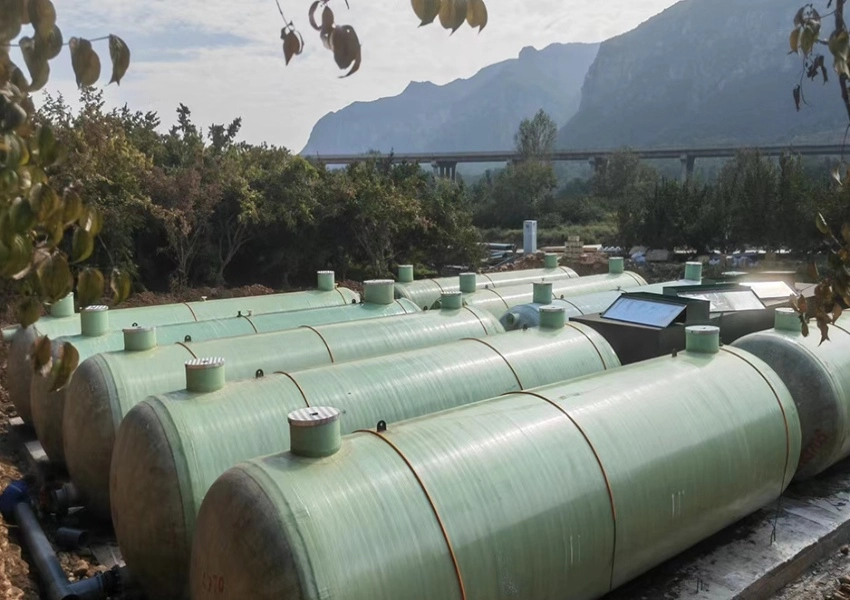
O tanque de produtos químicos deve ser dimensionado de acordo com o volume de circulação, e não simplesmente pelo maior tanque que caiba na estrutura. Ele precisa de uma marca de nível visível, resistência química, um ponto de drenagem e uma posição segura para abastecimento. (Hedelong's) série de tanques de dosagem PE É fabricado em PEAD e está disponível em opções de 40L, 60L, 100L e 200L para preparar, armazenar e dosar produtos químicos para tratamento de água.
Circulação, lavagem e enxágue
A bomba de circulação deve movimentar o líquido de limpeza uniformemente através do elemento, respeitando as especificações de pressão e vazão do fornecedor da membrana. O projeto deve incluir uma linha de retorno para o tanque, uma conexão para enxágue com água doce, um dreno no ponto mais baixo e um filtro de cartucho ou peneira para liberar sólidos durante a limpeza. Instrumentos de vazão e pressão são importantes, pois um canal bloqueado, uma mangueira danificada ou um adaptador mal encaixado geralmente se manifestam inicialmente como uma alteração de pressão.
Escolha um recipiente que permita aberturas frequentes.
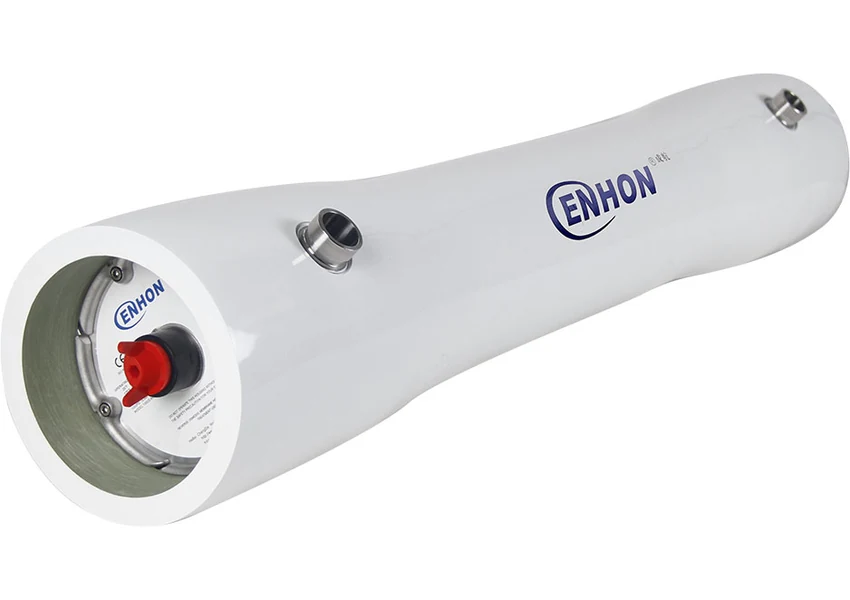
O vaso de pressão é a parte que os operadores da estação mais frequentemente tocam. Um vaso de pressão padrão para osmose reversa pode acomodar um elemento de membrana, mas o carregamento e descarregamento frequentes exigem uma rotina de manutenção diferente. A tampa precisa ser de fácil abertura, inspeção e suficientemente resistente para manutenção repetida, enquanto as superfícies de vedação ainda requerem cuidados rigorosos.
Abertura rápida e vedação confiável
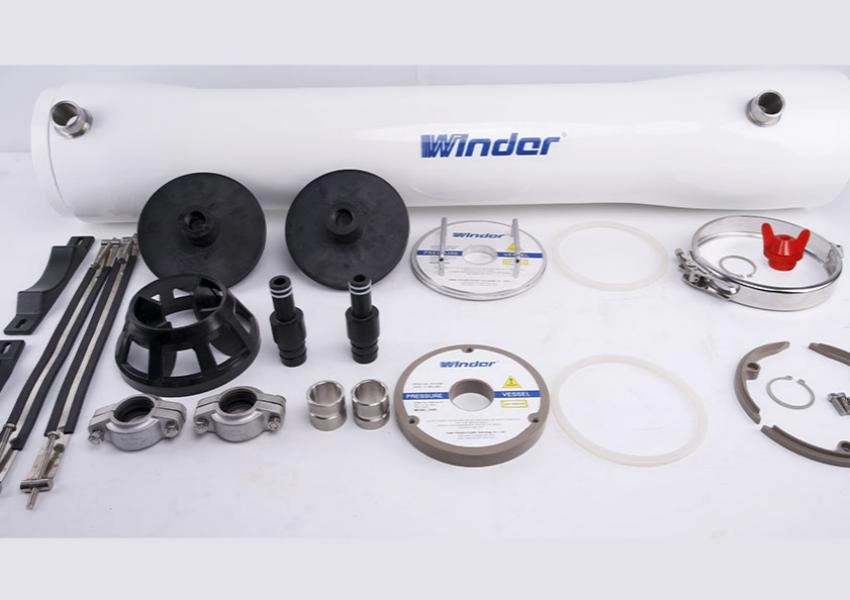
Para limpeza especializada de membranas 8040, a Hedelong oferece... Caixa de membrana para limpeza offline de membrana de 8 polegadas O modelo XM80S300 foi projetado como um vaso de pressão especial em PRFV (Plástico Reforçado com Fibra de Vidro) para limpeza química offline de elementos de membrana de osmose reversa (RO) e nanofiltração (NF). Sua tampa de fácil remoção permite a instalação e remoção repetidas durante os trabalhos de limpeza. O modelo XM80S300 é certificado para pressão de projeto de 300 PSI, operação em pH 3-11 e faixa de temperatura de operação de -10 °C a 66 °C. Ele também passou por 100.000 testes de pressão cíclica e possui uma pressão de ruptura quatro vezes maior que a pressão de projeto.
Uma estação de limpeza é aberta com muito mais frequência do que um vaso de produção normal. A classificação de pressão não deve ser interpretada como permissão para limpeza em alta pressão. Trata-se de uma margem de segurança e durabilidade para um processo de manutenção em pressão mais baixa. Os operadores ainda precisam lubrificar e inspecionar as vedações conforme especificado, verificar o encaixe das tampas e manter a sujeira longe das ranhuras de vedação antes do próximo ciclo.
Referências de porta lateral ou porta final
Os principais sistemas de osmose reversa podem usar um lado de 8 polegadas-contato FRP alojamento da membrana de osmose reversa onde as conexões laterais suportam o acesso ao serviço e o layout do fluxo, ou um extremidade de 8 polegadas–para terminar PRFV alojamento da membrana de osmose reversa Onde a tubulação conectada nas extremidades ajuda a manter um arranjo compacto da plataforma. Para uma estação offline, essas opções de alojamento de produção são referências úteis, mas o vaso de limpeza dedicado geralmente é mais fácil de justificar quando a remoção da membrana ocorre com frequência. Ele economiza mão de obra, reduz o tempo de manuseio do tampão e oferece à equipe de manutenção um ponto de trabalho mais previsível.
Controle os produtos químicos sem complicar a estação.
Uma estação de limpeza pode rapidamente se tornar complexa demais. Aquecimento, dosagem, controle de condutividade, correção de pH, recirculação temporizada e enxágue automatizado podem ser úteis, mas cada recurso adiciona válvulas, sensores e pontos de falha. O melhor teste é simples: o recurso ajuda os operadores a limpar os elementos de forma mais consistente ou apenas faz com que o sistema pareça mais avançado?
Dosagem e Ajuste
Em receitas de limpeza que exigem correção gradual do pH ou adição controlada de produtos químicos, uma pequena bomba dosadora pode ser uma opção melhor do que o despejo manual. (Hedelong's) bomba dosadora eletromagnética Utiliza controle por microprocessador, com uma faixa de pressão de 0 a 20 bar e uma faixa de vazão de 0 a 110 L/h em toda a série. Em uma estação de limpeza, este tipo de bomba é mais adequado para dosagem controlada no tanque ou circuito, e não como bomba de circulação principal.
Materiais e tempo de contato
A compatibilidade química deve ser verificada em todo o percurso do sistema de osmose reversa: tanque, cabeçote da bomba, mangueiras, válvulas, vedações, componentes internos do vaso e elemento de membrana. A limpeza ácida e alcalina são categorias comuns na manutenção de osmose reversa, mas os produtos químicos exatos, a concentração e a temperatura devem ser confirmados de acordo com a marca da membrana e a análise de incrustação. Para depósitos difíceis, uma imersão prolongada nas condições adequadas costuma ser mais segura do que forçar uma pressão maior através do elemento.
Plano para Registros de Manutenção e Decisões de Compra
A estação offline mais eficiente nem sempre é a maior. É aquela que facilita a medição de trabalhos repetidos. Um projeto prático de estação de limpeza de osmose reversa deve prever espaço para registros no próprio skid, e não em um caderno que desaparece após a troca de turno. Os operadores devem registrar a posição do elemento filtrante, a localização original do sistema, o comportamento da pressão, a aparência da solução, o pH, a temperatura, as condições de enxágue e o desempenho pós-limpeza. Sem essas anotações, a limpeza da membrana 8040 se torna uma questão de tentativa e erro, e as decisões de substituição se tornam emocionais.
Quando uma emissora dedicada compensa
Um sistema dedicado de limpeza de membranas offline faz sentido quando a substituição da membrana é cara, o tempo de inatividade é dispendioso ou a incrustação é muito variável para uma única receita CIP online. Também auxilia as equipes de serviço que limpam elementos de diferentes locais e precisam de um fluxo de trabalho repetível. Plantas com eventos de incrustação raros podem não precisar de um skid completo, mas ainda precisam de um procedimento seguro para abertura de vasos e manuseio de produtos químicos.
Adequação do fornecedor e compatibilidade de componentes
Hoje A linha de produtos abrange tanques de PRFV (Plástico Reforçado com Fibra de Vidro), carcaças de membrana, tanques de salmoura, tanques de dosagem, distribuidores de água, filtros, amaciadores, válvulas de diafragma e controladores. Para compradores que estão construindo uma estação de tratamento de água, essa variedade é útil porque o tanque de membrana, o armazenamento de produtos químicos, a dosagem e os acessórios para tratamento de água podem ser combinados em uma única reunião de engenharia. A empresa também lista documentos de certificação CE, NSF, ISO 9001 e de higiene nacional em seus materiais de origem, o que fornece às equipes de compras mais informações para análise antes da compra.
Perguntas frequentes
P1: Qual é a principal diferença entre a limpeza CIP online e a limpeza offline da membrana 8040?
A1: A limpeza CIP online realiza a limpeza de elementos dentro do trem RO. A limpeza offline remove elementos selecionados do sistema 8040 e os trata em uma estação separada, proporcionando aos operadores maior controle sobre o carregamento, imersão, enxágue, inspeção e verificações de recuperação.
Q2: Um vaso de limpeza de membrana de osmose reversa deve operar na mesma pressão que uma carcaça de osmose reversa de produção?
A2: Não. A classificação do vaso é uma margem estrutural. A pressão, o fluxo, a temperatura e o pH da limpeza devem permanecer dentro dos limites de limpeza do fornecedor da membrana e do procedimento validado da estação.
P3: Quando a limpeza de membranas industriais exige uma estação dedicada?
A3: Uma estação dedicada deve ser considerada quando a incrustação é frequente, o custo de substituição da membrana é elevado, o trabalho de manutenção é realizado em lotes ou o sistema principal de osmose reversa não pode ficar inativo durante períodos prolongados de limpeza e inspeção.