
In a semiconductor plant, water quality is not fixed at the RO permeate outlet. A membrane train may produce water that meets the immediate process target, yet the quality can drift before that water reaches a point of use. The storage vessel, vent arrangement, return loop, residence time, and sampling plan all shape what happens next. That is why semiconductor ultrapure water needs a storage strategy, not only a purification train.
Storage after RO is a holding stage with its own risks. Air contact can change dissolved-gas conditions. Warm, slow-moving zones can support microbial growth. An unsuitable surface can add contaminants, while poor drainage leaves a place for residue to collect. The exact UPW specification still belongs to the semiconductor process, but the storage design should be reviewed against that specification from the start.
Purification And Preservation Are Different Jobs
Reverse osmosis removes much of the dissolved load from a feed stream, but a permeate outlet is not the same thing as a protected distribution system. Once water leaves the membrane vessel, it encounters piping, valves, instruments, tank surfaces, vents, and returning water. Each contact point can affect conductivity, particles, dissolved gases, or biological control.
What Can Change After The Membrane
A storage tank can take up carbon dioxide or other gases when the water is exposed to an uncontrolled air space. That gas exchange may influence conductivity and pH, depending on the water condition and the surrounding environment. The change is not a reason to assign one universal tank design to every UPW project. It is a reason to specify the headspace, vent path, gas isolation, and monitoring method together.
Microbial risk also follows the system layout rather than the RO nameplate. Low-flow branches, unused nozzles, warm sections, rough or damaged surfaces, and long residence times can make control harder. A storage vessel does not replace sanitization, circulation, filtration, or an operating procedure. Those measures need to be selected around the site’s water-quality limits and cleaning chemistry.
Why A Nitrogen-Sealed Tank Can Matter
For high-purity water, separating the stored liquid from ambient air is a practical design question. A nitrogen-sealed tank uses a controlled nitrogen space above the water so that the liquid is not simply exposed to an open atmosphere. This can reduce a route for secondary contamination, but it does not make the tank a complete UPW system by itself.
Check The Gas Boundary And Controls
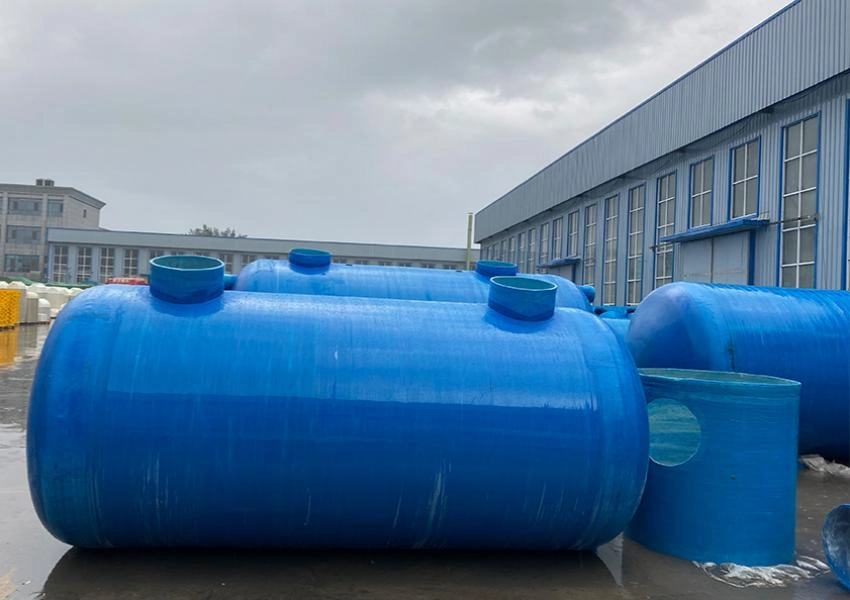
The FRP nitrogen-sealed tank described in Hedelong is intended for ultrapure-water storage. It uses a sanitary-grade resin inner lining, resin and fiberglass winding reinforcement on the exterior, and automatic nitrogen admission and discharge controlled by tank pressure. Those features establish a useful equipment direction. They do not, on their own, specify the nitrogen quality, pressure setpoints, sterile venting method, or final water specification for a semiconductor line.
A buyer should ask for a process and instrument drawing showing the gas inlet, relief path, pressure controls, level measurement, overflow, drain, access opening, and sample point. The RFQ should also state whether the nitrogen supply is continuously available, what happens during a control failure, and how the vessel is isolated for inspection. A pressure-controlled headspace needs a defined failure response, not just a tank name.
Limit Residence Time And Dead Zones
Tank volume should follow the production pattern, not a generous guess. A large buffer can help separate RO production from point-of-use demand, but it can also extend residence time. The design should show inlet and outlet locations, turnover, circulation, drainability, and the treatment of low-use connections. A level signal alone cannot prove that every part of the vessel receives adequate movement.
Materials And Surfaces Need A Written Basis
Material compatibility is more than a corrosion statement. In a semiconductor water treatment package, the surface in contact with water should be reviewed for extractables, particles, cleaning agents, temperature, fabrication quality, and the site’s acceptance criteria. The same material may be reasonable for one water duty and unsuitable for another because the water specification and cleaning regime are different.
Read The Lining And Reinforcement Separately
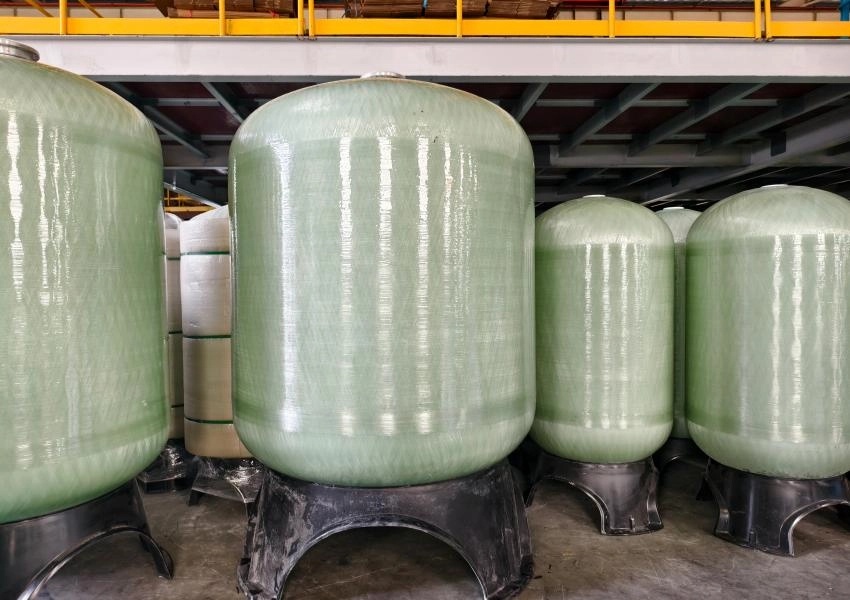
Hedelong’s FRP tank has sanitary-grade resin lining for the nitrogen-sealed design and resin with fiberglass winding reinforcement for the tank structure. The wider FRP tank range also includes liner options, corrosion resistance, impermeability, custom openings, and water-treatment or water-reuse applications. These are relevant starting points when comparing a high-purity water tank, but they are not a substitute for a project-specific materials review.
The purchaser should request the proposed liner or inner-surface specification, resin designation, laminate construction, nozzle materials, gasket and seal materials, surface-finish information, and any available test or inspection records. Avoid treating a general food, water, or chemical-service description as automatic proof of semiconductor suitability. The final acceptance basis should name the contaminants and limits that matter to the process.
Connect The Tank To The UPW System
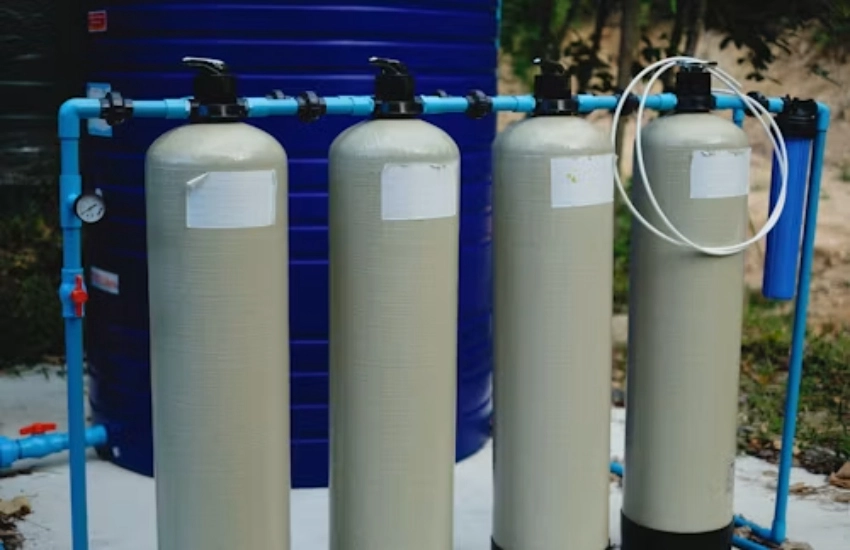
The storage vessel sits between purification and distribution, so the surrounding equipment matters. RO pretreatment protects the membrane train. The tank protects the buffer. A recirculation loop protects movement. Instruments show whether the water remains within the operating window. A useful UPW system review should map those functions instead of treating the tank as an isolated purchase.
Plan Sampling And Recirculation Together
Sampling points should represent the actual water path: after RO, at the storage outlet, on the return loop, and near a critical point of use where the process requires it. Conductivity or resistivity, temperature, flow, pressure, total organic carbon, particles, and microbiological indicators may be relevant, but the plant specification decides which are mandatory. Trending matters because a slow drift can be more useful than a single pass result.
The tank return should avoid short-circuiting from inlet to outlet while leaving the lower or remote areas stagnant. Drain and flush arrangements deserve the same attention as the main nozzle. Where a tank is customized, openings can be coordinated with level instruments, sample connections, recirculation, and inspection access. The drawing review is the right place to settle these details.
Keep RO And Storage Interfaces Clear
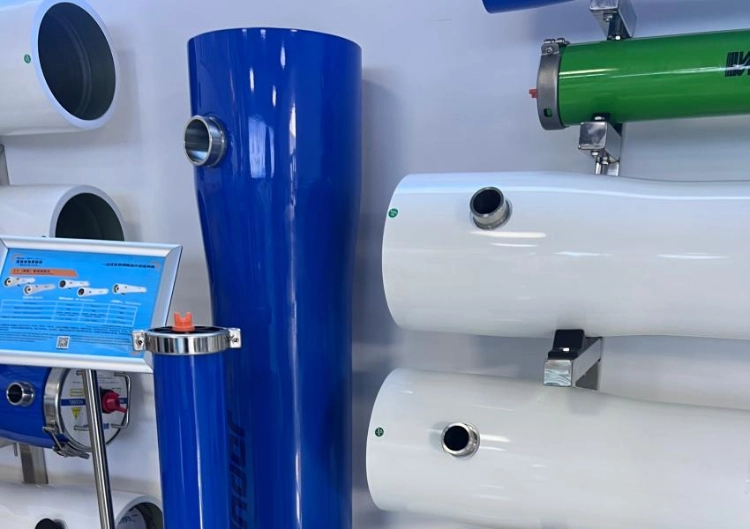
A membrane housing defines the pressure boundary on the RO side, while the storage tank has a different mechanical and water-contact duty. The RO membrane housing covers FRP membrane vessels and related configurations, but the housing pressure class should not be carried over to the tank without a separate mechanical review. Flow, pressure, membrane format, cleaning chemistry, and connection details should be checked across the full skid.
What To Request Before Selecting The Tank
A procurement package for an ultrapure water storage tank should make the water-quality risk visible. Provide the RO permeate specification, expected flow and peak demand, storage volume, temperature range, residence-time target, cleaning and sanitization method, gas supply requirements, instrument list, drain philosophy, installation environment, and point-of-use circulation concept.
Useful Supplier Documents
Ask for a general arrangement drawing, process and instrument diagram, nozzle schedule, material and liner description, pressure and vacuum limits, inspection and test plan, dimensional tolerances, packing details, spare-part list, and maintenance instructions. Where the supplier offers custom tank openings, those should be shown on an approved drawing rather than left to site modification.
Hedelong’s FRP water treatment tank and FRP storage tank provide relevant product routes for a project review. The general FRP tank solutions page is useful when the package also includes filtration, softening, dosing, or water-reuse equipment. The right selection still depends on the buyer’s UPW limits, layout, controls, and validation plan.
For a supplier discussion, Hedelong can be evaluated as part of a complete RFQ covering the FRP tank, RO housing, instruments, documents, and service boundaries. The key question is not whether one vessel can create semiconductor-grade water. It is whether the proposed storage stage can preserve the agreed quality with a clear, testable operating plan.
FAQ
Q1: Does RO permeate remain ultrapure while it is stored?
A1: Not automatically. Air exchange, dissolved gases, tank surfaces, residence time, stagnant zones, cleaning practices, and microbial control can all affect water after the membrane outlet. Storage and distribution need their own controls.
Q2: Is a nitrogen-sealed tank automatically suitable for semiconductor water?
A2: No. Nitrogen isolation can reduce direct contact with ambient air, but the project must still confirm gas quality, controls, lining, seals, drainability, circulation, monitoring, cleaning, and acceptance limits for the intended process.
Q3: What should be included in an RFQ for a high-purity water tank?
A3: Include the water specification, volume and flow profile, residence-time target, temperature, materials, gas boundary, nozzles, instruments, circulation, drain and access requirements, cleaning method, drawings, tests, documents, and service responsibilities.