

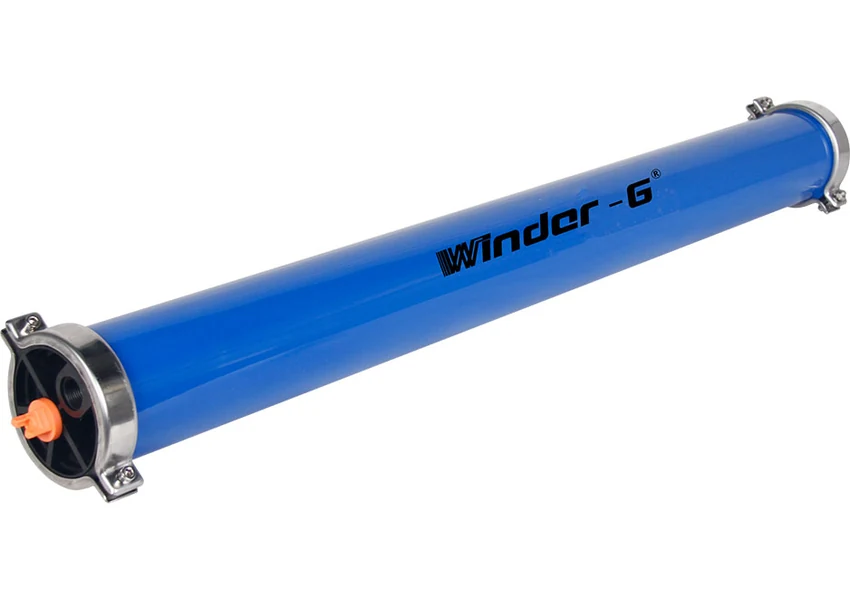
Membrane replacement rarely fails because the crew does not know what to do. It usually becomes slow because the vessel is hard to reach, the end closure needs tools, or the seals need careful reseating when the line is already shut down. That is why a quick release RO membrane housing is not just a convenience feature. It changes how the maintenance job feels on site, especially when elements are pulled often. Standard housings still have a strong place in many RO systems. They are familiar, economical, and widely used on commercial and industrial skids. The better choice depends on how often membranes are changed, how tight the service space is, and how much downtime costs.
Replacement Speed Starts With Access, Not the Membrane
The membrane element may take only a few minutes to pull once the vessel is open. The slow part is getting to that point. On a compact skid, technicians may need to remove guards, loosen pipe sections, find the right tool, open the end assembly, clean the seal area, and repeat the same process across several housings. If the system is installed against a wall or packed into a containerized plant, access becomes even more important than the nominal vessel size.
A quick release RO membrane housing helps when the maintenance rhythm is frequent. Operators handling pilot lines, rental units, high-fouling feedwater, or process water systems may open vessels more often for inspection and cleaning. That does not mean every plant needs a quick opening pressure vessel. If membranes are replaced on a long cycle and the system has comfortable service clearance, a standard closure can be perfectly sensible.
What Changes With Quick-Release Housings
Quick-release housings are mainly about repeatable field work. They reduce tool handling, make access more direct, and lower the chance that a technician rushes the closure because the line is waiting to restart. In a plant with several small vessels, those differences add up.
Less tool handling during shutdown
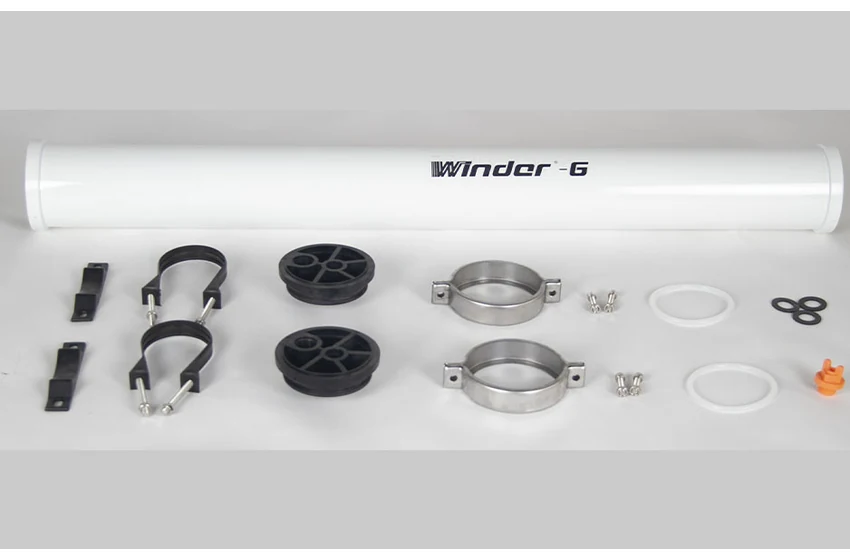
A tool-free membrane housing is useful when the maintenance team needs to open and close vessels in a controlled but quick sequence. Fewer loose tools near wet equipment also means fewer delays caused by misplaced wrenches or awkward access angles. The 4-inch quick-release FRP RO membrane housing is a practical example for compact RO equipment where fast service access matters. Its role is not to make the membrane work better. The point is to make repeated RO membrane replacement less clumsy when the system layout, service schedule, or customer site calls for faster opening.
More consistent closure habits
Speed is only helpful if sealing remains controlled. Any RO pressure vessel depends on the correct seating of the end cap, O-rings, adapters, and locking structure. Easier handling can help seal reliability, though it does not remove the need for cleaning and inspection.
Procurement teams should ask for the full closure structure, seal parts, and replacement accessory list before approving a quick-opening pressure vessel. A fast closure that relies on hard-to-source parts can create a different problem later. The right housing should shorten service time without making spare parts management more fragile.
Where Standard Housings Still Make Sense
A standard RO membrane housing is not a weak option. It is often the better business choice when maintenance is predictable, system pressure is moderate, and the buyer wants a familiar design with widely understood service steps. Many operators already know how to open, inspect, and reseal standard vessels. That familiarity matters in plants where different technicians rotate through the equipment.
Lower service frequency
If feedwater is stable, pretreatment is well controlled, and membranes last through a long operating cycle, the benefit of faster opening may be small. Standard housing, good instrumentation, and a clear replacement schedule may be the cleaner purchase.
Familiar parts and lower purchasing pressure
Standard housings can also simplify spare parts planning. End caps, seals, connectors, and port fittings are easy for maintenance teams to recognize. For projects with tight budgets, a standard RO membrane housing may keep the initial purchase under control while still supporting reliable daily operation.
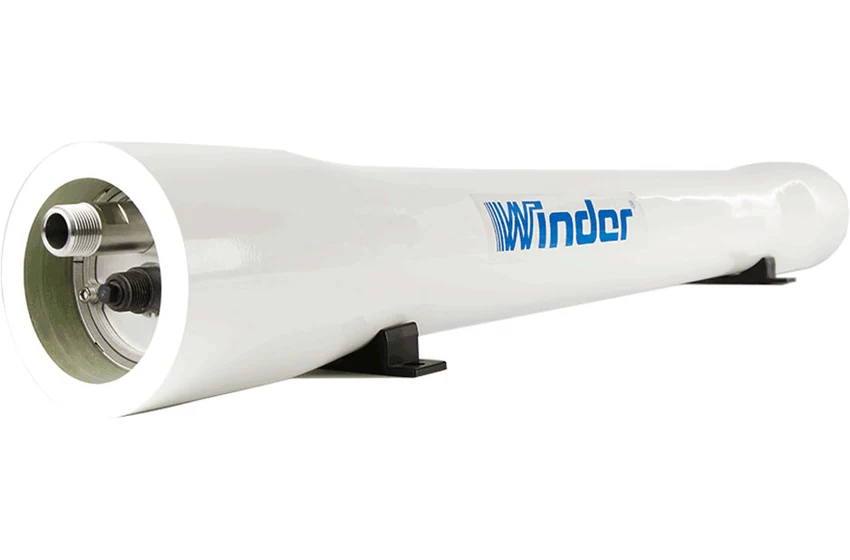
The 4-inch end-to-end FRP RO membrane housing fits this kind of compact system thinking. The end port layout is straightforward for smaller RO skids, and 4-inch vessels are commonly used in commercial water, laboratory water, food and beverage lines, and smaller industrial systems where service cycles are planned rather than constant.
Cost, Downtime, and Seal Reliability Need One Calculation
The purchase price alone gives an incomplete answer. A quick-release vessel may cost more at the start, but the real question is how often the system is opened and what downtime costs. A beverage plant, process water line, or rental RO unit may value a shorter shutdown more than a small saving on the vessel. A small commercial system in a low-risk room may not.
There is also a sealing question. A standard closure can seal very well when cleaned, assembled, and tightened correctly. A quick-release closure can also seal well when the design is sound and the parts are maintained. Neither type should be treated as automatic protection against leaks. Seal reliability comes from correct pressure rating, proper O-ring condition, clean seating surfaces, and disciplined closure after each RO membrane replacement.
Hedelong’s FRP membrane housing includes 4040 and 8040 options, side port and end port structures, standard white color, custom color support, and special specification capability. The broader RO membrane housing range also covers common pressure classes used across brackish and industrial RO systems. For buyers comparing a quick opening pressure vessel with a standard vessel, those details help keep the decision tied to the actual skid rather than only to the closure style.
Matching the Housing to the Project
Start with the service pattern. If membranes are pulled often, space is tight, and downtime is expensive, a tool-free membrane housing deserves serious attention. If the system is opened rarely and maintenance happens during scheduled shutdowns, standard housing may be the cleaner purchase.
Then check the mechanical boundaries. Hedelong list FRP membrane housing connection types such as 4040 side port, 4040 end port, 8040 side port, and 8040 end port. Standard pressure selections include 150, 300, 450, 600, 800, and 1000 PSI, with hydrostatic testing at 1.5 times the standard pressure in the general membrane housing. It also refers to 100,000 cyclic pressure tests and burst pressure at six times design pressure for listed 4-inch and 8-inch series.
For OEMs and project buyers, the final check is practical: end clearance, port direction, element count, seal kit availability, replacement training, and the number of vessels on the skid. Hedelong supplies FRP membrane housings along with other water treatment equipment and accessories, with references to CE, NSF, ISO9001, ISO14001, ASME, and AEO. That background is useful when the buyer needs product matching, custom color or specification support, and consistent spare parts for repeat orders.
The most balanced choice is usually simple. Use quick-release where frequent maintenance makes time valuable. Use standard housing where the system is stable, the budget is tight, and the service window is predictable. Both can be correct. The mistake is choosing the closure before checking how the RO skid will actually be maintained.
FAQ
Q1: When is a quick release RO membrane housing worth the higher purchase cost?
A1: It is worth considering when membranes are inspected or replaced often, shutdown time is expensive, or access around the skid is tight. The labor saving should be compared with the vessel price and spare parts plan.
Q2: Does a quick-release closure seal better than a standard closure?
A2: Not automatically. Seal reliability depends on pressure rating, O-ring condition, clean seating surfaces, and correct closure. A tool-free membrane housing can help technicians close the vessel more consistently, but it still needs proper maintenance.
Q3: Which Hedelong housing should be considered for compact 4-inch systems?
A3: For faster service access, the 4-inch quick-release FRP RO membrane housing fits projects with frequent opening. For planned maintenance and straightforward piping, the 4″ End Port RO Membrane Housing can be a practical standard option.