
Can reverse osmosis remove PFAS from drinking water? In many treatment designs, RO is considered a strong barrier for PFAS, but the answer is not a universal percentage or a simple yes-or-no equipment label. Performance depends on the PFAS compounds present, the membrane, feed-water chemistry, recovery, pretreatment, operating condition, and the way the concentrate stream is handled. The membrane housing supports the process; it does not create the removal result.
For a drinking-water buyer, the practical question is whether the proposed RO train can deliver a verified result at the required flow and operating window. That means separating four decisions: what the water contains, what the membrane is expected to remove, how the pressure boundary will be built, and how treated water and reject water will be sampled. A careful purchase specification keeps those decisions connected without confusing them.
What RO Can And Cannot Prove About PFAS
PFAS is a broad family of compounds rather than one contaminant with one fixed behavior. Chain length, functional group, concentration, competing dissolved matter, pH, temperature, and membrane condition can influence the observed result. A claim that RO can remove PFAS should therefore be tied to named compounds, a defined feed, a selected membrane element, and a test method.
Removal Is A Process Result
The phrase remove PFAS from water is useful for a buyer’s initial research, but it should not become an unqualified purchase promise. That distinction is central to RO PFAS removal and broader PFAS water treatment projects. The integrator or membrane supplier needs to state the expected permeate quality, recovery, pressure range, pretreatment requirements, cleaning limits, and concentrate disposition. Pilot or commissioning data may be needed when the feed is variable, or the compliance margin is narrow.
RO separates a treated permeate from a concentrated reject stream. PFAS does not disappear from the treatment system simply because it is reduced in the product-water line. The reject, cleaning liquid, spent filters, and any off-specification water need a documented handling route. A drinking-water project should review the whole mass balance before selecting equipment.
Start With The Drinking-Water Risk Profile
Before comparing RO skids, obtain a representative water analysis and define the intended use. The source may be a municipal supply, groundwater, surface water, or a blended stream. Sampling should account for seasonal variation and the possibility that different PFAS compounds occur at different levels. The applicable regulatory or customer limit must be identified by the project owner rather than assumed from a generic online figure.
Name The Compounds And The Boundary
A useful design basis lists the PFAS analytes, reporting limits, existing treatment, target flow, peak demand, temperature, pressure, salinity, organic load, hardness, oxidants, and suspended solids. It should also state whether RO is the primary barrier, a polishing step, or part of a train that includes activated carbon or another treatment technology. That context changes the membrane duty and the sampling plan.
Feed-water variability matters to both treatment performance and maintenance. Fouling can change pressure drop and permeate flow. Scaling can restrict recovery. Oxidants or incompatible cleaning chemicals can damage a membrane. Pretreatment is not a side issue: it protects the membrane and makes PFAS results easier to interpret over time.
Choose The RO Membrane Housing Around The Skid
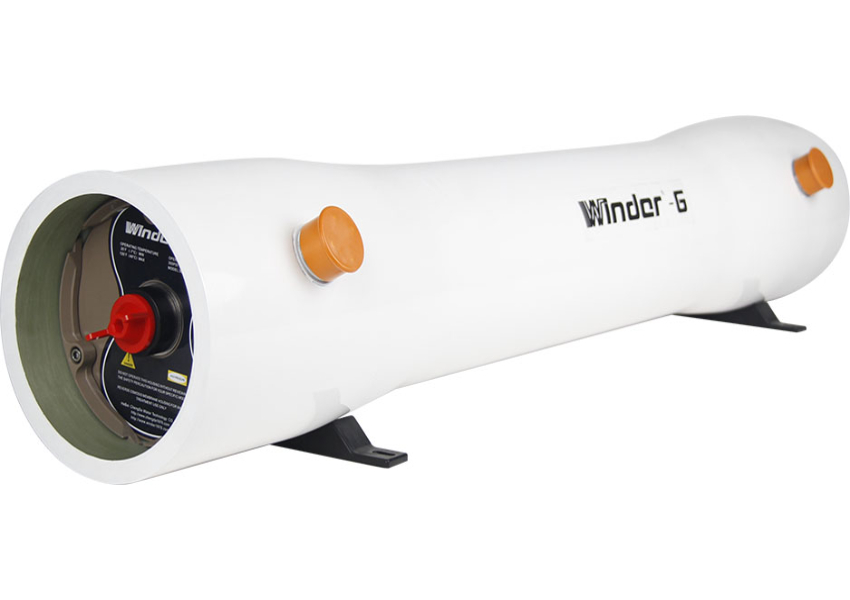
An RO membrane housing is the pressure vessel around the membrane elements. Its selection starts with element diameter, element count, vessel length, port arrangement, connection standard, pressure class, temperature, seals, and service clearance. The housing should match the membrane manufacturer’s installation limits and the pump’s actual pressure behavior, including start-up and shutdown conditions.
4-Inch Housings For Compact Or Pilot Duties
Hedlon’s 4-inch end-to-end RO membrane housing is a relevant candidate for compact commercial systems, pilot loops, and smaller drinking-water packages. It has 4-inch side-port and end-port formats, one to four elements, and pressure series that include 300, 450, 600, 1000, and 1200 PSI on the applicable configurations. The final selection still needs a model-specific drawing and pressure confirmation.
8-Inch Housings For Production Flow
For a larger plant, the 8-inch side-contact RO membrane housing can suit a parallel skid layout, while an 8-inch end-to-end RO membrane housing may fit a more direct axial connection arrangement. The listed product families cover one to eight 8-inch membrane elements and published low- and high-pressure choices. Port layout is a maintenance and piping decision, not a PFAS removal claim.
It describes FRP membrane housings with epoxy resin and fiber construction, hydrostatic permeation testing at 1.5 times the standard pressure, and a manufacturing reference to JC692-1998. It also lists corrosion resistance and selected temperature boundaries. These facts help a buyer screen the pressure vessel. They do not replace membrane data, drinking-water approval review, or a project-specific test plan.
Check Materials, Seals, And Water Contact
Drinking-water RO equipment has several material boundaries: the membrane, pressure vessel, end closures, adapters, O-rings, valves, sample fittings, pretreatment media, and storage components. A general statement that FRP resists corrosion is not enough to establish suitability for every drinking-water application. The buyer should request the wetted-material list and identify which components have documentation for the intended service.
Do Not Treat The Housing As The Membrane
The housing contains and supports the element under pressure. The membrane chemistry and element construction determine the separation behavior. If a supplier provides the RO membrane housing, the buyer should still obtain the membrane manufacturer’s compatibility limits, seal material, cleaning instructions, and test evidence separately. Keeping those responsibilities clear prevents a vessel supplier from being asked to certify a result outside its product boundary.
The procurement file should cover potable-water contact requirements relevant to the destination market, material declarations, traceability, pressure tests, dimensional inspection, labeling, and replacement seals. Certifications listed for a product family should be checked against the exact model, material, market, and intended contact condition. A certificate title alone is not a complete acceptance decision.
Design For Concentrate, Cleaning, And Verification
A PFAS treatment train needs a reject-water route before the first membrane is ordered. Concentrate may go to a permitted disposal route, additional treatment, controlled storage, or another approved process. The route depends on local requirements and the site’s water balance. It should never be left as an installation detail after the RO skid has been selected.
Sampling Must Match The Decision
A credible verification plan identifies the raw-water sample, pretreatment sample where useful, RO feed, permeate, reject, and final drinking-water point. It defines sampling frequency, preservation, laboratory method, reporting limits, chain of custody, and actions for an unexpected result. The exact analytical method and compliance limits belong to the project owner and qualified laboratory.
Trend data can reveal a change before a single compliance sample does. Falling permeate flow, rising differential pressure, changing conductivity, altered recovery, or a gradual PFAS result shift can indicate fouling, scaling, a damaged seal, a membrane problem, or a sampling issue. Maintenance records should connect those signals with cleaning, element replacement, and inspection actions.
Plan Membrane Service Without Contamination
Membrane replacement requires isolation, depressurization, drainage, end-closure removal, seal inspection, element handling, flushing, and release testing. The housing needs enough clearance for the selected element length and a safe working route around the end caps. A spare-parts list should identify seals, adapters, clamps, and any special tools, with compatibility confirmed before a service event.
A Buyer’s RFQ Checklist For PFAS RO
A strong RFQ asks for more than a quoted RO membrane housing price. Include the source-water analysis, PFAS analytes, target limits, flow profile, recovery, pressure and temperature, pretreatment, membrane model, element count, housing dimensions, port standard, materials, seals, cleaning chemistry, concentrate route, storage, instruments, sampling, testing, documents, spare parts, and commissioning responsibilities.
For compact projects, the 4-inch configuration can be compared against the required element count and service space. For production systems, the 8-inch side-port or end-port configuration should be checked against parallel piping, isolation valves, lifting access, and replacement workflow. Hedlon can be considered within that wider RFQ, while PFAS performance remains a responsibility of the full process design and verification program.
The final question is not simply whether PFAS reverse osmosis appears on a supplier page. It is whether the complete train can produce a documented result for the named water, keep the pressure boundary serviceable, handle the reject stream, and show what happens when the result moves outside the target. That is the standard a drinking-water buyer can defend during approval and operation.
FAQ
Q1: Can RO remove every PFAS compound from drinking water?
A1: No universal claim should be made. RO can be a strong PFAS treatment barrier, but performance depends on the compounds, membrane, feed water, operating conditions, sampling method, and concentrate management. Project-specific validation is required.
Q2: Does an FRP RO membrane housing determine PFAS removal?
A2: No. The housing provides the pressure boundary for the membrane elements. The membrane and full process design determine separation performance, while the housing must match element size, pressure, ports, materials, seals, and service needs.
Q3: What should a drinking-water PFAS RO buyer request?
A3: Request the water analysis, named PFAS analytes, target limits, membrane data, recovery, pressure, pretreatment, concentrate route, housing drawing, wetted materials, tests, potable-water documents, sampling plan, commissioning method, and spare-parts list.