
A small drip on an RO skid can look harmless during a shift change. Leave it through a weekend, and the same RO pressure vessel leak may become a wet floor, a corroded frame, or a shutdown complaint. The hard part is not always stopping the water. It is finding whether the leak comes from the membrane housing O-ring, the end cap area, or a port connection stressed during piping work.
Good troubleshooting starts with location. A leak at the end closure is handled differently from seepage around a feed port. For maintenance teams, OEM skid builders, and distributors, that distinction decides which spare part to carry, what to ask the supplier, and whether the vessel itself is still fit for service.
First Locate The Leak Before Replacing Parts
A rushed repair often starts with the easiest part to remove. That can waste time. Before opening the vessel, isolate the skid, release pressure, rinse the area, and dry the shell and fittings, then restart at a controlled pressure if site rules allow it.
End Closure Or Port Area
Water appearing evenly around the end cap usually points toward the closure seal, the cap seating surface, or a part that was not seated squarely. Water appearing from the side of a threaded or flanged connection points toward port sealing, thread engagement, gasket condition, or pipe stress. If water tracks along the shell before dripping, mark the highest wet point with a clean cloth or tape. Gravity can make the drip appear far away from the real leak.
Pressure, Timing, And Service History
The timing also matters. A leak during initial pressure rise may indicate a rolled seal, a loose port, or a closure that has not locked into position. A leak after chemical cleaning may suggest seal swelling, particles in the groove, or a damaged seating surface. A leak after pipe modification often belongs to the connection, not the vessel body. This is where membrane housing troubleshooting becomes practical.
Membrane Housing O-Ring Problems
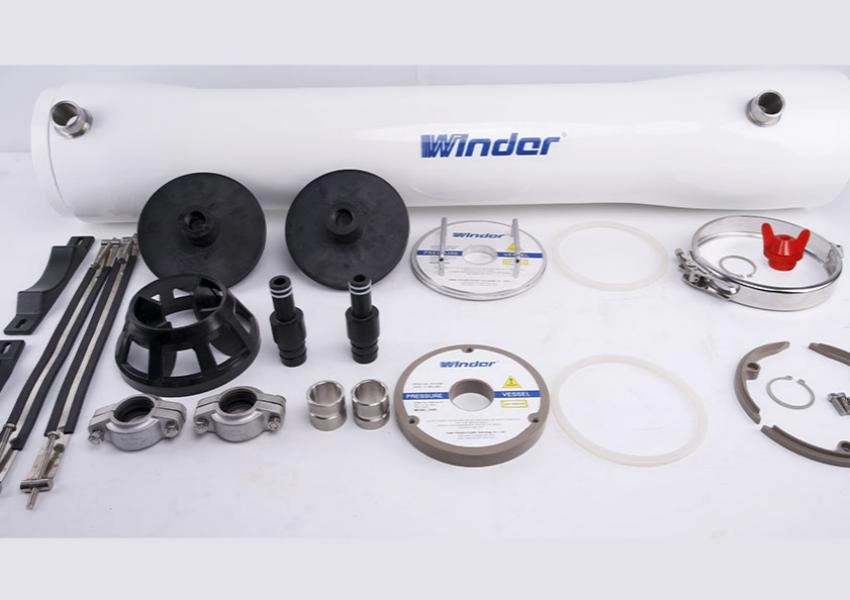
The closure seal is a small part, but it carries a large share of field complaints. It has to sit cleanly in the groove, compress evenly, and return to shape after the vessel is opened. If the seal is cut, flattened, swollen, dry, twisted, or coated with grit, the closure may still feel tight while the seal path is already compromised.
Common Seal Damage
Typical signs include a shiny flat section, a nick that can be felt by finger, a twisted section, or residue stuck to the sealing face. A seal can also roll during end cap insertion, especially when the operator pushes the cap at an angle or uses the wrong lubricant. The safer repair is replacement with the correct seal kit, not stretching a near-match part into the groove.
Fit And Cleanliness Matter
A clean groove is just as important as the seal itself. Sand, antiscalant residue, membrane preservative, or tiny FRP particles can hold the o-ring away from the surface. The groove should be wiped, inspected, and lightly lubricated with a compatible product before reassembly. If the same leakage returns after a new seal, the end cap, retaining parts, or shell seating surface should be checked.
RO End Cap Leak Causes
An RO end cap leak is not always a seal failure. The cap may be scratched, cocked to one side, exposed to uneven force, or assembled with missing parts. End caps also take handling abuse because operators pull them during membrane replacement, cleaning, and inspection.
Cap Seating And Retaining Parts
A closure should slide into position without forcing one edge ahead of the other. If it binds, the cause may be a dry seal, debris, misaligned components, or a damaged groove. Retaining plates, locking rings, bolts, clamps, and support parts must match the vessel design. Mixing old and new hardware can create uneven load, which may show up as an RO end cap leak during pressure ramp-up.
When End Cap Design Affects Service
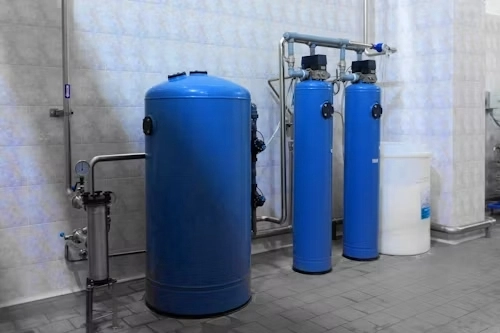
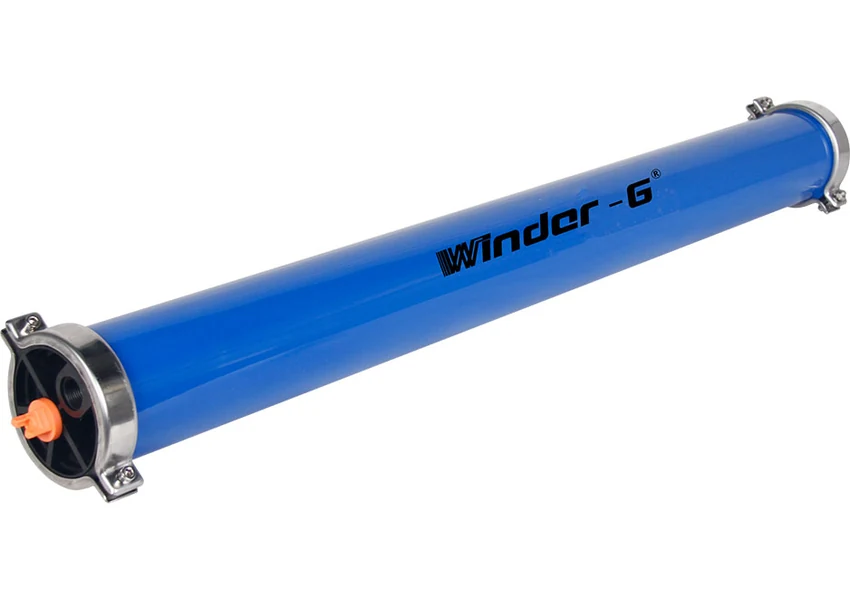
Hedelong‘s FRP membrane housing selection covers 8040 side port, 8040 end port, 4040 side port, and 4040 end port structures, with pressure classes from 150 to 1000 PSI in the general selection data. The manufacturing reference is JC692-1998, and hydrostatic permeation testing is listed at 1.5 times standard pressure. These details give buyers a baseline for asking whether the closure design, seal kit, and pressure rating match the skid duty.
Port Connection Leaks Need A Different Check
Port leaks are often blamed on the housing because the water appears on the vessel. In many cases, the real cause sits outside the shell: incorrect thread standard, too much tightening force, unsupported piping, vibration, poor gasket compression, or a pipe route that pulls the port out of alignment.
Thread And Gasket Mismatch
A feed, concentrate, or permeate port must match the thread type and sealing method. NPT, BSP, male and female connections cannot be treated as interchangeable just because they seem close during assembly. The Hedelong 4 inch side port has feed/concentration port sizes around 1 inch and permeate options such as 3/4 inch NPT on selected models, while 4 inch end port models list different NPT and BSP combinations. On 8 inch models, feed/concentration ports can be 1.5, 2, 2.5, or 3 inches, with permeate port options such as 1 inch NPT-F and 1 inch BSP. These are not cosmetic differences. They decide which fittings seal correctly.
Pipe Stress After Installation
A rigid manifold can look neat but still put side load on a port. If the skid is lifted, shipped, or re-piped, that load may increase. The leak may then appear only after vibration, pump start, or a warm-cold cycle. During membrane housing troubleshooting, maintenance teams should support the pipework and check alignment before tightening.
Choosing Housings And Spare Parts With Leaks In Mind
Leak risk is part of purchasing, not only maintenance. A buyer choosing the RO membrane housing range should ask about element count, pressure class, port layout, seal kits, end cap parts, and service clearance. The 4–inch end-to-end FRP RP membrane housing is a fit for compact commercial and smaller industrial skids where straight end connections make service simple. Where frequent opening is expected, the 4–inch quick-release FRP RO membrane housing can make access less awkward, although the seal still needs the same discipline.
For larger systems, the 8–inch side-contact FRP membrane housing supports multi-vessel arrays and side piping layouts, while the 8–inch end-to-end FRP RP membrane housing fits projects where end connections suit the frame and manifold plan. Hedelong has 4 inch side and end port models for 1 to 4 elements, operating pH 3-11, temperature from about -10 C to 66 C, 100,000 cyclic pressure tests, and burst pressure at six times design pressure for listed series. Similar 8 inch side and end port data covers 1 to 8 elements, selected low and high pressure classes, and the same need to match port size to the system.
For OEMs and distributors, spare parts deserve the same attention as the vessel. Keep the correct O-ring kits, end cap components, port fittings, and instruction sheets tied to each model. Ro membrane housing seals should be stored by model, not by rough diameter alone. If a customer reports leakage, the first response should ask for photos of the leak point, pressure at the time, chemical cleaning history, recent membrane replacement notes, and port connection details. A supplier should also identify which RO membrane housing seals fit each cap and port package. That kind of response shortens warranty discussions and protects both sides from guessing.
FAQ
Q1: What is the most common cause of an RO pressure vessel leak?
A1: Many leaks come from seal condition, end cap seating, or port connection stress. The exact cause should be located before replacing parts.
Q2: Can a membrane housing O-ring be reused after membrane replacement?
A2: It depends on condition. If the O-ring is cut, flattened, swollen, hardened, twisted, or dirty, replacement is safer than reuse.
Q3: What should buyers ask a supplier before approving membrane housing spare parts?
A3: Ask for model-specific O-rings, end cap components, port fitting standards, pressure rating, element count, and support from Hedelong for repeat orders.