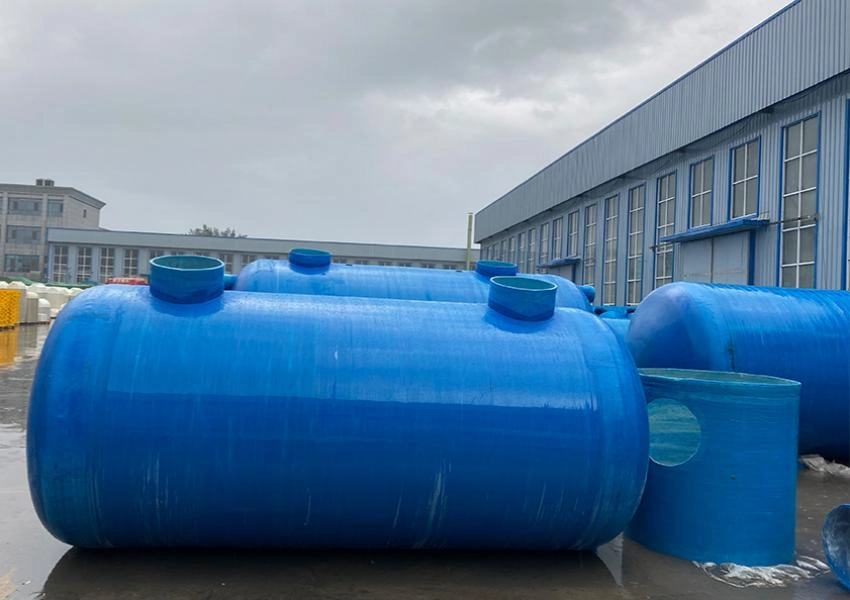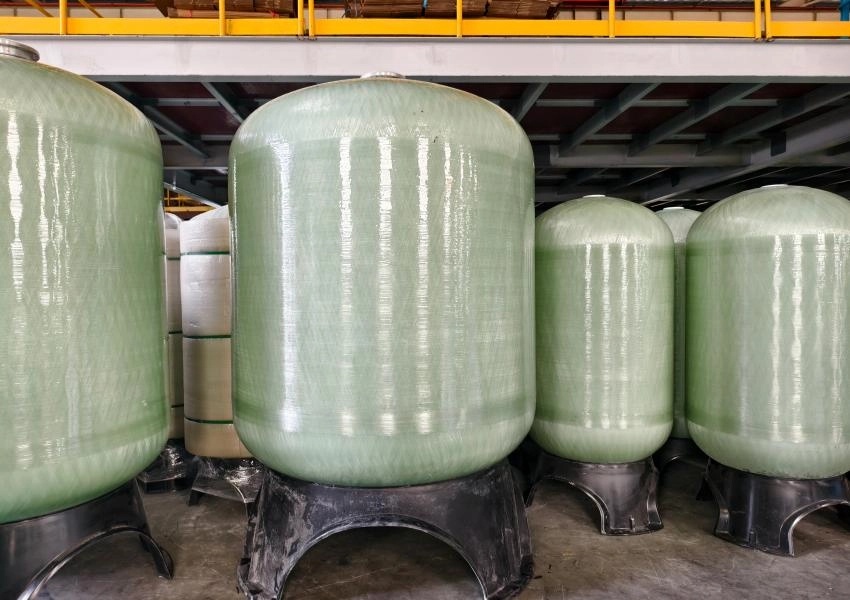

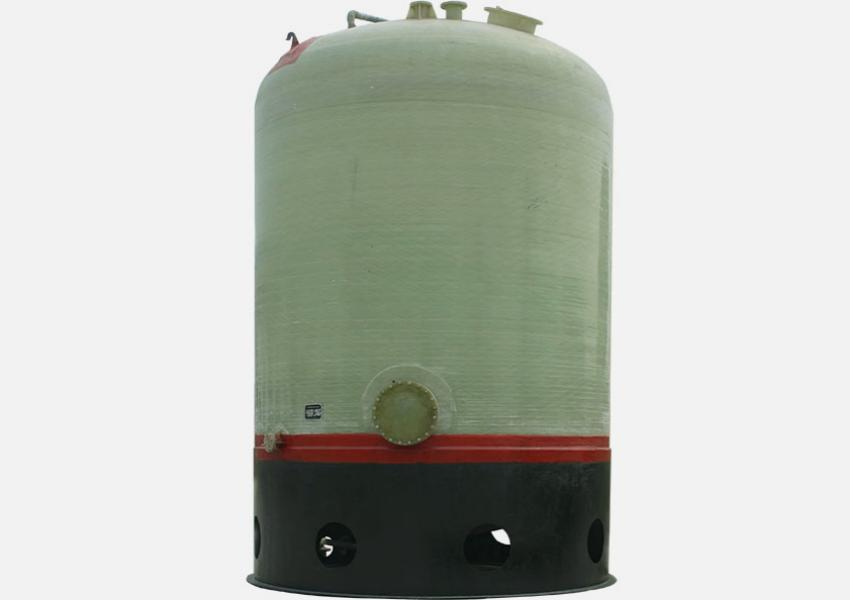
For ultrapure water, the storage tank is part of the quality boundary. A vessel can hold the right volume while exposing water to changes through air contact, particles, dissolved gases, stagnant zones, or difficult cleaning. The choice between a nitrogen-sealed water tank and conventional storage should follow the water-quality plan, not price or nominal capacity.
A conventional tank may suit treated water, process water, or a short holding stage with controlled turnover. A nitrogen-sealed design becomes more relevant when contact with ambient air is a concern and stored water must remain protected between purification and distribution. Neither option is automatically suitable for every UPW duty.
The Main Difference Is the Headspace
A conventional storage tank normally relies on an open or filtered vent to balance the air volume above the liquid as the level changes. That arrangement is simple and familiar. It can also create a direct gas-exchange path, depending on the vent design, pressure conditions, humidity, and surrounding cleanliness. For many industrial water duties, that tradeoff is acceptable. For high-purity water storage, it deserves a closer review.
Air Contact and Dissolved Gases
Air entering a tank can carry particles and moisture, while carbon dioxide transfer may affect water chemistry and conductivity. The actual change depends on the water condition, headspace, temperature, turnover, and vent arrangement. A tank should not be rejected because it has a vent, but the buyer should know what the vent protects against and what it cannot prevent.
A nitrogen-sealed arrangement replaces ordinary headspace exposure with a controlled nitrogen space above the water. The purpose is to separate the liquid from air and reduce a route for secondary contamination. That is the central reason a nitrogen-sealed water tank may be considered after RO, mixed-bed treatment, or another high-purity stage. It is a protective boundary, not a replacement for purification or final polishing.
When Conventional Storage Still Makes Sense
Conventional storage is not a weak choice by definition. It may fit a system where water is used quickly, the tank is located in a controlled area, the vent is properly filtered, and a recirculation loop keeps residence time short. It can also be practical when the stored water is an intermediate stream rather than the final high-purity supply. A simpler vessel may reduce capital costs, controls, and maintenance points.
Evaluate the Actual Exposure
Start with the water path: residence time, batch or continuous filling, level movement, idle branches, unused nozzles, and whether the return line reaches the whole vessel. These factors often matter more than the label “conventional” or “nitrogen-sealed”.
For a conventional ultrapure water tank, the RFQ should define the vent filter, air path, drainability, inspection access, internal surface, and cleaning method. A short buffer can have a manageable risk profile; a long distribution reservoir needs tighter control of gas exchange and residence time.
What Nitrogen Sealing Adds To UPW Storage
Le PRV nitrogen-sealed tank is described as a storage vessel for ultrapure water. The working principle is to separate stored water from air with nitrogen, while nitrogen admission and discharge are controlled automatically by tank pressure. The design is also described with a sanitary-grade resin inner lining and an exterior reinforced by resin and fiberglass winding.
Protection Has To Be Designed As A System
The gas boundary needs more than a nitrogen connection. A project should show the inlet, discharge, or relief route, pressure controls, isolation valves, level instrumentation, overflow, drain, sample point, and failure response. Nitrogen purity, pressure setpoints, sterile venting, alarms, and backup supply are project-specific items and should be confirmed in the RFQ. No universal nitrogen pressure or semiconductor acceptance value should be assumed.
A nitrogen-sealed vessel can reduce direct air exposure, but it does not remove all contamination routes. Particles may enter during maintenance. Microorganisms may grow in warm or stagnant sections. Seals, nozzles, instruments, and cleaning chemicals still need review. The tank must remain connected to suitable circulation, sampling, sanitation, and maintenance practices.
Compare Materials, Seals, and Cleanability
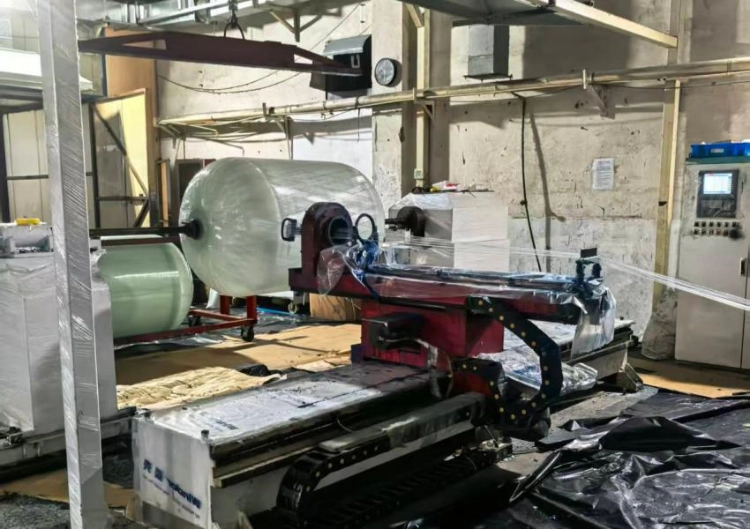
A storage tank for high-purity water should be reviewed as a wetted-surface system. The inner lining, structural laminate, nozzles, gaskets, valves, level probes, sample fittings, and drain arrangement all touch or influence the water. A general corrosion-resistance statement is useful, but it does not prove compatibility with a particular UPW specification or sanitization procedure.
The Inner Surface Is the First Review Point
Hedelong’s product information identifies a sanitary-grade resin inner lining for the nitrogen-sealed design. The wider FRP tank range includes resin and fiberglass winding reinforcement, liner options, impermeability, corrosion resistance, and customized openings. Nitrogen-sealed tank diameters of 3.5 meters and above can be customized. Final liner, seals, surface condition, and acceptance tests still require written confirmation.
For conventional process-water duties, Hedelong’s FRP composite tank has food-grade HDPE lining, epoxy resin and fiberglass winding reinforcement, threaded or flanged connections, and 125 or 150 PSI operating-pressure references. It also lists pressure-fatigue tests above 100,000 cycles and a burst-test basis of four times design pressure. These figures apply only to the specified composite tank series. They are not a rated-pressure or structural claim for the nitrogen-sealed product without supplier confirmation.
Conventional tanks can use different materials and lining arrangements, so the comparison should be made on the actual proposed construction rather than on the tank category. Ask for the resin or liner designation, laminate description, nozzle materials, gasket material, surface-finish information, and cleaning limitations. If the water specification is strict, request extractables, particle, or cleanliness evidence where applicable to the project.
Cleaning and Inspection Boundaries
Both designs need access for inspection, a low-point drain, a flushing route, and a documented cleaning method. The isolation and return-to-service sequence should be written before purchase.
Make The Tank Fit the UPW System
Tank selection cannot be separated from the RO and distribution layout. The RO train determines production timing and water quality at the outlet. The tank manages the buffer. The recirculation loop limits stagnation. Instruments show whether quality is holding. A review of the RO membrane housing range can help align the upstream vessel arrangement with the storage and distribution duty, but RO housing pressure data should never be transferred to the tank without a separate mechanical review.
Turnover, Recirculation, And Sampling
The design should state expected turnover and identify the areas that may move slowly. A bottom outlet, well-positioned return, suitable internal geometry, and full drainability are practical details with direct maintenance value. Sampling points should represent the water path after treatment, at the tank outlet, and on the return loop where the plant’s quality plan requires verification.
For UPW storage, monitoring may include resistivity or conductivity, temperature, flow, pressure, total organic carbon, particles, and microbiological indicators. The required list depends on the semiconductor or industrial process. Trending is important because a gradual change in water quality or tank behavior can appear before an out-of-specification event.
How To Choose Between The Two Designs
A nitrogen-sealed water tank is more compelling when air isolation is a stated quality objective, water residence time is significant, the stored water feeds a sensitive process, or the facility can support gas controls and verification. A conventional vessel may be the better fit when turnover is rapid, exposure is controlled, the tank holds an intermediate stream, and a filtered vent plus circulation meets the acceptance plan.
Put The Decision In The RFQ
The RFQ should include inlet and outlet water quality, volume, flow pattern, residence-time target, temperature, cleaning method, headspace arrangement, nitrogen requirements if applicable, vent filtration, drains, level instruments, sampling points, installation environment, and containment.
Request a general arrangement drawing, nozzle schedule, process and instrument diagram, materials list, pressure and vacuum limits, inspection and test plan, maintenance instructions, spare-parts list, and packing details. If custom openings are needed, they should be shown on the approved drawing. A clear document package reduces the chance that a tank arrives with a convenient connection layout but no practical way to inspect or maintain it.
Hedelong’s PRV water treatment tank and PRV storage tank are relevant starting points for a nitrogen-sealed or conventional FRP tank discussion. The broader FRP tank solutions route can also be reviewed when the package includes filtration, softening, dosing, or reuse equipment. Final selection remains tied to the buyer’s water specification and site controls.
For a complete supplier review, Hedelong can be considered alongside the tank drawing, RO interface, instrumentation, testing, and service boundaries. The useful question is not which design sounds more advanced. It is which storage boundary gives the project a controllable, inspectable, and maintainable way to protect water quality.
FAQ
Q1: Is a nitrogen–sealed water tank always better than a conventional tank?
A1: No. Nitrogen sealing can reduce direct air contact, but a conventional tank may be suitable when turnover is fast, the vent is controlled, circulation is effective, and the stored stream is not the final sensitive water supply.
Q2: Does nitrogen sealing make water semiconductor-grade?
A2: No. It protects a storage boundary from one contamination route. Purification, polishing, materials, circulation, cleaning, monitoring, and the site’s acceptance criteria still determine whether the complete system meets its intended water quality.
Q3: What should be confirmed before buying an FRP water tank for UPW storage?
A3: Confirm the lining and wetted materials, gas or vent arrangement, pressure and vacuum limits, volume, turnover, nozzles, drainability, instruments, cleaning method, inspection documents, tests, spare parts, and all site-specific water quality requirements.