
High TDS cooling water is rarely a problem because of one number alone. In a data center, dissolved minerals become a practical concern when they concentrate in a cooling loop, combine with hardness or silica, and push the system toward scale, corrosion, frequent blowdown, or unstable chemical control. The data center cooling water review should separate those risks before a treatment package is specified.
A useful treatment plan separates TDS from the substances that make up TDS. Calcium and magnesium affect hardness and scale. Chloride can raise corrosion concerns. Silica may limit concentration cycles. Microbial growth is a separate biological issue. RO, an FRP storage tank, side-stream filtration, and chemical control may each have a place, but only after the source water and cooling equipment are reviewed together.
What High TDS Changes In A Cooling Loop
Cooling towers remove heat through evaporation. Water leaves as vapor, while many dissolved substances remain behind. Unless a controlled blowdown stream removes part of that concentrated water, the dissolved load rises over time. The result is not simply salty water. It is a changing chemical environment inside the basin, fill, heat exchanger, piping, and makeup water controls.
Scale And Heat Transfer Loss
High TDS cooling water may carry calcium, magnesium, alkalinity, silica, and other ions that form deposits as temperature and concentration change. A deposit on a heat-transfer surface adds resistance between the water and the metal. The exact scaling risk depends on the full analysis, temperature, pH, concentration cycles, and treatment program. TDS alone cannot predict which mineral will form or how fast it will build.
Corrosion Is Not The Same As TDS
High conductivity can make corrosion control more difficult, but a high TDS reading does not identify the corrosive species. Chloride, dissolved oxygen, pH, temperature, metallurgy, flow, deposits, and chemical dosing all matter. A cooling loop with high TDS and low chloride may present a different risk from one with lower TDS but a chloride-rich makeup source. That distinction belongs in the engineering review.
Separate TDS, Hardness, Silica, Chloride, And Biology
The phrase “high TDS cooling water” is useful as a warning, but it is too broad for a treatment purchase order. A data center water treatment plan should identify the components behind the reading and track the indicators that control the actual failure modes.
Hardness And Alkalinity
Hardness is mainly associated with calcium and magnesium. When combined with alkalinity, heat, and concentration, it can contribute to carbonate scale. Softening may reduce hardness, but it does not remove every dissolved salt. If the cooling process has a silica or chloride limit, a softener alone may leave the main concern untouched.
Silica, Chloride, And Other Dissolved Ions
Silica can become difficult to control at higher concentrations and may require a different treatment decision from carbonate hardness. Chloride deserves attention because it can affect corrosion behavior and material selection, particularly around metal heat exchangers and fittings. Sulfate, iron, manganese, and organic matter may also change the treatment burden. The makeup-water report should be read as a composition, not just a TDS value.
Microbial Growth Needs Its Own Control
Microorganisms are not explained by TDS. Warm, aerated cooling equipment can support biological growth when the control program, inspection routine, or biocide dosing is not working. Biofilm may increase fouling and under-deposit corrosion even when the conductivity reading looks acceptable. Filtration and RO do not replace a cooling-water biological control plan.
Where Reverse Osmosis Fits
Reverse osmosis can lower the dissolved load of a selected feed stream, which may help a cooling system work with less mineral carryover. It does not remove the need for pretreatment, concentrate handling, membrane cleaning, or cooling chemistry control. Suspended solids, oxidants, oil, hardness precipitation, and biological fouling should be addressed before they become membrane problems.
Treat The Right Stream
Some facilities evaluate a side stream, while others treat makeup water before it enters the cooling equipment. The choice depends on flow, water balance, cooling technology, recovery target, blowdown route, and the cost of an off-specification event. A smaller RO unit may be easier to isolate, but its production rate and storage volume must still cover the real demand pattern.
Match The RO Housing To The Duty
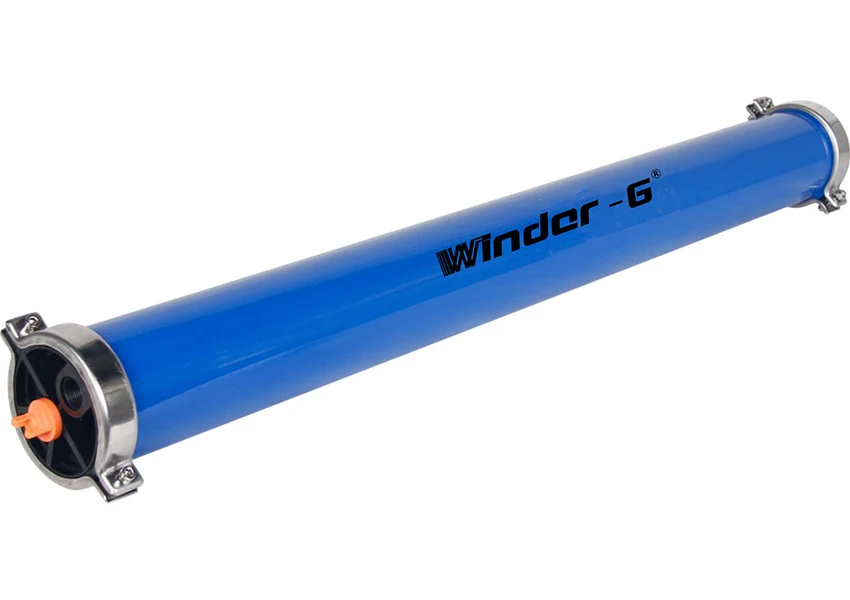
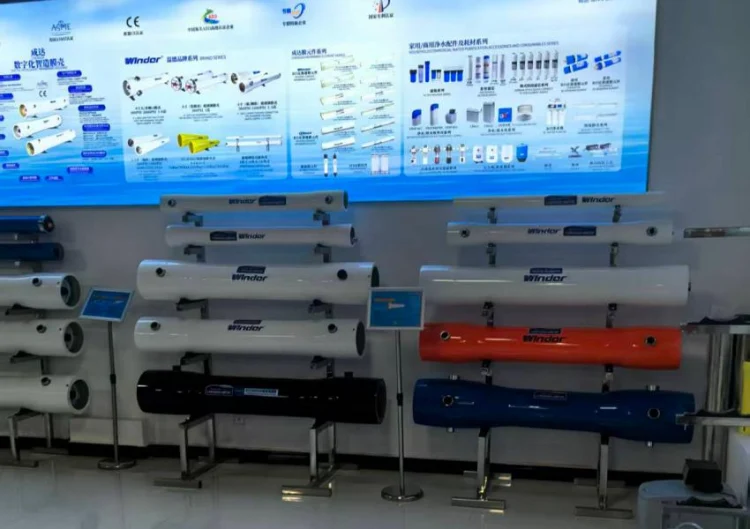
A membrane housing is part of the pressure boundary and maintenance plan. The buyer should confirm element format, element count, vessel length, port layout, connection size, pressure class, temperature, pH, seals, and removal clearance. Hedelong’s 4-inch side-entry GFK RO-Membrangehäuse is listed for one to four elements, with 300 and 450 PSI low-pressure selections and 600, 1000, and 1200 PSI higher selections. Those are product options, not a promise that any one class suits every cooling-water train.
It has a pH range of 3 to 11, an operating temperature range of -10 C to 66 C, more than 100,000 cyclic pressure tests, and a burst-pressure basis of six times design pressure for the applicable 4-inch series. Such details help screen a candidate reverse osmosis vessel. The final order still needs the membrane manufacturer’s limits, pump data, feed analysis, cleaning chemistry, and drawing approval.
Why FRP Storage Matters After Treatment
RO production and cooling demand do not always move together. A storage tank provides a buffer between treatment and use, gives operators time to sample water, and can help isolate an off-specification batch before it reaches the cooling loop. It should be treated as part of the control strategy, not as an oversized container added at the end of the layout.
Select The Tank Around Water Contact
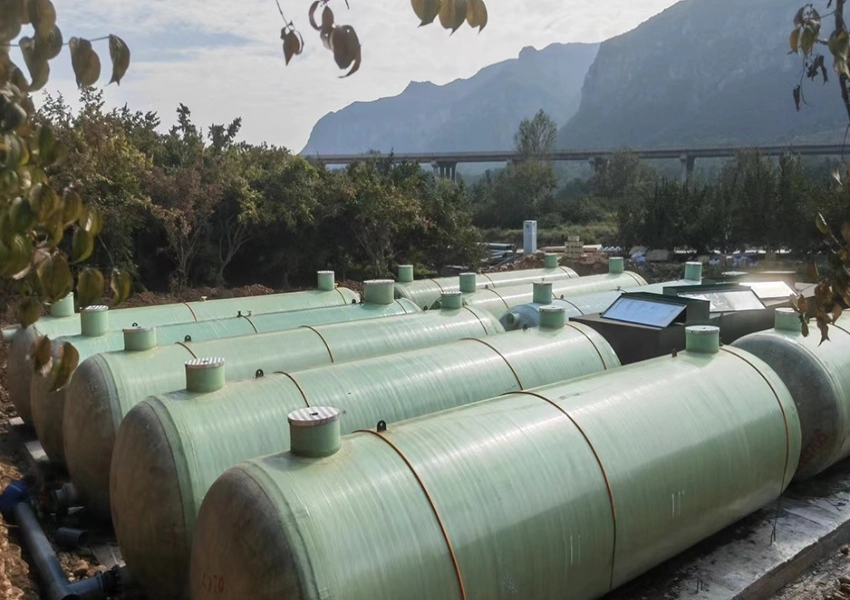
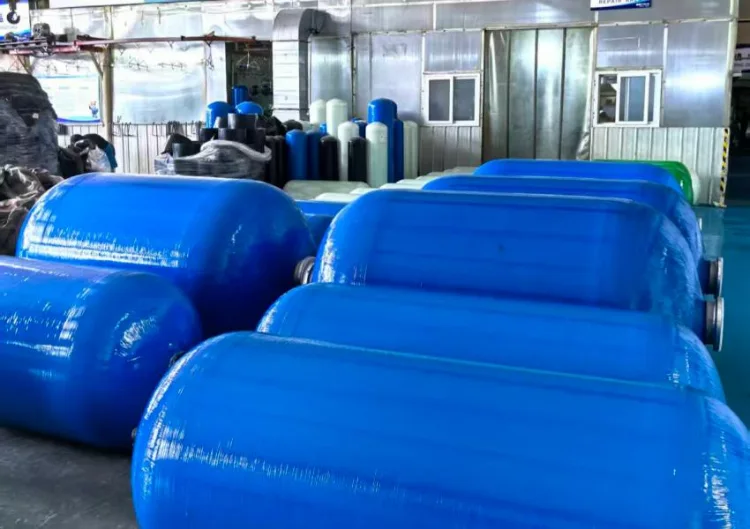
Hedelong’s GFK Lagertanks are positioned for water and chemical storage with light weight, strength, corrosion resistance, impermeability, impact resistance, and custom structures. For a data center project, the request should also cover the stored-water temperature, outdoor exposure, support, level instruments, venting, overflow, drain, access, and secondary containment. Nominal volume is only one part of the tank decision.
Keep The Buffer From Becoming A New Risk
A tank can create water-quality trouble if it has dead zones, poor drainage, uncontrolled return flow, or insufficient inspection access. The tank material and inner surface should match the treated water and any cleaning method. The FRP water-treatment material includes PE inner-liner options, epoxy resin and fiberglass winding reinforcement, threaded or flanged connections, and standard tank designs tested for pressure fatigue. The final configuration still depends on the storage duty rather than a generic claim of compatibility.
Der GFK water treatment tank category is relevant when the same package also needs filtration, softening, brine handling, or dosing support. The RO membrane housing range covers 4040 and 8040 side-port and end-port directions, allowing the integrator to compare vessel size and layout against the actual skid. Keeping these decisions in one RFQ can reduce mismatched connections and spare-part gaps.
Build A Cooling Tower Water Treatment Specification
A good cooling tower water treatment specification contains the information of the source water analysis, the expected makeup flow, the peak demand, the concentration or the blowdown strategy, the target operating indicators, the pretreatment, the RO recovery, the concentrate route, the chemical dosing, the monitoring points, the alarms, the storage volume, and the sampling plan. This is the practical starting point for water treatment for data centers, because it ties the necessary equipment to the cooling tower’s cooling duty rather than to a generic water-quality label. The specification must also describe what to do with the water when it is off-spec: divert, hold, re-treat, or stop the makeup connection.
Monitor Trends, Not Just Limits
Operators benefit from seeing conductivity, pH, hardness-related results, silica (where relevant), chloride, temperature, pressure drop, flow, and biological-control indicators as trends. A single acceptable sample does not prove that the loop will remain stable. Rising pressure drop across pretreatment, changing RO permeate quality, or a gradual increase in blowdown demand may show that the water balance is moving before a visible deposit appears.
Leave Space For Service
Maintenance access to all parts of the system to carry out membrane removal, end-closure inspection, seal replacement, filter service, tank inspection, instrument calibration, chemical-handling controls, etc. Store of spare membranes, O-rings, cartridges, dosing parts, relevant fittings etc. For repeat builds, record the approved vessel model, port arrangement, tank configuration, test documents, and replacement part numbers for approved shipment of the first part number.
For a coordinated package, Hedelong includes FRP tanks, membrane housings, dosing tanks, filters, softeners, valves, controllers, and related accessories. The practical value for a data center buyer is a clearer equipment boundary. Water quality, pressure, storage, maintenance, and documents can be reviewed together, while site-specific cooling limits remain with the project engineer and cooling-equipment supplier.
Häufig gestellte Fragen
Q1: Does high TDS automatically mean a data center cooling loop will fail?
A1: No. TDS is a warning about dissolved load, not a complete diagnosis. Hardness, alkalinity, silica, chloride, pH, temperature, metallurgy, concentration cycles, deposits, and microbial control must be reviewed together.
Q2: Can reverse osmosis replace cooling tower water treatment?
A2: No. RO may reduce dissolved minerals in a selected stream, but pretreatment, blowdown control, corrosion and scale management, biological control, monitoring, and concentrate handling may still be required.
Q3: What should an RFQ include for an RO housing and FRP tank package?
A3: Include the water analysis, flow balance, cooling equipment limits, membrane format, element count, housing pressure and ports, tank volume and lining, temperature, cleaning chemistry, instruments, drawings, testing, certificates, spare parts, and service clearance.