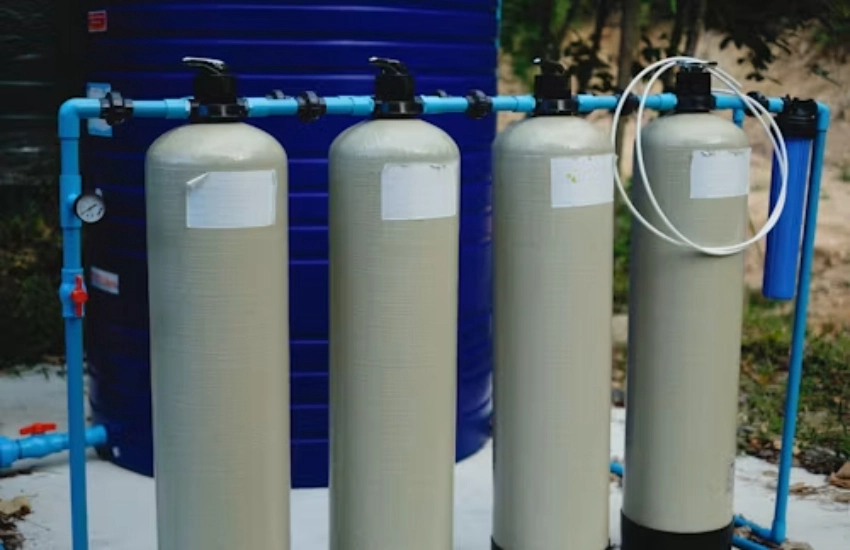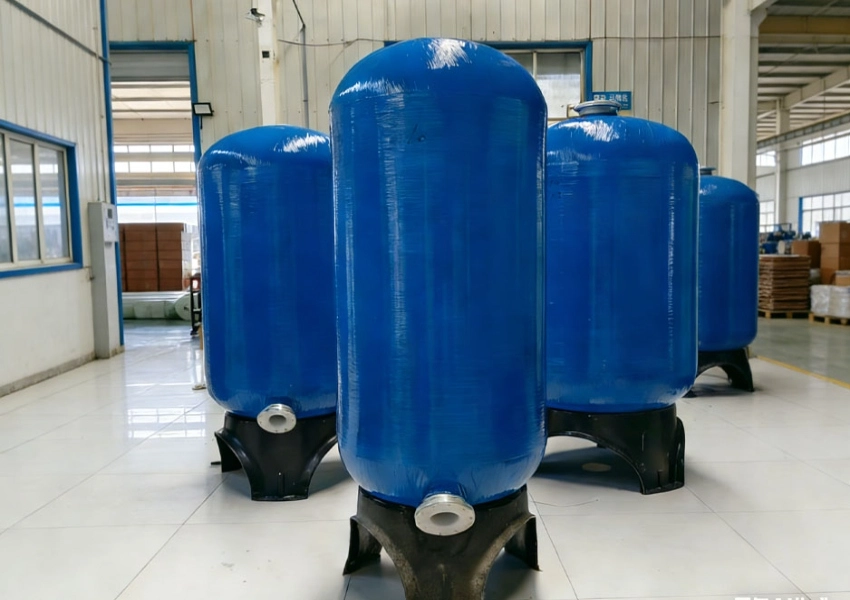

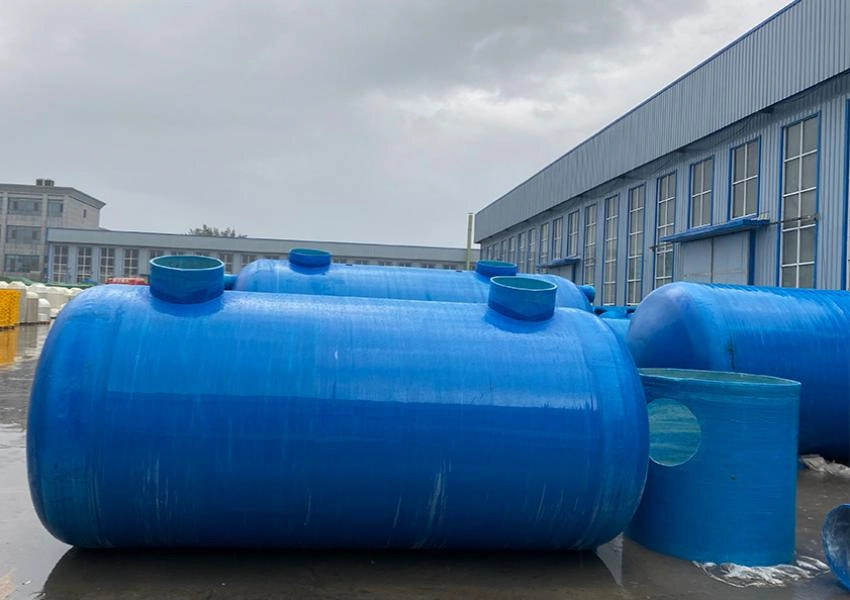
Data center cooling can consume a steady stream of treated water, especially where evaporative equipment, blowdown, or local water restrictions make makeup water a project concern. A well-designed data center water reuse scheme does not begin with an RO skid alone. It begins by separating collection, pretreatment, membrane treatment, storage, monitoring, and final use so that each part has a clear job.
RO can reduce dissolved load in a selected side stream, while an FRP tank can provide the buffer needed between water generation and cooling demand. The right data center water treatment arrangement depends on the source water, the cooling technology, the required water quality, and the consequences of a short treatment interruption. Those conditions should be settled before equipment is sized.
Map The Water Path Before Choosing Equipment
The first design task is to draw the actual water path. Potential sources may include cooling-tower blowdown, condensate, process drainage, rainwater, or another approved non-potable stream. These sources should not be treated as interchangeable. Each brings different solids, dissolved minerals, biological conditions, temperature, and seasonal variation.
Separate Collection, Treatment, And Use
A practical data center water system normally needs a collection point, screening or filtration, chemical control where required, RO or another polishing step, treated-water storage, and a controlled connection to the cooling-water makeup line. Keeping these stages visible makes troubleshooting easier. If conductivity rises at the cooling loop, the operator can ask whether the cause is source blending, pretreatment breakthrough, membrane performance, storage contamination, or a control problem.
Set The Water Quality Boundary With The Cooling Team
RO cooling water should not be specified by a generic purity label. The cooling equipment supplier and water-treatment engineer need to confirm limits for conductivity, hardness, silica, alkalinity, corrosion control, biological treatment, and any discharge requirement that applies to the site. The final target may differ between an open cooling tower, a closed loop, adiabatic equipment, and a hybrid system.
Where RO Fits In Cooling Water Recycling
RO is useful when dissolved minerals or specific contaminants in a recoverable stream would limit reuse. For cooling water recycling, it is not a universal answer for every water-quality problem. Suspended solids, oil, oxidants, biological growth, and scaling precursors may need control before water reaches the membrane. A membrane train that receives unstable feed water will create a maintenance problem rather than a reliable reuse line.
Treat The Side Stream, Not Every Drop By Default
Many projects can start by evaluating a side stream instead of routing the entire cooling-water flow through RO. A side stream approach may reduce equipment size and make the treatment skid easier to isolate for service, but the actual flow balance still needs calculation. Collection rate, RO recovery, concentrate handling, cleaning frequency, and peak cooling demand must be checked together.
Match The Housing To The Membrane And Skid
The pressure vessel is part of the treatment boundary, not a decorative enclosure. Diameter, element count, port direction, connection size, design pressure, temperature, pH, seals, and access space all affect the skid. Hedelong’s 4-inch side-entry FRP RO membrane housing range includes one to four elements, low-pressure selections at 300 and 450 PSI, and higher listed selections at 600, 1000, and 1200 PSI. The appropriate class must follow the membrane data and pump design, not a rough assumption about cooling water.
It has a 100,000-cycle pressure test, a burst-pressure basis of six times design pressure for the relevant series, an operating pH range of 3 to 11, and a temperature range from -10 C to 66 C. Those figures are useful for screening a candidate’s housing. They do not replace confirmation of the actual feed chemistry, cleaning solution, and operating envelope for the project.
Use FRP Storage As A Control Point, Not Just A Tank
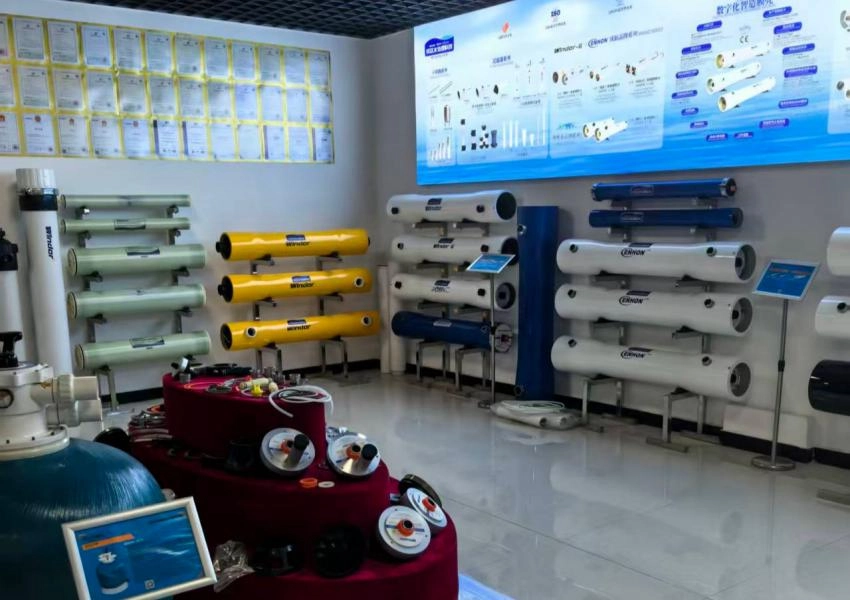
Treated water rarely arrives at exactly the same moment that the cooling system needs it. Storage gives the process a buffer, but the tank also becomes a quality-control point. Its volume should reflect treated-water production, cooling demand, cleaning or maintenance windows, emergency reserve policy, and the time required to investigate an off-specification sample.
Choose The Tank Around The Stored Water
An FRP storage tank can fit water storage projects where corrosion resistance, low weight, strength, impermeability, and a customized structure matter. The tank still needs a proper review of the stored water, temperature, outdoor exposure, support, inlet velocity, overflow, drain, vent, level measurement, and containment. A tank selected only by nominal volume may create awkward piping or insufficient inspection access.
Protect Water Quality During The Hold Period
Storage can change water quality if the tank is poorly vented, difficult to drain, exposed to heat, or connected to an uncontrolled return line. The project should define whether the tank is atmospheric, closed, nitrogen-sealed, or part of a pressurized arrangement. Hedelong’s FRP water-tank material includes sanitary-grade inner lining options, resin and fiberglass winding reinforcement, and water-reuse applications. The final lining and configuration still need to match the intended water contact and site conditions.
Build Pretreatment And Monitoring Around The RO Unit
A data center water treatment package should make water quality visible before the RO housing. Typical checks may include turbidity, pressure drop, conductivity, pH, temperature, residual oxidant, hardness, and chemical dosing status, but the exact instrument list depends on the source and the cooling process. The important point is to catch a change before it becomes a membrane or cooling-loop complaint.
The FRP water treatment tank category is relevant when the reuse train also needs filtration, softening, brine handling, or dosing support. For project procurement, request a process flow diagram, design flow, peak flow, expected recovery, concentrate route, tank operating level, instrument list, and cleaning method. These documents keep the RO housing and storage tank connected to the same duty statement.
Control Return And Bypass Conditions
A reuse system needs a clear decision for off-specification water. The control sequence may divert water to drain, return it for another treatment step, hold it in quarantine storage, or stop makeup to the cooling system. Bypass lines should not become an unnoticed route around treatment. Labeling, valve position feedback, alarms, and sampling points are small details that protect the whole operating strategy.
Specify The Package For Maintenance And Expansion
Data center projects run under tight uptime expectations, so maintenance access is part of the wet design. Leave room to remove membrane elements, inspect end closures, replace seals, clean strainers, calibrate instruments, and isolate the tank without shutting down every water source. Also decide where replacement housings, membrane elements, O-rings, filter media, and dosing components will be stored. This is where a data center water system earns its reliability during an unplanned service window.
The RP membrane housing includes 4040 and 8040 configurations with side-port and end-port options. That range can support different RO cooling water skid sizes, but each purchase should still identify the element format, vessel length, port layout, pressure class, materials, spare parts, and drawing approval point. For repeat data center builds, configuration control matters as much as the first quotation.
A supplier discussion becomes more useful when the buyer sends the water analysis, flow balance, cooling equipment requirements, tank location, drawings, expected operating schedule, and documentation list. Hedelong has FRP tanks, membrane housings, brine tanks, dosing tanks, filters, softeners, valves, and controllers. That broader product scope can help coordinate the tank and RO housing, while the final selection remains tied to the project engineer’s water-quality and pressure calculations.
FAQ
Q1: Can RO water be sent directly to a data center cooling loop?
A1: Not automatically. The cooling equipment, water chemistry program, storage arrangement, and site discharge rules should define the required quality and whether blending, remineralization, corrosion control, or additional treatment is needed.
Q2: What is the role of an FRP storage tank in cooling water recycling?
A2: It can buffer treated-water production and cooling demand, provide a point for level and quality monitoring, and allow the treatment train to operate separately from short-term cooling fluctuations. Volume, lining, venting, drainage, and containment need project-specific review.
Q3: What should be included in an RFQ for a data center water reuse system?
A3: Include the source-water analysis, flow and peak demand, cooling equipment requirements, RO membrane format, vessel pressure and port requirements, tank volume and location, pretreatment, concentrate handling, instruments, cleaning method, drawings, certificates, spare parts, and service access.