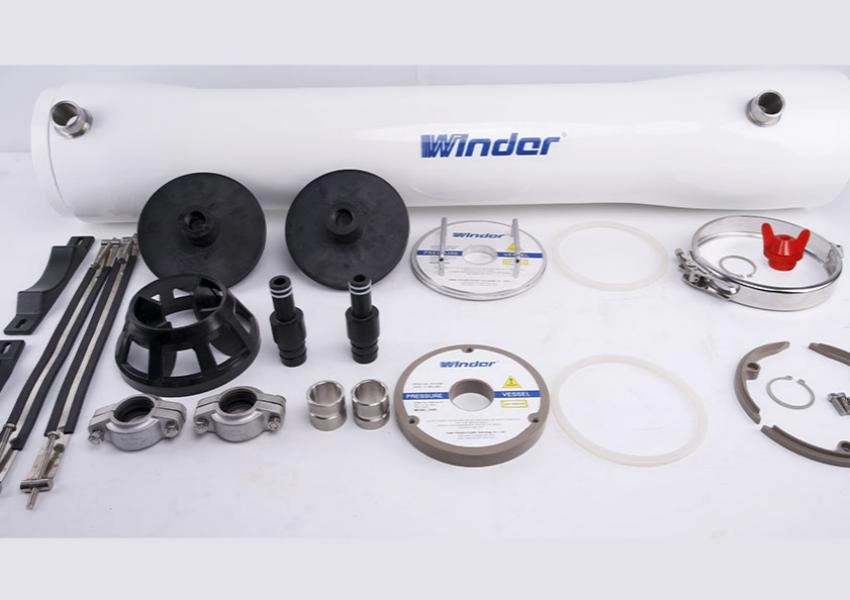

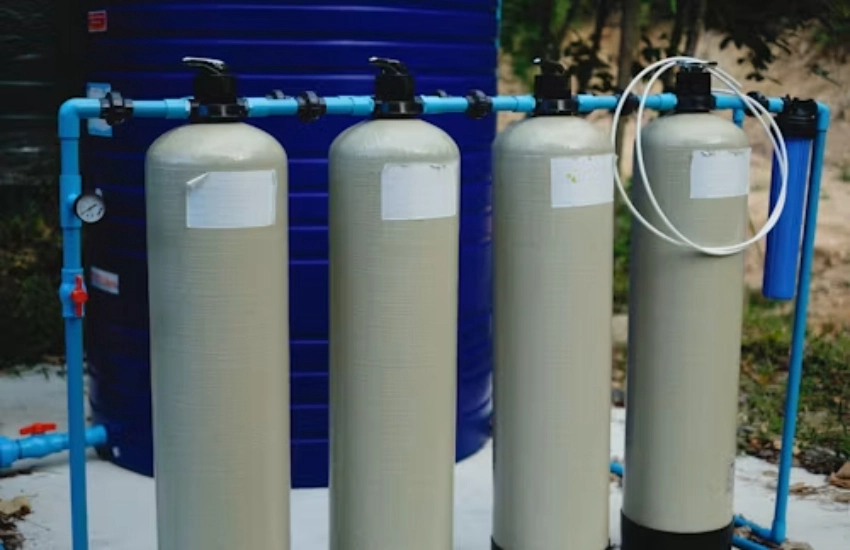
PFAS projects are rarely won by one component. The integrator has to make a full treatment train work: pretreatment, membrane selection, pumps, controls, reject handling, sampling points, and documentation. Still, the pressure vessel is not a small detail. Poorly matched housing can slow membrane change-outs, create port stress, or leave the operator with weak records when the project moves from pilot approval to shipment.
For any RO system for PFAS removal, the membrane housing should be treated as a pressure-rated, serviceable part of a broader removal barrier. It does not prove PFAS removal on its own. The right question is more practical: can the vessel hold the selected elements, operate within the required pressure class, seal reliably, survive cleaning exposure, and arrive with documents that the owner and regulator can review?
Start With System Fit, Not Removal Claims
PFAS treatment usually brings extra scrutiny because the final water quality target may be tied to a permit, drinking-water requirement, industrial discharge limit, or customer specification. That makes equipment selection more document-heavy than a normal polishing RO project.
Treat PFAS Performance As A System Result
An RO membrane pressure vessel supports the membrane elements under pressure. It is not the membrane, the pretreatment package, the analytical method, or the compliance plan. In a PFAS treatment system, any removal statement should be tied to the membrane model, feed-water chemistry, recovery, fouling control, sampling plan, and verified test results.
That distinction protects both sides of the purchase. Integrators can ask the vessel supplier for pressure, material, port, drawing, and test records while keeping PFAS rejection claims with the process designer and membrane supplier.
Match Vessel Layout To Membrane Elements
The first mechanical check is simple but often rushed: element diameter, element count, vessel length, and connection type. Hedelong’s RO membrane housing covers common 4040 and 8040 formats, including side port and end port structures. For larger PFAS water treatment equipment, 8040 vessels are often considered because they suit modular skid layouts.
Element count matters as much as diameter. Hedelong’s 8-inch side port and end port series can be configured for 1 to 8 standard 8 inch elements, while 4-inch models are used for smaller commercial or pilot systems.
Verify Pressure Rating, Ports, And Flow Layout
Pressure vessel selection should follow the pump, membrane, and concentrate-side design conditions. A PFAS project may run at moderate brackish-water pressure, or it may need more margin because the feed water contains salts, organics, or scaling risk beyond PFAS.
Pressure Class And Operating Margin
Hedelong’s membrane housing selection data include pressure classes such as 150, 300, 450, 600, 800, and 1000 PSI, with some 8-inch ones having higher optional classes up to 2000 PSI for demanding industrial or desalination work. Overspecifying pressure adds cost and weight. Underspecifying it creates a safety and warranty problem.
Confirm the normal operating pressure, cleaning pressure, pressure spikes during startup and shutdown, and the relief-valve setting. Ask for the design pressure on the approved drawing, not just a catalog name.
Side Port Or End Port
Port location affects the skid more than it appears on a purchasing sheet. A side-port layout can make manifolds easier when several vessels run in parallel. Hedelong’s 8–inch side-contact FRP RO membrane housing is positioned for flexible piping, multiple elements, and industrial RO applications where manifold routing needs room.
End-port housings keep connections at the ends and can produce a compact, orderly skid. Hedelong’s 8–inch end–to-end FRP RO membrane housing is a better shortlist when the integrator wants standardized pressure-tube rows and a cleaner piping envelope. Neither style is automatically superior. The right choice depends on pump room space, valve access, sample ports, permeate collection, and the direction membranes must be removed.
Look Closely At Seals, Materials, And Cleaning Access
PFAS water treatment equipment may run for long hours with frequent monitoring. Small leaks, awkward end-cap removal, or unclear spare-part lists can become expensive when operators must document every maintenance action.
O-Rings, End Caps, And Port Connections
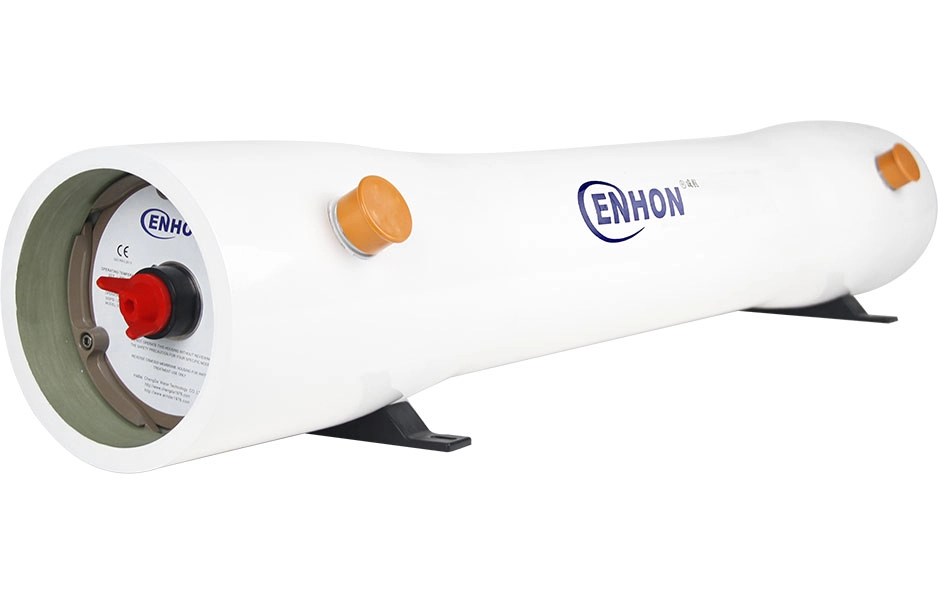
A vessel purchase should include the end cap structure, O-ring or seal kit details, port thread or connector specification, and recommended installation steps. Seal reliability depends on more than the FRP shell. Pipe stress, uneven supports, damaged O-rings, thread mismatch, poor lubrication, and rushed membrane loading can all create field issues.
For smaller systems, Hedelong’s 4–inch end-to-end FRP RO membrane housing gives integrators a compact option for commercial RO, pilot testing, or lower-flow units. Where frequent access is expected, the 4–inch quick-release FRP RO membrane housing may reduce service time, especially on trial systems that need membrane inspection or replacement more often than a mature production skid.
Chemical Exposure During Cleaning
Do not treat the phrase corrosion-resistant as a blanket chemical approval. FRP housings can offer strong corrosion resistance compared with metal vessels, and Hedelong links the body construction to glass fiber and epoxy resin systems. It also has operating boundaries such as temperature ranges and, for selected series, pH ranges that should be checked against the final model. PFAS systems may use cleaning steps to control scaling, biofouling, organics, or particulate fouling. The actual chemical list, concentration, temperature, and soak time must be confirmed before purchase.
Check Testing, Batch Control, And Shipment Records
Large PFAS programs can involve several skids, phased site rollouts, or repeated builds for different plants. In that setting, the vessel becomes part of a repeatable equipment standard.
Pressure Tests And Qualification Evidence
Hedelong’s technical records for FRP membrane housing reference JC692-1998 manufacturing requirements and hydrostatic permeation testing at 1.5 times the standard pressure. Others include 100,000 cycle or fatigue-test references, and some series list burst-test ratios such as four or six times design pressure. Tie these figures to the exact model ordered.
Before shipment, request a clean document pack: approved drawing, pressure rating sheet, port specification, material statement, test record, packing list, label or nameplate information, and spare seal list. For an RO system for PFAS removal, keep membrane certificates, water-quality testing, and site commissioning in a separate file.
Repeatability For Multi-Skid Projects
Batch consistency is easy to overlook when the first unit looks correct. Ask whether the same color, port orientation, pressure class, end-cap style, permeate outlet standard, and spare kits can be supplied across all skids. For containerized equipment, even small changes in port position may affect pipe supports and replacement clearance. Hedelong’s RO membrane housing gives integrators a useful way to compare side port, end port, quick assembly, and cleaning-related vessel options before locking the skid design.
Where Hedelong Fits In A PFAS Treatment System
The supplier conversation should happen after the process designer has defined the membrane train but before the skid drawing is frozen. That is when housing dimensions, pressure class, port direction, accessories, and packaging can still be adjusted without painful rework.
Product Pages Worth Shortlisting
Hedelong manufactures FRP tanks, membrane housings, brine tanks, dosing tanks, water storage tanks, filters, softeners, valves, and related water-treatment accessories. The company also has CE, ISO9001, domestic hygiene approval documents, and other quality-related documents. For integrators comparing vessel families, Hedelong can serve as the starting point, and then the short list can move into the exact housing pages.
The most relevant PFAS treatment system candidates are usually the 8-inch side port or 8-inch end port housings for production skids, plus 4-inch housings for compact commercial units, pilots, and test loops.
Supplier Questions Before Purchase
Good RFQs are specific. Ask for the pressure class, element count, membrane brand fit, connection drawings, feed and concentrate port sizes, permeate outlet standard, O-ring material, assembly guidance where available, operating temperature boundary, chemical compatibility confirmation, and test documentation. The final check is commercial, not only technical. Can the supplier keep the same model across repeat orders? Are spare seal kits named clearly? Can packing protect end caps and ports during export shipments? Those practical details decide whether a clean design stays clean on site.
FAQ
Q1: Can an RO membrane pressure vessel prove PFAS removal performance?
A1: No. The vessel supports the membrane elements under pressure. PFAS removal must be validated through the membrane selection, full process design, feed-water testing, sampling method, and commissioning results.
Q2: Is side port or end port better for PFAS water treatment equipment?
A2: Side port housings often help with parallel manifold layouts. End port housings can suit compact, standardized skid rows. The choice depends on pipe routing, service access, and membrane removal clearance.
Q3: What documents should integrators request before shipment?
A3: Ask for approved drawings, pressure rating, port and thread details, material and chemical compatibility confirmation, pressure test records, packing information, nameplate details, and spare seal kit lists.