


Urbanization is driving the need for increasingly sophisticated water management systems across the globe, requiring materials that are up to the challenge of delivering water reliably within a robust infrastructure. After years of testing a variety of options in pipeline applications, we have identified which ones deliver the best value and performance for delivering water at large scale – essential for urban survival.
While choosing a suitable partner for high-technology water treatment is a challenging task, we can affirmatively confirm Hedelong as a strong candidate. Hedelong is a high-technology enterprise that focuses on various fields of water treatment. Over 20 years of industry experience and a service network covering 150 countries make it one of the leading manufacturers of high-strength pressure vessels and piping parts in the market. While increasing in size, Hedelong has grown to a massive operation that serves over 600 partner clients by using self-developed production equipment that leads the industry. What stands out most about Hedelong, however, is its focus on providing integrity and quality service to its customers. Every part, ranging from small accessories to large diameter pipelines, is made with the utmost care to adhere to both domestic and international standards of hygiene. What makes them a truly human-centric company is their commitment to quality service over all else. With their one-stop water treatment solution provider that has strong technical roots and global reach, Hedelong undoubtedly represents the highest pinnacle of modern engineering reliability.
The technical superiority of prestressed composite design for high-pressure
The search for the best pipe materials for high-pressure water transfer leads directly to the unique structural composition of modern concrete cylinder systems. These systems are not merely concrete tubes; they are sophisticated composite structures. The core design involves a prestressed steel cylinder combined with high-strength concrete. This combination allows the pipeline to withstand high internal pressures that would cause standard materials to fail. By integrating the compressive strength of concrete with the tensile strength of prestressed steel wire, the resulting structure gains a level of precision and durability required for large-scale water delivery projects.
Structural integrity and load-bearing capacity
The structural design of these pipes is based on a combination of prestressed steel cylinder and high strength concrete, which enables them to withstand high internal pressure and offer superior resistance to cracking. Made by alternately depositing wire and concreting around a concrete-lined steel cylinder, the product has a concretesolid core that is in a state of permanent compression, providing ideal pipes to handle the tensile stresses generated by high velocity water flow without risk of cracking or leakage.
Stability in complex Taylor environments
Maintaining stability in complex geologies is a primary concern for engineers today. Hedelong PCCP pipes remain stable for extended periods even in harsh Taylor environments where soil shifts or external loads are unpredictable. The structural design ensures that the pipe maintains its integrity under both internal fluid pressure and external earth pressure. This dual-resistance capability makes it a top-tier choice for urban water supply, drainage, and agricultural irrigation. When we evaluate the best solutions for 2026, the ability to handle multi-faceted pressure environments is what distinguishes a leader from a standard product.
Long-term reliability and environmental adaptation in sustainable infrastructure
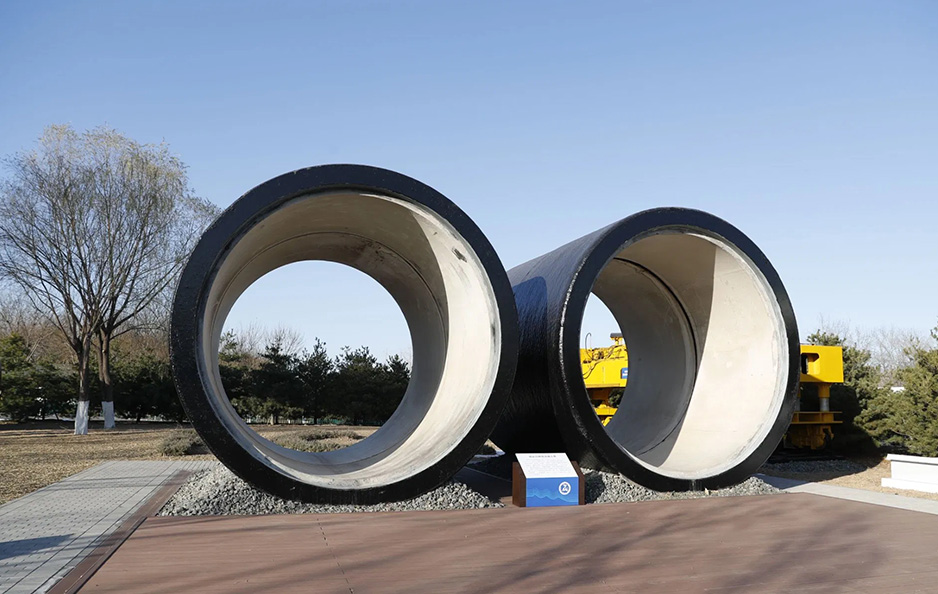
In the modern era of sustainable infrastructure, the lifespan of a product is a critical metric for success. High-quality piping must offer more than just initial strength; it must provide a decades-long service life to justify the initial capital expenditure. The materials we recommend are manufactured using advanced technology to ensure excellent performance over a service life that generally reaches over 50 years. This longevity significantly reduces the frequency and cost of maintenance and replacement, which is a major pain point for municipal authorities and industrial operators.
Advanced corrosion resistance technology
Environmental adaptation is equally important, particularly when dealing with varying soil chemistries and water qualities. A key feature of these high-performance pipes is their exceptional corrosion resistance. The internal and external anti-corrosion coatings, combined with the protective concrete layer, allow the pipeline to function in various complex environments without degrading. Whether conveying municipal water or industrial sewage, the resistance to chemical attack ensures that the pipeline does not leak during high-pressure transportation, thereby maintaining the purity of the conveying medium. This anti-leakage property is vital for preventing water waste and protecting the surrounding environment from contamination.
Durability against abrasive media
Not all water transfer projects involve clean, filtered water. Many industrial and drainage applications require moving media that contains particles such as sand and mud. In these scenarios, wear resistance becomes the deciding factor for material selection. The high-strength concrete used in these pipelines is designed to be highly resistant to abrasion. This ensures that the pipe walls are not easily worn out by the constant friction of solid particles, preserving the structural thickness and pressure rating of the system over time. This resilience extends to the operating temperature range of 34–120°F (1–49°C), ensuring the system remains functional even in extreme seasonal shifts.
Construction efficiency and urban integration with jacking technology
As cities become more crowded, traditional open-cut excavation for pipe installation becomes increasingly difficult and expensive. The move toward trenchless technology has highlighted the need for specialized components like the Micro Tunnel Jacking Pipe. These are specifically designed for precast installation, which simplifies on-site assembly and significantly shortens the construction period. Using prefabricated components allows for better quality control during manufacturing and faster deployment in the field.
Convenient construction in dense urban areas
Convenient construction is not just about speed; it is about reducing the impact on urban life. By using jacking pipes, projects can proceed with minimal disruption to surface traffic and existing utilities. The high strength and precision of these pipes make them widely recognized in large-scale water delivery projects where accuracy is paramount. We have observed that contractors who utilize these advanced precast solutions report fewer installation errors and higher overall project safety. This efficiency is a core reason why these materials are considered the best for modern urban drainage and flood control projects.
Simplified on-site assembly and logistics
The logistics of large-scale infrastructure often involve complex coordination. Because these pipes are manufactured in a controlled factory environment, they arrive on-site ready for immediate installation. The use of advanced CNC-controlled manufacturing for components ensures that each section fits perfectly with the next, minimizing the need for on-site adjustments. This level of precision is essential for ensuring a leak-proof system during high-pressure transportation, which in turn protects the purity of the medium being conveyed.
Global standards and rigorous quality assurance protocols
Trust in a product is built through rigorous testing and international recognition. For any water treatment or transfer project, verifying that the materials meet food-grade and hygiene standards is mandatory. The best manufacturers ensure their products pass CE certification, NSF certification, and international ISO9001 quality management system certifications. These accolades are not just stickers; they represent a commitment to non-toxic materials and reliable manufacturing processes. For instance, the use of food-grade HDPE or PE plastic for linings ensures that the water remains safe for drinking and meets hygiene standards.
Pressure testing and fatigue cycles
But safety goes beyond the material’s “fragility” – Mechanical reliability of a component or system through fatigue testing is just as important. For this reason, the majority of Our tanks and pipes have undergone over 100,000 cycles of fatigue testing at varying pressures. In addition to these rigorous tests, the burst pressure of many of our systems is tested at 4-6 times the design pressure for even greater peace of mind. Having spent years developing fluid storage systems, we’ve become familiar with certain critical parameters that go above and beyond the standard operating pressures, like the 150 psi required for the composite tanks we design. And those are the criteria we take into consideration before we ever recommend a solution to our clients.
Material selection for extreme environments
Strict material selection is the foundation of quality assurance. Only premium fiberglass embedded in epoxy resin and high-quality steel are used to ensure the final product has incomparable advantages over ordinary steel or plastic materials. This careful selection results in a product that is stronger than normal steel vessels while remaining corrosion-resistant both inside and out. The result is a system that can operate reliably within a temperature range of 34–120°F (1–49°C), with certain components capable of withstanding exposed temperatures as low as -17°F (-27°C).
Integrated one-stop water treatment solutions
While the pipeline is the artery of the system, a complete water management strategy requires integrated components. A one-stop service provider offers everything from the main pipes to accessories like FRP membrane housings, water distributors, and dosing tanks. These composite housings are often microcomputer-controlled during the forming process to ensure incomparable advantages in terms of pressure resistance and thermal insulation. The low thermal conductivity of fiber materials is particularly beneficial for reverse osmosis membranes, as it reduces the influence of external temperature on the delicate filtration process.
Another benefit to these systems is the possibility of customizing them to fit particular piping details. Often, a specialized resin and fiberglass winding is required for an ion exchange column, or a unique opening port is required for a composite tank. Customizing the equipment allows the entire water purification or softening system to operate optimally. Having one manufacturer who understands all the components and how they work together is also a huge benefit to the project manager, as it guarantees fit and performance over the life of the facility.
So, for 2026’s high-pressure water transfer solution, look no further than a system that utilises the tried and tested properties of prestressed steel and concrete wrapped in the latest, most advanced composites. Such a system will deliver the long-term performance required to achieve a 50-year leak-free solution, whilst still providing all the practical advantages of construction convenience. Contact us to discuss your specific requirements and receive full technical specifications.
FAQ
Q: How long can we realistically expect a modern PCCP pipeline to stay in service?
A: Honestly, if the installation is handled correctly, you’re looking at a 50-year horizon, minimum. The real advantage here isn’t just the raw strength—it’s that multi-layered protection which keeps the pipe from degrading in the ground. In practical terms, this means you aren’t digging up the same street for repairs every decade, which is a massive win for long-term municipal budgets.
Q: How does the structural design of these pipes handle high internal pressure?
A: The design consists of a prestressed steel cylinder coated with high strength concrete, forming a composite structure, suitable for high pressure applications and resisting cracks from environmental attacks.
Q: Are these materials safe for drinking water applications?
A: Generally speaking, products from large manufacturers come with food-grade coatings and have been certified by NSF, CE, or domestic hygiene licenses to meet drinking water standards.